
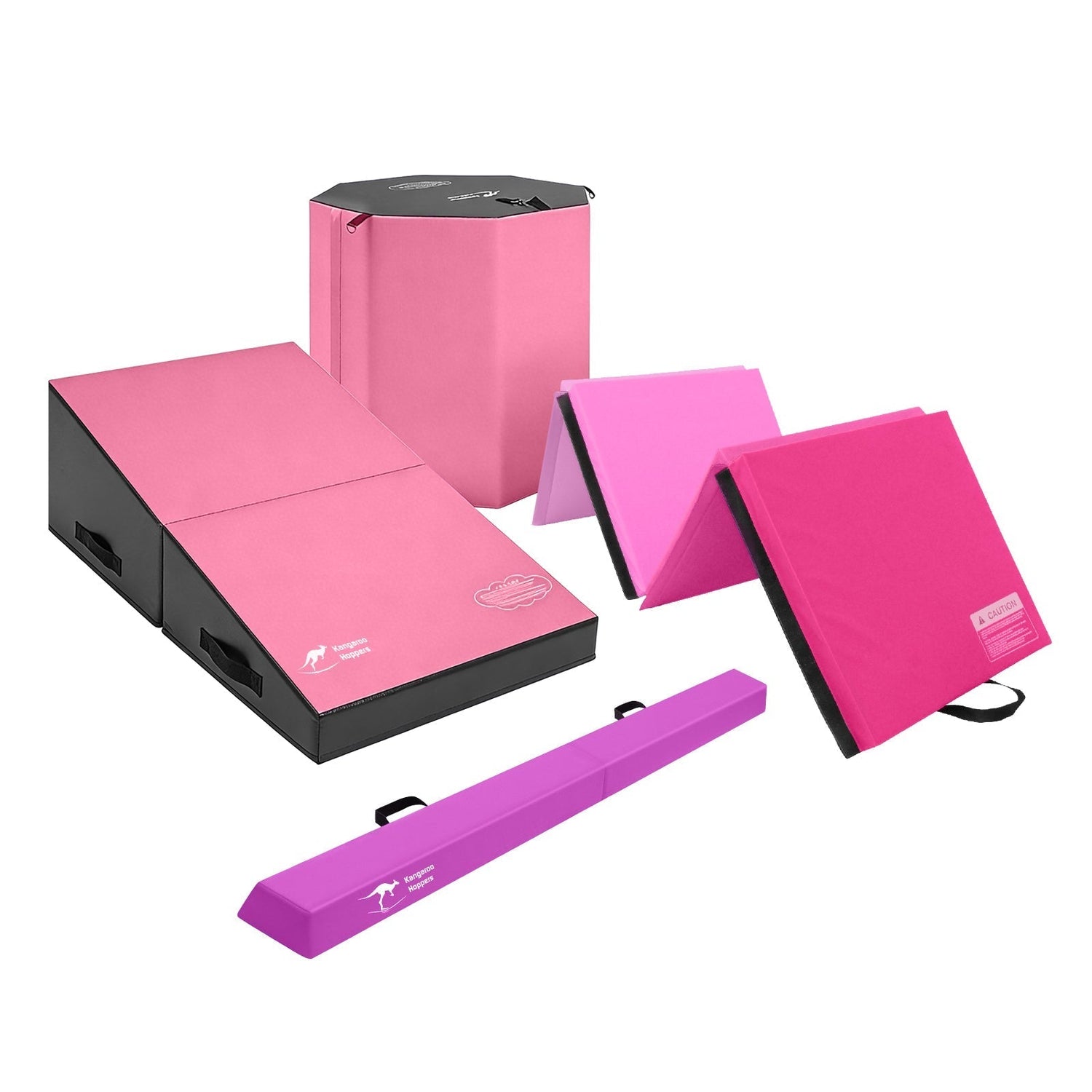
The best gymnastics toys for kids are the ones that match a child’s age, skill level, available space, and safety needs. For most families, the strongest starting options are soft balance toys for toddlers, folding mats and low beams for preschoolers, and bars or air tracks only when a child is older, more coordinated, and properly supervised.
Key Takeaways
- The best gymnastics toy depends on your child’s age, movement skills, and how much space you have at home.
- For beginners, folding mats, soft foam sets, and low balance beams usually offer the safest and most versatile value.
- School-age kids who already enjoy gymnastics often benefit from home balance beams, junior bars, and inflatable air tracks.
- Safety matters as much as fun, so stable construction, proper matting, weight limits, and adult supervision should guide every purchase.
- A good gymnastics toy should support active play, confidence, coordination, strength, and balance without pushing a child into skills beyond their level.
What Makes a Good Gymnastics Toy for Kids?
A good gymnastics toy helps kids move with confidence while staying safe, engaged, and physically active. The best options combine skill development, home practicality, and age-appropriate design instead of simply looking exciting online.
Safety First
Safety should come before every other feature. Look for sturdy construction, non-slip surfaces, rounded edges, reliable weight limits, and materials that feel durable enough for repeated use.
For younger children, soft padding and low-to-the-ground designs are especially important. It is also smart to choose products made with non-toxic materials and to use protective mats under any raised equipment.
Age Appropriateness
The right toy should match a child’s developmental stage, not just their enthusiasm. Toddlers usually need soft climbing and balance tools, while older children may be ready for beams, bars, rings, or tumbling equipment that requires more control and coordination.
A product that is too advanced can create frustration or safety issues. A product that is too easy may not hold interest long enough to support real skill development.
Skill Development
The best gymnastics toys do more than burn energy. They help children improve balance, coordination, core strength, grip strength, spatial awareness, flexibility, and body control through active movement.
This matters because gymnastics-based play supports both general motor development and sport-specific confidence. Even simple equipment like mats and beams can help children practice focus, posture, landing mechanics, and movement patterns.
Practical Considerations
A great gymnastics toy should work for your actual home, not just in a product photo. Before buying, think about floor space, ceiling height, storage, setup time, portability, and whether the toy will be used indoors, outdoors, or both.
It also helps to compare material quality against long-term value. Foam, wood, steel, and inflatable designs all solve different problems, so the best choice depends on your budget, storage needs, and how seriously your child will use the equipment.
Best Gymnastics Toys for Toddlers
For children around ages one to three, the best gymnastics toys focus on safe exploration, gross motor development, and basic balance. At this stage, soft surfaces and low height matter more than advanced skill practice.
Soft Balance Beams and Foam Blocks

Soft balance beams and foam blocks are some of the best first gymnastics toys for toddlers. They allow children to step, climb, crawl, and balance close to the floor, which builds confidence without adding much fall risk.
Dense foam is usually a better choice than overly soft material because it keeps its shape during play. Washable covers are also helpful for everyday use in homes, playrooms, and daycare spaces.
Mini Tumbling Mats and Play Mats

Mini tumbling mats are one of the most versatile options for young children. They create a cushioned area for rolling, crawling, stretching, and beginner movement games while also protecting knees, elbows, and small falls.
A non-slip base is especially important for home use. Foldable mats are often the most practical because they are easier to store and can serve as general active play equipment beyond gymnastics.
Activity Gyms and Soft Climbing Sets

Soft climbing sets help toddlers build body awareness, coordination, and confidence through climbing, crawling, stepping, and sliding. They turn indoor play into a movement-rich environment without requiring formal gymnastics instruction.
These sets are especially useful for energetic toddlers who need a safe indoor outlet. They also support early balance and directional movement in a way that feels playful rather than structured.
Best Gymnastics Toys for Preschoolers
Children ages three to five are often ready for more purposeful movement and beginner gymnastics-style play. At this stage, the best toys help improve coordination, balance, jumping control, and basic confidence with simple skill patterns.
Low Balance Beams

Low balance beams are excellent for preschoolers because they introduce controlled beam practice in a safe and manageable format. Children can work on walking, posture, turning, and focus without the pressure of height.
A beam with a stable base and non-slip feet is usually the best choice for home use. Adjustable height can add value if you want equipment that grows with your child.
Folding Gymnastics Mats
A folding gymnastics mat is one of the best overall purchases for this age group. It supports forward rolls, cartwheel practice, assisted handstands, stretching, and general active play in one simple piece of equipment.
Thickness matters, especially if the mat will be used on hard floors. Storage also matters, so many parents prefer panel mats that fold easily under a bed or into a closet.
Mini trampolines with bars
Mini trampolines can help preschoolers build leg strength, coordination, and rhythm while giving them a fun way to release energy. A handlebar adds stability and usually makes the toy more beginner-friendly.
This type of toy requires clear rules and direct supervision. Only one child should use the trampoline at a time, and it should always be placed on a stable surface with enough surrounding clearance.
Gymnastics Rings or Swinging Bars
Indoor rings or swinging bar sets can support grip strength, upper body development, and confidence with hanging movements. They are often appealing to preschoolers who enjoy climbing and active challenge.
The key issue is installation quality. Parents should follow mounting instructions carefully and make sure the support point can safely handle dynamic movement, not just static weight.
Best Gymnastics Toys for School-Age Kids
For children ages six to twelve, gymnastics toys often become real practice tools rather than simple activity toys. The best options at this stage support skill building, structured play, strength, coordination, and home practice between classes.
Home Balance Beams
A home balance beam is one of the best gymnastics toys for school-age kids because it offers a clear path for progression. Children can practice walks, turns, kicks, jumps, and simple beam combinations while improving balance and body control.
Longer beams tend to feel more realistic and useful for repeated practice. A surface that mimics gym-style traction can also improve confidence and make home drills feel more specific.
Junior Horizontal Bars and Kip Bars
Junior bars and kip bars are strong choices for children who already enjoy gymnastics and want to practice basic bar work at home. They can help with pull-overs, casts, support holds, and early circle progressions when used correctly.
This equipment should be treated seriously because it introduces greater load and greater risk. A stable frame, appropriate height setting, and thick protective matting underneath are essential.
Inflatable Air Tracks and Air Beams
Air tracks are one of the most popular home gymnastics tools because they combine softer landings, portability, and broad skill potential. They are useful for tumbling drills, jumps, handstand work, and beginner acrobatic progressions.
When comparing options, pay attention to thickness, length, pump quality, inflation consistency, and storage convenience. For many families, an air track is a better long-term investment than several smaller single-use toys.
Parallettes and Handstand Trainers
Parallettes and handstand trainers are compact tools that can support shoulder strength, core control, wrist management, and body line awareness. They are especially helpful for children who enjoy conditioning and technique work.
Stability matters more than appearance with this category. Choose equipment with a solid base and secure grip so children can practice with control rather than wobbling through repetitions.
Backyard Gymnastics Bars and Ring Sets
For families with outdoor space, backyard bars and rings sets can create a fun and challenging training area. These setups are often useful for active children who enjoy climbing, hanging, swinging, and general bodyweight movement.
Outdoor use requires extra attention to material quality and ground safety. Weather-resistant frames, secure anchoring, and clear safety space around the equipment are all important.
Best Gymnastics Toys for Teen Gymnasts or Advanced Kids
Older children and more advanced gymnasts need equipment that supports conditioning, progression, and repeated skill practice with greater control. At this level, the best tools are less about casual play and more about targeted training support.
Advanced Tumbling Equipment
Longer air tracks, heavier duty panel mats, and quality crash pads are often the most useful tumbling tools for advanced kids. They provide more training surface, more impact absorption, and more confidence during skill repetition.
These tools are particularly valuable when a child is already training in gymnastics and needs a safe way to practice drills at home. Even then, advanced flipping skills should not be attempted without proper coaching and progression.
Strength and Conditioning Tools
Resistance bands, sliders, pull up bars, and balance tools can support the physical qualities gymnasts need most. These include core strength, shoulder stability, grip strength, body tension, and controlled power.
Conditioning equipment is often overlooked in gift guides, but it can offer real long-term value for serious young athletes. It is also easier to store than large tumbling equipment.
Flexibility Tools
Stretch bands, oversplit blocks, and mobility tools can help advanced kids work on flexibility with more structure. They are especially useful for gymnasts who need consistent range of motion work outside the gym.
That said, flexibility tools should be used carefully and never force positions beyond a child’s control. Good technique and gradual progression matter more than aggressive stretching.
Indoor vs. Outdoor Gymnastics Toys
Indoor gymnastics toys are usually the best fit for year-round use, smaller homes, and more frequent short practice sessions. Mats, floor beams, rings, and compact conditioning tools are often easier to manage inside and are less dependent on weather.
Outdoor gymnastics toys allow bigger movement and more freedom, which makes them appealing for bars, ring frames, and larger activity setups. They also require more space, better anchoring, and more attention to weather exposure and surface safety.
For apartments or shared housing, noise and floor impact should be part of the buying decision. Thick mats, softer landing surfaces, and inflatable equipment can help reduce sound and make active play more neighbor-friendly.
Safety Tips for Using Gymnastics Toys at Home
Home gymnastics should be fun, but it should also be organized around clear safety rules. Good equipment does not replace supervision, proper setup, and smart boundaries.
- Supervise Actively: Young children should always be supervised during gymnastics play. Older children may need less direct help, but adults should still monitor raised equipment, jumping toys, and any attempt at new skills.
- Use Proper Matting: Raised bars, beams, and similar equipment should never be used without appropriate protective padding. Mats help reduce impact and are one of the simplest ways to make home practice safer.
- Clear the Surrounding Area: Every piece of gymnastics equipment needs space around it. Move furniture, hard objects, sharp edges, and other obstacles away before use so kids have room to move and fall more safely if needed.
- Follow Weight Limits and Setup Instructions: Always follow the manufacturer’s instructions for assembly, adjustment, anchoring, and use. Weight limits and setup guidance are there for safety, not just warranty protection.
- Inspect Equipment Regularly: Home equipment should be checked often for loose bolts, worn straps, damaged seams, unstable frames, or loss of air pressure. Small maintenance issues can become serious safety problems if ignored.
- Set household rules: Simple rules make a big difference. One child at a time, no reckless tricks, no advanced skills without training, and a brief warm-up before practice can help keep gymnastics play safe and productive.
How to Choose the Best Gymnastics Toy for Your Child
The best gymnastics toy is the one your child will use safely, consistently, and with real enjoyment. A good purchase matches ability, space, and purpose instead of chasing the biggest or most advanced option.
- Step 1: Assess Age, Ability, and Interest. Start with your child’s actual movement level, not just age. A confident and coordinated beginner may be ready for different equipment than a child who is still developing balance or is only casually interested.
- Step 2: Check Your Space. Measure your available floor space and think about ceiling height, storage, and surrounding clearance. This step prevents one of the most common buying mistakes, which is choosing equipment that technically fits but is not practical to use.
- Step 3: Define the Main Goal. Some families want a toy for indoor activity and fun, while others want equipment for real gymnastics practice. Knowing whether your goal is active play, strength development, balance work, or class support makes the choice much easier.
- Step 4: Compare Categories, Not Just Products. It helps to first decide between categories such as mats, beams, bars, air tracks, or climbing sets. Once the category fits your child’s needs, comparing individual products becomes more meaningful.
- Step 5: Read Reviews and Check Policies. Parent reviews can reveal setup issues, storage problems, durability concerns, or features that are not obvious in product photos. Return policies and warranties also matter, especially for larger items like bars and inflatable tumbling equipment.
Best Gymnastics Toys by Child Type and Home Setup
Sometimes the easiest way to choose is by matching the toy to the child and the home environment. This quick framework can help narrow the decision faster.
- Best for Energetic Toddlers: Soft climbing sets, foam blocks, and cushioned mats are usually the best options. They encourage movement exploration while keeping play close to the ground.
- Best for Preschool Beginners: A folding gymnastics mat and a low balance beam are often the most practical starter combination. They support a wide range of activities without taking over the entire room.
- Best for Kids in Gymnastics Classes: Home balance beams, junior bars, and air tracks usually offer the most direct practice value. These tools can support repetition, confidence, and conditioning between coached sessions.
- Best for Small Spaces: Foldable mats, soft beams, compact parallettes, and deflatable air tracks are strong choices for apartments or shared homes. They are easier to store and generally more flexible in daily use.
- Best for Outdoor Play: Backyard bars, ring sets, and weather-resistant activity frames are ideal when you have enough space and a safe surface. Outdoor equipment works best when it is anchored properly and checked regularly for wear.
FAQs
What are the best gymnastics toys for small spaces?
Folding mats, soft floor beams, compact handstand trainers, and deflatable air tracks are some of the best choices for limited space. They provide real play value while remaining easier to store than large fixed equipment.
At what age can kids safely start using bars or beams?
Soft floor-level beams can be used once a child walks steadily and can follow simple directions. Raised bars and more structured equipment are generally better for older children with direct supervision, proper matting, and age-appropriate coordination.
Do kids need formal classes to use gymnastics toys?
No, many gymnastics toys are excellent for free play, movement development, and confidence building at home. Formal instruction becomes more important when a child starts using raised bars or attempting more technical tumbling skills.
How much should I spend on a first gymnastics toy?
A first gymnastics toy does not need to be expensive. A quality folding mat or low beam often provides the best balance of cost, versatility, and long-term usefulness for beginners.
How do I store large gymnastics equipment at home?
Look for foldable, inflatable, or modular designs made for home use. Mats can slide under furniture, air tracks can be deflated into storage bags, and some bars can be partially folded or disassembled when not in use.
Conclusion
The best gymnastics toys for kids make active play safer, more engaging, and more developmentally useful. Start with equipment that fits your child’s age, your home space, and your safety setup, then build from there as skills and interest grow.


Leave a comment
This site is protected by hCaptcha and the hCaptcha Privacy Policy and Terms of Service apply.