
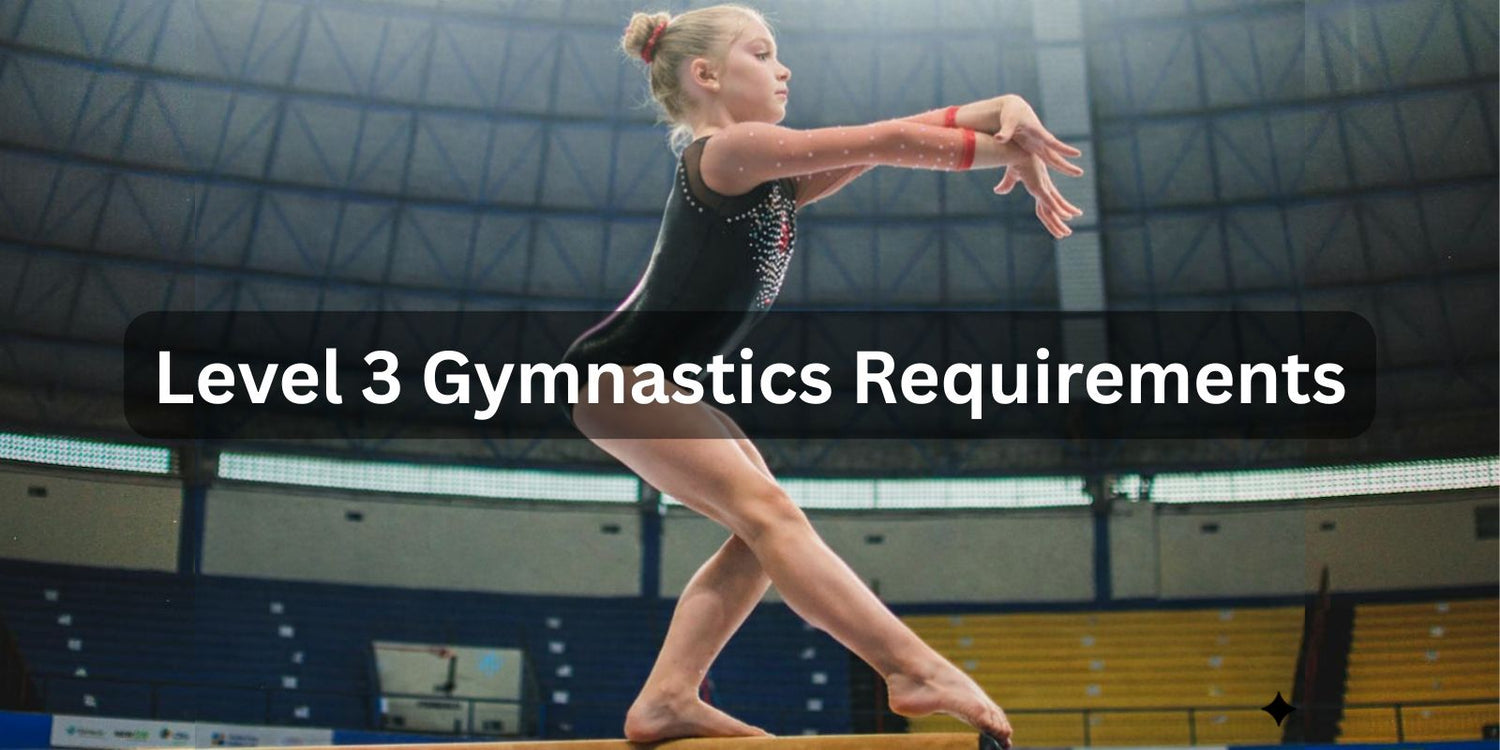
Level 3 gymnastics is where young athletes begin to turn basic skills into more polished compulsory routines across vault, uneven bars, balance beam, and floor exercise. In 2026, success at this level depends less on raw difficulty and more on clean body lines, tight form, steady rhythm, safe progressions, and confident execution in competition.
Key Takeaways
- Level 3 gymnastics introduces structured compulsory routines that build competitive consistency across all four events.
- In 2026, judges and coaches continue to value form, control, body tension, and clean connections more than aggressive difficulty.
- Athletes usually need solid basics in handstands, rolls, strength, flexibility, and focus before entering this stage.
- Common score losses come from bent arms or knees, pauses between skills, balance checks, weak landings, and incomplete shapes.
- Strong progress at Level 3 comes from repetition, safe progressions, event-specific conditioning, and realistic season goals.
What Is Level 3 in Gymnastics?
Level 3 gymnastics is an early compulsory stage in the developmental pathway that helps athletes build the mechanics needed for future competitive progress. It usually follows introductory classes and earlier foundational training, giving gymnasts their first deeper experience with standardized routines, meeting expectations, and more consistent event preparation.
A typical Level 3 gymnast has already developed body awareness, listening skills, and basic movement quality. At this stage, the goal is not simply to perform skills but to perform them with control, rhythm, posture, and technique that can hold up under judging.
What Is New in 2026?
The 2026 season continues to emphasize the fundamentals that matter most at this stage: body alignment, core tension, pointed toes, straight legs, controlled tempo, and cleaner connections between elements. These qualities matter because they build a safer technical base and prepare athletes for later Gymnastics Levels, where skill complexity rises and form mistakes become harder to fix.
For families and coaches, the practical takeaway is simple. Athletes who stay tight through shaps, move confidently from one element to the next, and show fewer breaks in rhythm will usually look more prepared than athletes who rush skills without control.
Purpose of This Guide
This guide explains the main expectations for Level 3 gymnastics in 2026, including readiness, scoring basics, event requirements, training focus, and progression. It is designed for athletes, families, and coaching staff who want a clear overview of what matters most during the season.
General Participation Requirements
Eligibility and Readiness
Many athletes at this stage are around six to ten years old, though readiness matters more than age alone. A gymnast is usually ready when she can show consistent handstands, clean forward and backward rolls, basic strength, body tension, listening skills, and enough flexibility to perform foundational shapes safely.
Training volume often increases compared with introductory classes. Many athletes train several hours per week across all four events, with additional time devoted to conditioning, mobility, drills, and routine repetition.
Competition Structure
Level 3 competition commonly includes local meets, invitationals, and championship-style events depending on the program and region. Athletes are usually grouped by age division, and scores may count for both individual placements and team results.
This structure helps young gymnasts learn how to perform under pressure, manage a meet schedule, and build confidence in a supportive competitive environment. Just as important, it teaches consistency, focus, and recovery from small mistakes.
Scoring Basics
Routines begin from a set start value and receive deductions for execution errors, form breaks, balance problems, rhythm interruptions, and incomplete positions. At this level, judges are mainly rewarding clean basics, not high-risk difficulty.
That means straight legs, pointed toes, tight body shapes, controlled landings, and smooth movement quality often matter more than power alone. Gymnasts who score well at Level 3 are usually the ones who repeat clean habits across every event.
Vault Requirements 2026
Approved Vaults
Vault at this stage typically uses an introductory jump to a mat stack with an emphasis on body control and a safe, stable landing. The setup is designed to match the athlete’s size and developmental stage while reinforcing proper approach mechanics.
Technical Expectations
A strong vault starts with an accelerating run, a controlled hurdle, and a confident takeoff from the board. In the air, the gymnast should stay long and tight through the body rather than folding at the hips or letting the knees soften.
The landing is just as important as the flight phase. Judges want to see absorption through the legs, posture through the torso, and immediate control without extra movement.
Common Deductions on Vault
Common vault deductions include bent arms, bent knees, weak board contact, low rise, insufficient distance, picking in flight, and unstable landings. Extra steps, hops, or loss of posture on landing can quickly reduce the score.
Uneven Bars Requirements 2026
Bar Routine Composition
The uneven bars routine at this level is built around foundational support skills, circling action, cast positions, and a simple dismount. The routine is meant to show strength, timing, and the ability to connect elements without unnecessary stops.
Key Skills for Bars
Common Level 3 bar elements include a pullover, casts, a back hip circle, and an undershoot-style dismount. The main objective is not just to complete each skill but to link them with enough rhythm that the routine feels continuous rather than pieced together.
For many Level 3 gymnasts, the bars are where technical discipline becomes especially important. Small timing errors, bent elbows, or a loss of tension can interrupt momentum and make the whole routine look less secure.
Technique and Form Expectations
Judges look for straight arms, a tight hollow body, clean leg positions, and steady movement from skill to skill. A routine with better rhythm and posture usually scores more strongly than one that technically finishes each element but looks rushed or broken.
Common Errors and Deductions
Typical bar deductions include bent arms during the pullover or back hip circle, leg separation in casts, low cast amplitude, pauses between skills, extra swings, and uncontrolled dismounts. These errors often reflect either weak body tension or inconsistent timing.
Balance Beam Requirements 2026
Required Beam Elements
A beam at Level 3 usually includes a simple mount, an acrobatic element, a turn, a leap or jump requirement, and a basic dismount. The routine is meant to test balance, posture, body awareness, and confidence on a very narrow surface.
Routine Structure and Length
The routine must fit within the expected time framework while using the beam with purpose and continuity. Judges want to see movement that travels, changes level, and stays connected instead of long pauses or hesitation.
Performance Criteria for Beam
The beam routine is judged heavily on control. Good beam work shows steady posture, calm arm positions, clear focus, and enough confidence that each element looks intentional rather than cautious.
Presentation matters here too. Even at an early, compulsory level, rhythm, composure, and finishing positions can make the routine look more polished and competition-ready.
Frequent Deductions
Frequent deductions on beam include balance checks, wobbles, posture breaks, incomplete split positions, under-rotated turns, pauses before major skills, and falls. In many routines, hesitation and body instability cost more than the individual skill itself.
Floor Exercise Requirements 2026
Floor Routine Composition
The Level 3 floor routine combines tumbling, dance elements, shapes, and choreography set to compulsory music. Athletes must move with timing, control, and enough performance quality to make the routine feel connected from start to finish.
Tumbling Skills
The tumbling in this routine usually includes backward and forward acrobatic work that introduces stronger rebound, directional control, and landing awareness. Coaches want gymnasts to create power from the floor while holding tight body shapes through each phase of the skill.
At this level, clean takeoff and landing mechanics matter more than aggressive speed alone. A gymnast who stays tight and finishes each skill with control will often look much stronger than one who moves quickly but loses shape in the air.
Dance and Artistry Expectations
Floor is not only about tumbling. It also requires leaps, jumps, turns, posture, musical timing, expression, and awareness of how the routine fills the space.
Artistry at this stage means performing with confidence and intention rather than just moving from one required skill to the next. Sharp arm positions, complete finishes, and timing that matches the music can raise the overall quality of the routine.
Common Floor Deductions
Frequent deductions on floor include bent knees, flexed feet, weak rebound, incomplete body extension, under-rotated tumbling, poor leap shape, off-tempo movement, and stepping outside the boundary. These are often the result of weak tension, rushed timing, or lack of routine repetition.
Execution, Form, and Safety
Emphasis on Form Over Difficulty
At Level 3, execution should always come before more advanced difficulty. A gymnast who learns to move with straight legs, pointed toes, tight shapes, and consistent control now will usually progress more safely and more efficiently later.
This is one of the most important ideas for families to understand. Repeating a level or spending longer on basics is not a setback if it leads to stronger mechanics and fewer technical problems in future seasons.
Safety and Progressions
Safe skill development depends on proper progressions, correct matting, active spotting when needed, and drills that isolate each part of a movement pattern. Coaches build confidence by breaking larger skills into smaller pieces until the athlete can perform them with stability.
Conditioning and Flexibility Benchmarks
Strong Level 3 gymnastics depends on more than routine practice. Athletes benefit from core strength, shoulder stability, upper body pushing and pulling strength, straight body hold endurance, split flexibility, and general mobility that supports cleaner shapes in every event.
Training and Season Planning for 2026
Typical Training Schedule
A typical training week balances event work with conditioning, shaping drills, flexibility, and routine repetition. The goal is to give enough volume for progress without letting fatigue ruin technique or confidence.
Good training plans also rotate focus intelligently. One session may emphasize bars, shapes, and beam confidence, while another may build floor endurance or vault approach mechanics.
Preseason vs. In-Season Focus
Before the season, the focus is usually on skill acquisition, shaping quality, and consistency in individual event pieces. Once competition begins, training shifts more toward routine repetition, endurance, pressure simulation, and reducing the small mistakes that lead to repeated deductions.
This shift is important because meeting success often comes from stability, not novelty. By midseason, a gymnast usually benefits more from cleaner details and calmer performance than from chasing constant routine changes.
Goal Setting
The best goals at this stage are process-based as well as score-based. It is helpful to aim for score improvement, but goals such as sticking a landing, hitting the beam with confidence, or keeping straight legs on bars often create healthier long-term progress.
Process goals also help athletes stay motivated when placements vary from meet to meet. A gymnast who understands what she is improving is more likely to stay resilient and coachable.
Advancing Beyond the Current Tier
When Is an Athlete Ready for the Next Step?
A gymnast is usually ready to move on when she performs current skills consistently, understands corrections, handles training demands well, and shows the maturity to absorb more complex instructions. Coaches also look for stronger scores, but numbers alone do not tell the full story.
Readiness includes emotional stability, body awareness, routine confidence, and the ability to recover from mistakes without losing focus. These qualities become more important as the sport gets harder.
Optional Paths and Alternatives
Not every athlete follows the exact same developmental route. Some continue through the standard compulsory path, while others may move into alternative competitive or recreational tracks that better match their goals, schedule, and long-term enjoyment of the sport.
The best path is the one that supports healthy progress, confidence, and sustainable development. In gymnastics, the right fit often matters more than the fastest timeline.
Frequently Asked Questions 2026
What age do most kids compete at this stage?
Many athletes are between six and ten years old, but age is only one factor. A slightly older or younger gymnast may still fit well at Level 3 depending on skill quality, strength, maturity, and training history.
How long do athletes usually stay in this tier?
Many gymnasts spend one full season at this level, while others stay longer to improve strength, confidence, and execution. Taking extra time is common and can be very beneficial when fundamentals still need to become more automatic.
Can a gymnast skip this stage and move directly to a higher tier?
In most structured developmental systems, Level 3 functions as an important foundation and is not usually skipped without special circumstances. Coaches generally prefer athletes to master the basics here before moving into harder routines.
How important are scores for future progression?
Scores help measure competitive consistency, but they are only one part of the bigger picture. Long-term progress depends even more on mechanics, coachability, physical preparation, and how reliably the gymnast performs under pressure.
How can families best support their athlete?
Families support best by encouraging effort, protecting recovery, helping with rest and nutrition, and trusting the training process. Athletes usually thrive most when home support stays positive, calm, and focused on growth rather than only results.
Summary
Level 3 gymnastics in 2026 is all about building dependable competitive habits through clean basics, safe progressions, and consistent execution on every event. Athletes who focus on body tension, form, confidence, conditioning, and routine quality will build the strongest foundation for future levels and a healthier long-term experience in the sport.

Leave a comment
This site is protected by hCaptcha and the hCaptcha Privacy Policy and Terms of Service apply.