
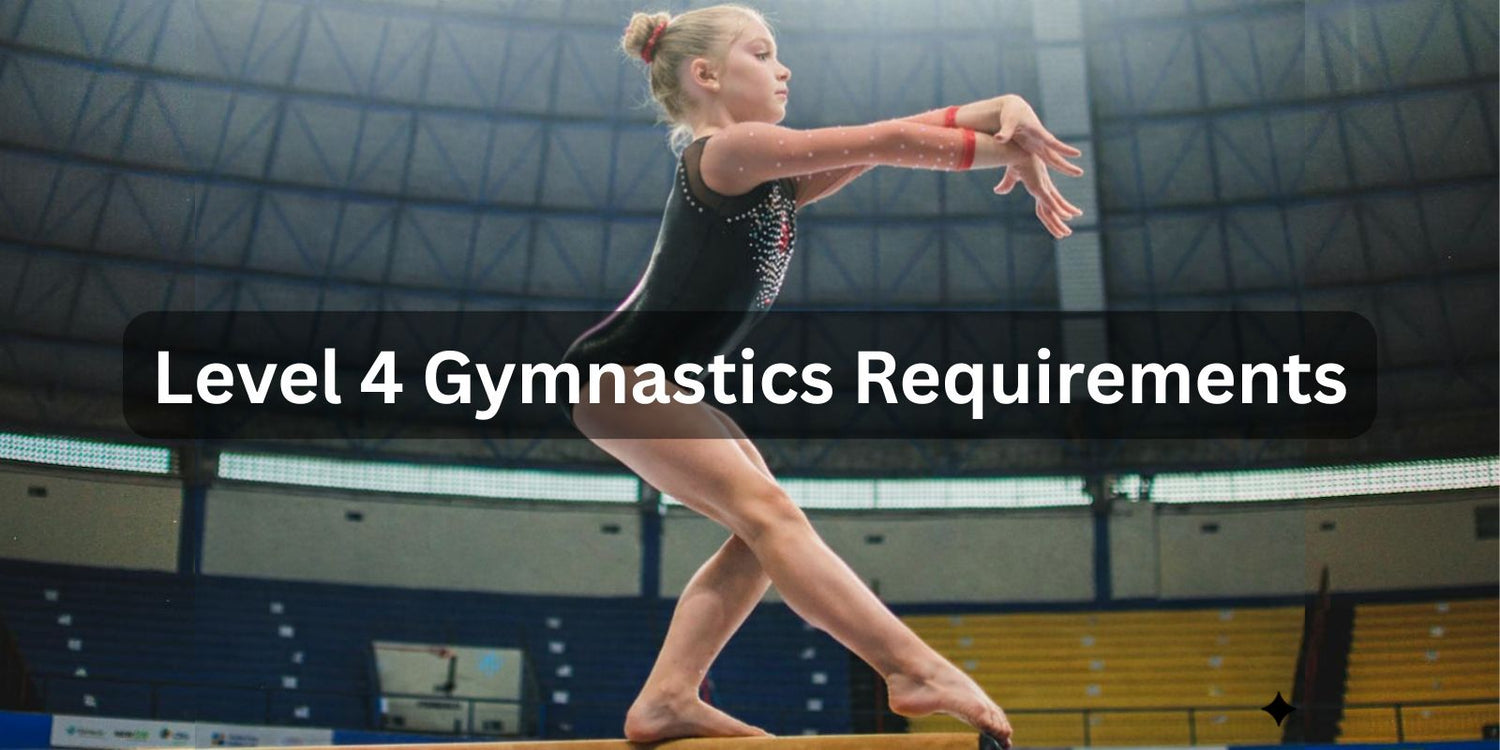
Level 4 is one of the most important stages in the Gymnastics Levels system because it turns basic skill development into true compulsory competition readiness. For the 2026 season, athletes, families, and coaches should focus on routine accuracy, clean execution, stronger fundamentals, and consistent meet preparation across vault, bars, beam, and floor.
Key Takeaways
- Level 4 is a compulsory competitive stage where athletes perform standardized routines and are judged heavily on form, rhythm, control, and consistency.
- Success at this level depends less on advanced difficulty and more on precise basics, clean body positions, confidence, and repeatable execution.
- Vault, bars, beam, and floor each test a different part of readiness, including power, timing, strength, balance, flexibility, artistry, and composure.
- Scores are built from a start value and reduced through execution deductions, which makes details such as straight legs, pointed toes, body tension, and stuck landings especially important.
- Athletes move forward most successfully when they combine technical mastery, physical preparation, and mental confidence with guidance from qualified coaches and official season materials.
Overview of Level 4 in the Gymnastics Levels System
Level 4 is a pivotal compulsory level because it bridges foundational gymnastics with more demanding competitive expectations. At this stage, athletes are expected to show not only skill completion but also stronger form, rhythm, body control, and consistency across all four events.
Within the broader gymnastics levels pathway, compulsory competition creates a shared technical standard by requiring athletes to perform the same routines and choreography. This structure helps coaches, judges, and families evaluate whether an athlete has truly developed the basics needed for long term progression.
For many gymnasts, Level 4 is where competition starts to feel more serious and performance based. It is no longer enough to complete a skill once in practice, because athletes must perform under pressure with cleaner lines, fewer pauses, and more confidence at meets.
General Eligibility and Competition Guidelines
Before competing in Level 4 during the 2026 season, athletes must meet the age, membership, and mobility requirements established by the governing organization and their program. Families should always confirm the latest official rules because exact competitive eligibility, score thresholds, and season procedures can vary by federation and update cycle.
In most cases, progression into this level depends on successfully completing the previous stage and earning the required qualifying or mobility score. This is important because Level 4 introduces more technical expectations, and proper advancement helps reduce performance gaps and safety risks.
Competition at this stage usually takes place through local, state, and possibly higher qualifying meets depending on the athlete’s track and results. Because compulsory competition emphasizes consistency, every meet becomes a test of preparation, routine memory, and execution quality rather than difficulty alone.
Skill Requirements by Event
Vault Requirements
Vault at Level 4 typically emphasizes a front handspring based compulsory entry that tests speed, blocking mechanics, body tension, and landing control. A strong vault starts with an aggressive run and efficient board contact, then continues through active shoulder extension on the table and finishes with a stable landing.
Judges usually look closely at height, distance, straight body alignment, and confidence from start to finish. Common deductions include bent arms on support, weak block, loose body shape in flight, piking, and steps or instability on landing.
For athletes and coaches, vault readiness is often less about raw bravery and more about repeatable timing. The best Level 4 vaults look powerful yet organized, with momentum transferred cleanly from the runway into the board, table, and landing.
Uneven Bars Requirements
Uneven bars at this level challenge strength, timing, shoulder control, rhythm, and technical precision. The compulsory routine generally includes casts, circling elements, swing connections, a transition to the high bar, and a defined dismount sequence that must be performed with continuity.
Bars often become one of the most detail sensitive events because judges evaluate not just whether each skill is completed, but also how cleanly positions are shown. Bent arms, leg separation, closed shoulders, loss of swing rhythm, extra movements, and low amplitude are frequent reasons scores drop.
A successful Level 4 bars routine depends on foundational mechanics rather than shortcuts. Athletes need strong hollow and arch body awareness, reliable front support positions, confident back hip circle execution, and enough upper body strength to maintain shape without muscling through the routine.
Balance Beam Requirements
Beam at Level 4 tests posture, balance, confidence, body tension, rhythm, and artistic discipline. The compulsory routine typically combines a mount, acrobatic elements, dance skills, jumps or leaps, a turn, and a controlled dismount, all performed on a very narrow surface that magnifies even small errors.
Judges reward routines that look calm, connected, and deliberate. Wobbles, pauses, rushed corrections, soft knees, poor releve, incomplete split positions, and broken rhythm often lead to meaningful deductions.
Beam success at this stage comes from confidence built through repetition and precise body placement. Athletes who understand how to finish each movement, hold posture through transitions, and stay mentally composed usually score better than those who simply rush to survive the routine.
Floor Exercise Requirements
Floor exercise at Level 4 blends compulsory tumbling with choreography, rhythm, musical timing, and presentation. Athletes are expected to perform the required tumbling lines, leaps, jumps, turns, and dance sections with control and expression while staying aligned with the prescribed routine structure.
This event rewards both physical and artistic quality. Judges look for amplitude, clean landing mechanics, complete turns, strong leap shapes, pointed toes, straight knees, and confident performance quality throughout the routine.
Common deductions on floor include low chest on landings, incomplete turn completion, weak extension in dance elements, short split positions, and loss of energy between passes. Athletes often improve fastest when they train floor not just as tumbling, but as a full performance that includes timing, posture, and expression.
Judging and Scoring Details
Level 4 scoring is designed to measure how well an athlete performs the required compulsory routine, not how difficult their skill choices are. Routines generally begin from a standard start value when all required elements are present, and judges then subtract for execution errors, form breaks, amplitude limitations, rhythm issues, and technical mistakes.
Because of this system, small details matter on every event. Bent knees, flexed feet, leg separation, incomplete extension, balance checks, extra swings, pauses, low chest on landings, and weak body alignment can all reduce the final score.
Many athletes at this level compete within a score range that reflects execution quality more than raw athletic potential. A gymnast with simpler but cleaner technique usually outscores one with stronger power but inconsistent form, which is why compulsory seasons are so valuable for long term development.
Families should also remember that scores can vary somewhat across meets based on judging panels and competitive context. The most useful way to read results is to track improvement patterns over time, especially in consistency, deduction trends, and event by event strengths.
Conditioning, Flexibility, and Training Expectations
Physical preparation is one of the clearest separators between struggling and thriving at Level 4. Athletes need enough strength, mobility, body tension, and work capacity to repeat skills with proper form, because technique usually breaks down quickly when conditioning is not strong enough.
Core strength, shoulder stability, handstand control, pull strength, sprint mechanics, leg power, and landing discipline all support better compulsory performance. Flexibility is equally important, especially for split positions, leaps, bridge based mobility, shoulder opening, and cleaner shapes on beam and floor.
Training hours often increase at this stage because routines require repetition, correction, and consistency under fatigue. The exact schedule varies by gym, but most athletes need regular practice volume to build confidence, sharpen timing, and reduce routine breakdowns.
Injury prevention should remain a constant priority throughout the season. Thorough warm ups, progressive skill drills, balanced strength work, impact management, recovery habits, and open communication with coaches all help athletes stay healthy enough to improve steadily.
Mental preparation matters as much as physical preparation once competition begins. Athletes who learn to reset after mistakes, handle meet nerves, trust their training, and stay composed between skills often perform more consistently than equally talented gymnasts who lose focus under pressure.
Moving Up to the Next Level
Moving beyond Level 4 should be based on mastery, not impatience. A gymnast is usually most prepared to advance when she can perform routines with confidence, minimal major deductions, and enough physical readiness to begin training the next set of demands safely.
Coaches typically look for a combination of clean compulsory scores, strong basics, reliable practice habits, and readiness for more advanced shaping, connections, and competitive expectations. This matters because skipping technical development at Level 4 often creates form problems that become harder to fix later.
The official move up process depends on the required score or qualification path set by the governing program. Families should use meet results as one part of the picture, but the better question is whether the athlete truly owns the level rather than barely passes through it.
For some gymnasts, the next step is progression through the compulsory track. For others, an alternative program pathway may be the better fit based on goals, development pace, enjoyment, and long term training style.
Tips for Parents and Gymnasts
Parents support Level 4 athletes best by reinforcing healthy routines rather than adding extra pressure. Sleep, nutrition, hydration, consistency, and emotional steadiness outside the gym often influence performance just as much as one more correction in practice.
It also helps to understand that meets at this level can feel long and demanding for young athletes. Knowing the session format, warm up flow, judging process, and award structure can reduce anxiety for both the gymnast and the family.
Gymnasts themselves improve fastest when they focus on one correction at a time and trust repetition. Level 4 is built on doing basics well, so steady progress in posture, tightness, rhythm, and confidence usually matters more than chasing perfection too early.
Communication with coaches is especially valuable during a compulsory season. Families should ask about readiness, event priorities, and progress markers in a way that supports development rather than comparing athletes against one another.
Updates and Rule Changes
Compulsory programs are reviewed and updated over time, which means returning athletes and families should never assume the current season is identical to a previous one. Even small changes in choreography, skill emphasis, judging expectations, angles, or routine timing can affect preparation and scoring.
For the 2026 season, athletes should verify all official routine details, mobility requirements, and judging materials through the current resources provided by their governing organization and coaching staff. This is the best way to make sure practice habits match the season’s actual standards rather than outdated assumptions.
Comparing the new season with prior routines can still be helpful, especially for identifying where returning athletes may need to adjust timing, body positions, or connections. The key is to treat historical familiarity as context, not as the final authority.
FAQs
What makes Level 4 gymnastics different from earlier levels?
Level 4 turns basic skill development into compulsory competition readiness. Athletes must perform standardized routines on vault, bars, beam, and floor. Success depends on precise basics, clean body positions, and repeatable execution rather than advanced difficulty. Coaches look for routine accuracy and stronger fundamentals during the 2026 season.
Why do gymnasts often receive lower scores at this stage?
Scores drop because judges heavily penalize small execution errors instead of rewarding difficult skills. Small details like bent knees, flexed feet, and weak body alignment lead to execution deductions. A gymnast with simple but clean technique will usually outscore someone with strong power but inconsistent form.
Does an athlete need to master high difficulty to win?
No, success relies on precise basics and clean execution rather than advanced difficulty. Routines begin from a standard start value when required elements are present. Judges then subtract points for execution errors, form breaks, and technical mistakes. Athletes must focus on straight legs and pointed toes.
How can a gymnast successfully move up to the next level?
Gymnasts advance when they perform routines with confidence, minimal major deductions, and physical readiness. Moving beyond this compulsory stage requires clean scores and strong basics. Skipping technical development often creates form problems later. Athletes must truly own the level and meet the qualification path set by their program.
Are the compulsory routines the same every single competition year?
No, compulsory programs are reviewed and updated over time. Even small changes in choreography, skill emphasis, and judging expectations can affect preparation. For the 2026 season, athletes should verify all official routine details and mobility requirements through the current resources provided by their governing organization.
Conclusion
Level 4 is a major step in the gymnastics levels journey because it rewards disciplined basics, clean compulsory execution, and growing confidence under pressure. Athletes who build strong fundamentals on vault, bars, beam, and floor, while also developing strength, flexibility, and composure, create the best foundation for future success. Use official 2026 materials and qualified coaching guidance to confirm season specific details, then focus on steady improvement, safe progress, and consistent routine quality.


Leave a comment
This site is protected by hCaptcha and the hCaptcha Privacy Policy and Terms of Service apply.