
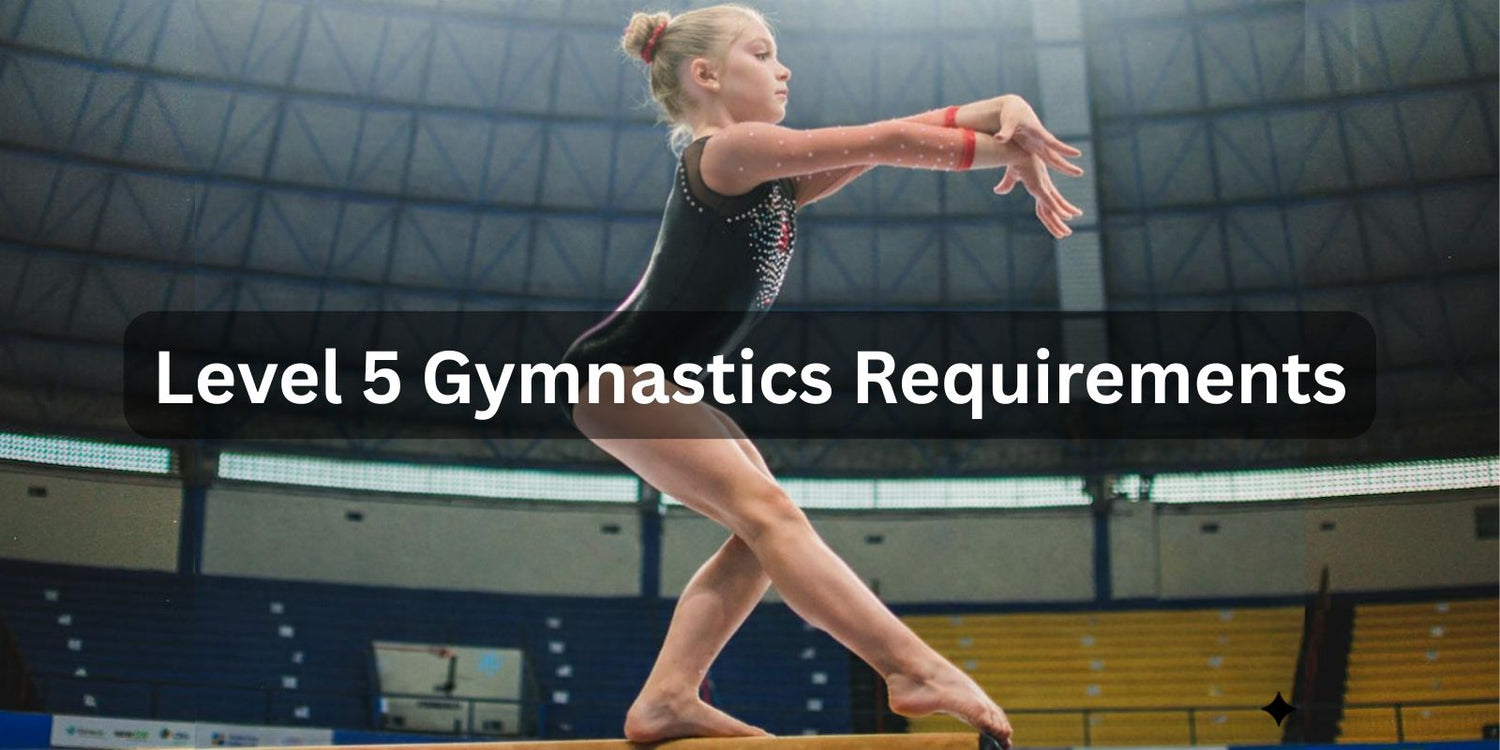
Level 5 gymnastics is the second required Gymnastics Levels in the national development pathway and one of the most important steps before optional gymnastics. In 2026, athletes must show strong basics, clean compulsory execution, and the readiness to perform standardized routines across vault, bars, beam, and floor. For most families, this level is where strength, confidence, form, and consistency begin to matter as much as simply having the skill.
Key Takeaways
- Level 5 is a required compulsory level that bridges Level 4 fundamentals and the more individualized demands of optional gymnastics.
- Gymnasts usually need to be at least 7 years old and earn the required mobility score from Level 4 before entering sanctioned Level 5 competition.
- Success at Level 5 depends on execution, rhythm, body tension, and consistency, not just on whether a gymnast can perform the skills.
- Bars, beams, and floor often become the biggest challenge areas because they require strength, timing, confidence, and clean routine connections.
- The best Level 5 programs combine technical coaching, conditioning, mental preparation, and safe progressions so athletes are prepared for both competition and long-term development.
What Is Level 5 Gymnastics?
Level 5 is a critical milestone within the national gymnastics development program. As the second required competitive level, it serves as a compulsory stage where all gymnasts perform the same routines to standard music and standardized choreography.
This level matters because it verifies that athletes have built the strength, body shape, timing, and technical discipline needed before moving into optional gymnastics. At the optional levels, routines become more individualized, but Level 5 ensures those routines are built on dependable fundamentals rather than rushed skill progression.
Why Level 5 Matters in 2026
In 2026, Level 5 remains the essential bridge between foundational, compulsory gymnastics and higher-level optional competition. Athletes in this tier are typically age 7 and up, and they are expected to demonstrate stronger technique, tighter body tension, better landings, and more polished presentation than in earlier levels.
For many gymnasts, Level 5 is the first stage where the sport starts to feel truly competitive. Scores become more dependent on execution quality, rhythm, posture, and confidence under pressure. Mastery here supports safer progressions into stronger tumbling, more advanced bar work, bigger beam skills, and more complex routine construction later on.
About Indigo Gymnastics
For families looking for a structured and supportive training environment, a program such as Indigo Gymnastics represents the type of setting that can prepare athletes well for Level 5. Strong developmental programs typically focus on safe skill progressions, consistent fundamentals, event-specific conditioning, and emotional resilience alongside technical training.
While every gym has its own coaching style and team culture, the best Level 5 environments usually share the same priorities: safety, repetition, progression, accountability, and healthy communication with families.
General Level 5 Eligibility Requirements
Age and Membership Requirements
To compete at Level 5 in 2026, a gymnast typically must be at least 7 years old before the first sanctioned competition. The athlete also needs an active competitive membership with the governing organization in order to participate in official meets.
Families should always confirm exact eligibility details with their gym and current season materials, since administrative requirements, mobility procedures, and meet policies can vary by program and governing updates.
Skill Readiness and Assessment
Readiness for Level 5 is not based only on whether a gymnast can complete an isolated skill. Coaches also evaluate body tension, leg form, pointed toes, rhythm, control, and the athlete’s ability to repeat the skill safely under fatigue and pressure.
A gymnast may look ready in practice on a good day but still need more time if landings are inconsistent, casts are low, leaps do not reach the required angle, or confidence drops during full routines. That is why many programs use internal readiness checklists before moving an athlete onto the Level 5 competition roster.
Score Mobility
Because Level 5 is a required stage in the competitive pathway, entry is usually tied to prior Level 4 performance. In most cases, gymnasts must complete Level 4 and achieve the required mobility score at a sanctioned meet before moving up.
For many families, this mobility benchmark is one of the first major questions when planning the season. It is best to view the score as a readiness filter, not the final goal. A gymnast who barely reaches mobility may still need additional time to become truly competitive and confident at level 5.
Women’s Artistic Gymnastics Level 5 Event Requirements
Vault
Allowed Vaults at Level 5
The standard Level 5 vault is the front handspring over the vault table. To perform it well, a gymnast needs a fast run, a controlled hurdle, an efficient board contact, and an aggressive block through the shoulders.
A vault at this level is not just about getting over the table. Judges want to see a clean body line, visible flight, and enough power to create both height and distance from the table to the landing.
Scoring Emphasis
Judging the vault in 2026 places strong emphasis on body position and the two flight phases. Common deductions include bent arms on contact, piking through the hips, weak repulsion, poor distance, and unstable landings.
Because a vault happens quickly, even small technical flaws become easy to spot. A gymnast with a fast run but weak block may still lose significant tenths if the shape and landing control are not there.
Training Focus
Good Level 5 vault training usually starts with shapes and speed development. Coaches often build the front handspring through handstand flat back drills, board punch mechanics, blocking drills, sprint work, and repeated body-tension training.
At strong developmental programs, vault progress is usually tied to consistency rather than occasional power. The goal is to produce the same safe and efficient vault over and over, not just one good attempt.
Uneven Bars
Required Skills and Elements
The Level 5 uneven bars routine demands a combination of upper body strength, timing, rhythm, and technical precision. Common core elements include the glide kip, cast, clear hip circle, squat on, jump to high bar, long hang kip, and flyaway dismount.
For many athletes, bars become the most technically demanding event at this stage because every mistake affects the next skill. A weak glide, bent-arm kip, or short cast can break the flow of the routine and lead to multiple connected deductions.
Routine Composition Rules
Because Level 5 is compulsory, athletes must perform the prescribed routine in the correct sequence. Judges are not just evaluating whether the skills are present; they are evaluating whether they are connected with the expected rhythm, timing, and control.
This makes bars a true test of preparation. Gymnasts must learn to move continuously, manage grip and swing timing, and maintain form even when fatigue starts to build late in the routine.
Execution and Common Deductions
Typical deductions include bent arms on kips, low casts, form breaks in clear hip circles, extra swings, leg separation, flexed feet, and short flyaway dismounts. Clean line and amplitude matter throughout the routine, especially on casts and circling elements.
The athletes who score best on bars are usually not the strongest only; they are the ones who combine strength with rhythm. Level 5 bars rewards athletes who can stay connected, efficient, and composed from start to finish.
Instruction Notes
To build strong Level 5 bars, coaches often rely on targeted progressions rather than endless full routines. These progressions may include glide swing drills, kip shaping, clear hip drills on a strap bar, cast handstand shaping, and event-specific core training.
This approach helps gymnasts develop the endurance and technical feel needed for a full compulsory routine. It also reduces the habit of muscling through skills with poor form.
Balance Beam
Required Components of a Level 5 Beam Routine
The Level 5 beam routine tests balance, body control, presentation, and courage. Key requirements generally include an acrobatic series, leap and jump elements, a full turn, and a compulsory dismount performed within the required routine pattern.
Beam at this stage is often where physical readiness and emotional readiness meet. A gymnast may have the skill physically but still lose tenths if the performance becomes hesitant, tight, or disconnected on the apparatus.
Routine Structure and Time Limits
Gymnasts must memorize the exact compulsory choreography and complete the routine within the allowed time. Dance positions, arm placements, acro timing, and general rhythm all matter.
This is why beam preparation is not only about skill repetition. It also requires routine pacing, presentation quality, and the ability to stay focused after a wobble or mistake.
Judging and Deductions
Common beam deductions include wobbles, pauses, bent knees, low split positions, incomplete turns, rhythm breaks, and falls. Judges also pay attention to posture, confidence, and whether leaps and jumps reach the expected split position.
Because the beam is narrow and unforgiving, even a minor check can affect the look of the whole routine. Athletes who score well usually show not just balance, but commitment and continuity.
Training Strategies
Beam confidence is usually built progressively. Many programs begin with line work, floor beam drills, low beam repetition, visualization, and series training before expecting athletes to complete the full routine confidently on high beam.
For home support, families can help with safe basics such as flexible work, body positions, leap drills on the floor, and turn preparation under appropriate guidance. High-risk acro skills should remain coach-supervised.
Floor Exercise
Required Elements
Level 5 floor combines power, flexibility, rhythm, and presentation. The routine generally includes front tumbling, back tumbling, dance passage elements, turns, and compulsory choreography performed to the official music.
This event often becomes one of the most visible tests of overall readiness because it blends athletic power with polish. Gymnasts need both explosive mechanics and enough control to make the routine look intentional rather than rushed.
Music and Choreography
Athletes perform to official compulsory music, and the timing of skills and dance sequences matters throughout the routine. From the opening pose to the final finish, the routine is judged as a complete performance rather than a series of disconnected skills.
This means that floor training at Level 5 is not only about tumbling passes. It also requires attention to expression, rhythm, arm positions, transitions, and confidence in presentation.
Execution Standards
Judges look for secure landings, straight legs, pointed toes, dynamic rebounds, and clean split positions in dance elements. Tumbling should show amplitude and control, especially on the stronger backward pass.
Floor tends to reward athletes who can maintain quality from beginning to end. Even strong tumbling can lose value if dance elements are weak, turns are unstable, or landings become uncontrolled.
Building Level 5 Floor Routines
Programs preparing athletes well for Level 5 floor usually combine shaping drills, rebound work, flexibility training, dance instruction, trampoline progressions, and tumbling basics done with high repetition. The best results come when athletes train power and presentation together rather than treating them as separate tasks.
Scoring, Judging, and Competition Format
How Level 5 Routines Are Scored
Level 5 compulsory routines generally begin from the standard maximum start value when all required elements are present and performed in the prescribed way. Judges then take deductions for errors in form, amplitude, rhythm, technique, and landing control.
This is where many families notice a major shift from earlier levels. At Level 5, scoring starts to punish weak basics more consistently, so form and execution can influence results just as much as skill completion.
Meet Format and Competition Season
A typical Level 5 meet includes a warm-up phase followed by timed event rotations on vault, bars, beam, and floor. Athletes compete locally during the season and may progress toward state-level competition if they achieve the required scores for their region.
Understanding meal flow can help families support athletes more effectively. Competition success at this level depends not only on skills but also on managing warm-ups, nerves, pacing, and recovery between events.
Qualifying Scores and Advancement
State meet qualification standards are often set at the state or regional level, so required scores can vary. Advancement beyond Level 5 generally depends on both skill mastery and consistently meeting performance, not simply on age or time in the sport.
For that reason, the strongest long-term approach is not to rush out of Level 5. A gymnast who finishes this level with strong basics, clean technique, and competitive confidence is usually better prepared for future success than one who moves on with gaps in execution.
Physical Preparation and Conditioning
Strength Requirements for Level 5
Level 5 athletes need real event-specific strength. Bars require pulling power, shoulder stability, and core compression. Vaulting and flooring require speed, leg drive, and force transfer. Beam requires postural control, leg stability, and repeatable balance under fatigue.
Common conditioning priorities include pull-ups, hollow holds, leg lifts, arch work, rope climbs, rebound drills, jump series, and event-specific shaping. The goal is not simply general fitness but usable gymnastics strength.
Flexibility and Injury Prevention
Flexibility remains essential at this level, especially for leaps, jumps, shoulder extension, and bridge-related positions. Athletes also need active flexibility, which means being able to control positions rather than only reach them passively.
Injury prevention becomes more important as training hours and intensity increase. Consistent warm-ups, mobility work, landing mechanics, recovery habits, and coach-supervised progressions all support safer development across the season.
Approaching Conditioning
The most effective Level 5 programs integrate conditioning into regular event training instead of treating it like a separate afterthought. That usually means core shaping on bar days, jump and rebound work on floor days, and balance plus ankle stability work on beam days.
At home, families can best support progress with basic flexibility, low-risk shaping drills, recovery routines, and schedule consistency. More is not always better. Quality, safety, and avoiding burnout matter more than piling on extra volume.
Mental and Emotional Readiness
Handling Pressure at Level 5
The jump to Level 5 often brings higher expectations, stricter judging, and more noticeable performance pressure. Gymnasts need to learn how to manage nerves, recover from mistakes, and refocus quickly during a meet.
This emotional growth is part of the level, not separate from it. An athlete who can reset after a wobble, stay composed after a missed kip, or finish a floor routine with confidence is developing an important competitive skill.
Goal Setting and Progress Tracking
Strong goal setting at Level 5 usually works best when it is specific and process-based. Instead of focusing only on medal placement or final score, athletes can track concrete targets such as cleaner casts, stronger landings, steadier turns, or improved leap angles.
Skills charts, routine checklists, and seasonal progress notes can help gymnasts and parents see real development even when scores fluctuate. This makes improvement easier to measure and keeps motivation tied to growth.
Parent and Training Staff Support
Parents and coaches play a major role in shaping the athlete’s experience at this stage. The best support usually comes from clear communication, realistic expectations, and praise that recognizes effort, resilience, and healthy progress rather than score alone.
A family does not need to understand every technical deduction to be helpful. It is often more useful to support routines, recovery, nutrition, scheduling, and confidence in a consistent, calm way.
Choosing the Right Gym for Level 5 Training
What to Look For in a Level 5 Program
A strong Level 5 program should prioritize safety, skill progression, conditioning, communication, and athlete well-being. Families should look for qualified coaching, appropriate spotting standards, structured drills, well-maintained equipment, and a team culture that balances discipline with encouragement.
The best gym is not always the one pushing the most advanced skills the fastest. It is usually the one that develops sound basics, protects confidence, and prepares athletes for long-term success.
Questions to Ask Prospective Gyms
When evaluating a program, families should ask practical questions such as the following:
- How many hours per week do Level 5 athletes typically train?
- How does the program decide when an athlete is ready to compete?
- What is the approach to fear, inconsistency, or skill regressions?
- How are parents updated during the season?
- How does the gym balance competition goals with athlete health and school life?
These questions often reveal more than marketing language alone. They help families identify whether a program is structured, transparent, and development-focused.
Spotlight on Indigo Gymnastics
A gym such as Indigo Gymnastics can stand out when it combines technical preparation, conditioning, routine consistency, and emotional support in one clear developmental system. For families moving from Level 4 into Level 5, that kind of structure can make the transition smoother, safer, and more rewarding.
Frequently Asked Questions About Level 5 Gymnastics
At what age do most gymnasts compete in Level 5?
Gymnasts must generally be at least 7 years old to compete, but many athletes compete at Level 5 between ages 8 and 12 depending on readiness, coaching philosophy, and the pace of development.
How long do athletes usually stay in Level 5?
Many gymnasts spend one full competitive season at Level 5. Some may need longer to build consistency, while others progress more quickly once their execution and confidence become reliable.
Can a gymnast skip Level 5?
Level 5 is typically a required compulsory level in the traditional development pathway. In some situations, athletes may move efficiently through the level structure if they meet mobility and program requirements, but families should always confirm current rules with their gym and governing body materials.
What score is generally needed to move into Level 5?
In many cases, a gymnast must first complete Level 4 and earn the required mobility score at a sanctioned meet. Coaches usually also consider readiness beyond the score itself, including form quality, physical strength, and routine consistency.
How can parents help at home?
Parents can best help with safe, low-risk support such as stretching routines, shaping basics, recovery habits, and a positive training environment. Higher-risk skills, especially tumbling, beam acro, and bar elements, should stay under qualified supervision.
Summary and Next Steps
Level 5 gymnastics in 2026 is where strong basics must start holding up under real competitive pressure. Athletes who build clean, compulsory routines, event-specific strength, confidence, and consistent execution at this stage are usually far better prepared for optional gymnastics later on. For families, the smartest next step is to focus on safe progressions, patient development, and a gym environment that values both performance and long-term athlete growth.


Leave a comment
This site is protected by hCaptcha and the hCaptcha Privacy Policy and Terms of Service apply.