
Table of Contents
- What Kids Really Need from a Floor Surface
- Overview of Each Option
- Safety and Support: Cushioning and Protection
- Practical Factors: Space, Portability, and Cleaning
- Cost and Durability
- Matching Mat Type to Your Child and Space
- Safety and Material Considerations
- Quick Comparison Summary
- How to Decide: A Simple Step-by-Step Checklist
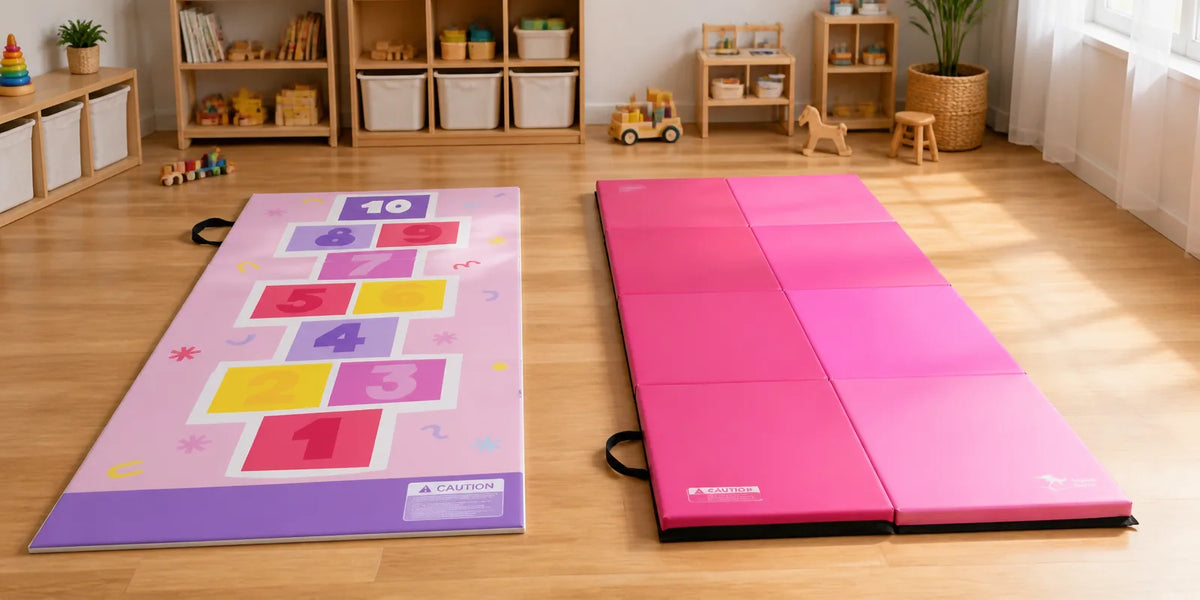
Choosing the right mat for kids comes down to one simple rule: match the surface to your child’s age, activity level, and space. Play mats are best for babies and quiet floor time; tumbling mats are best for rolls, jumps, and beginner gymnastics; and foam tiles are best for affordable room coverage rather than true impact protection.
Key Takeaways
- Play mats are best for babies, tummy time, crawling, and quiet everyday play.
- Tumbling mats provide firmer support and better impact absorption for rolls, cartwheels, and active movement.
- Foam tiles work well for covering larger play areas, but they are not the best choice for repeated tumbling practice.
- The safest option depends on both age and activity, not just softness.
- Many families get the best result by combining two surfaces, such as foam tiles for the room and a foldable tumbling mat for active play.
What Kids Really Need from a Floor Surface
Before comparing mat types, focus on what the surface actually needs to do for your child and your home. The right flooring should improve safety, support development, stay easy to clean, and fit your real space and budget.
Safety and Impact Absorption
A mat should reduce everyday bumps and help protect against falls during sitting, crawling, walking, and active play. Higher-impact activities need denser support, not just a softer feel.
Age Appropriateness
A newborn doing tummy time needs a very different surface from a preschooler practicing forward rolls. Choosing by age and movement stage prevents both overbuying and underprotecting.
Cleanliness and Maintenance
Kids’ mats need to handle spills, drool, snacks, and dirty feet without becoming difficult to maintain. Easy-wipe-down surfaces or washable covers make daily use much more practical.
Space and Storage
Some families need a defined play zone in a living room, while others need a full playroom floor solution. Storage matters just as much as footprint if the mat needs to disappear after use.
Budget and Durability
The cheapest option is not always the best long-term value. A mat that matches your child’s activity level usually lasts longer, performs better, and avoids the need for a quick replacement.
Overview of Each Option
Play Mats
Play mats are soft padded surfaces designed mainly for infants and toddlers. They create a comfortable everyday area for floor time, crawling, early standing, and quiet play.
Most play mats use softer foam or cushioned fill with a fabric, PU, or wipeable outer layer. Many modern options are designed to look more like rugs or neutral nursery pieces, which makes them especially appealing in shared living spaces.
Best For
- Babies and young toddlers
- Tummy time
- Crawling
- Early standing
- Reading corners and quiet play zones
Main Strengths
- Soft and comfortable for floor-based play
- Usually lightweight and easy to move
- Often more attractive in living rooms and nurseries
- Good choice for low-impact daily use
Main Limits
- Usually not supportive enough for repeated tumbling
- Softer surfaces may compress under harder falls
- Some styles can slide on smooth floors if not anchored well
Tumbling Mats
Tumbling mats are thicker, firmer mats designed for active movement and beginner gymnastics at home. They are the best fit for kids who are rolling, jumping, practicing cartwheels, or using the mat for higher-energy play.
Most tumbling mats use high-density foam with a durable vinyl or PVC cover. Foldable panel designs and hook and loop connections make them practical for storage and for expanding a practice area over time.
Best For
- Toddlers with high activity levels
- Preschool and school-age kids
- Beginner gymnastics
- Rolls, cartwheels, jumps, and martial arts drills
- Families who want a home gymnastics floor mat option
Main Strengths
- Better impact absorption for dynamic movement
- Firmer support helps reduce bottoming out
- Durable wipe-clean surface
- Foldable designs work well for storage and travel
Main Limits
- Bulkier than a standard play mat
- Less decorative in shared living spaces
- Usually costs more than basic foam tile setups
Foam Tiles
Foam tiles are interlocking EVA floor pieces that create a modular cushioned surface. They are often the most budget-friendly way to cover a larger area or an awkward room layout.
These tiles come in many thicknesses, textures, and colors. They work well in playrooms, basements, and multi-use spaces, especially when families want flexible coverage rather than one fixed mat.
Best For
- Large playroom coverage
- Budget-conscious setups
- Basement floors
- General play spaces
- Layering under other mats or play equipment
Main Strengths
- Easy to size for different rooms
- Affordable for larger areas
- Good basic cushioning for general play
- Individual sections can often be replaced
Main Limits
- Seams can trap crumbs, dust, and spills
- Chewable edges may be a concern for teething babies
- Not ideal as a dedicated landing surface for repeated tumbling
- Setup and reassembly take more effort than a foldable mat
Safety and Support: Cushioning and Protection
Thickness and Shock Absorption
Thickness alone does not tell the whole story because density matters too. A thick mat that is too soft may feel comfortable at first touch but still fail to protect well during repeated landings.
Play mats usually provide soft to medium cushioning that works well for sitting, crawling, and gentle play. Foam tiles vary more widely, and while they can soften a hard floor, thinner versions often do not provide enough support for active tumbling.
Tumbling mats offer a firmer and denser structure that is better suited to jumps, rolls, and cartwheels. This is why they are often the safer home choice for kids doing beginner gymnastics movements.
Surface Traction and Slip Resistance
Traction becomes more important as children begin standing, running, and changing direction quickly. A surface that is too slick or that shifts underfoot can create a new safety problem.
Play mats may be soft and skin-friendly, but some smooth-backed styles move on hardwood or tile. Tumbling mats and many foam tiles use textured surfaces that generally offer better grip for active play.
Age and Development Stage
Babies usually benefit most from a softer surface that feels comfortable during long stretches of floor time. Toddlers need cushioning for falls, but they also need enough stability for walking, climbing, and quick changes in direction.
Once children begin practicing rolls, donkey kicks, cartwheels, or other gym-style movements, a firmer tumbling mat becomes the better option. A plush play mat may feel nice, but it is often not the safest surface for repeated impact.
Practical Factors: Space, Portability, and Cleaning
Space and Layout
Your room setup often decides the best mat just as much as your child’s age does. A small nursery corner needs a different solution from a basement playroom or a shared family room.
Play mats are excellent for creating a defined soft zone without taking over the room. Tumbling mats work best when you can lay out a longer rectangular practice area, while foam tiles are strongest when you need wall-to-wall or room-scale coverage.
Storage and Portability
If you need to move the mat often, portability matters. A floor solution that works beautifully when set up full time may be frustrating if it must be packed away every evening.
Play mats are usually the easiest to roll, fold, or move between rooms. Tumbling mats are bulkier but still practical because they fold into panels, while foam tiles are the least convenient to repeatedly take apart and rebuild.
Cleaning and Maintenance
Easy cleaning is essential in any kid-focused setup. Surfaces that look good but trap messes quickly become high maintenance.
Play mats often feature wipeable tops or washable covers that work well for daily family use. Tumbling mats are usually very easy to wipe clean, while foam tiles require more attention because dirt and crumbs tend to collect around the seams.
Cost and Durability
Typical Price Ranges
Foam tiles are often the most affordable choice for large spaces. Play mats usually land in the budget to midrange category, while tumbling mats tend to cost more because of their denser core and stronger outer cover.
The right value depends on the job the mat needs to do. Spending less on a surface that cannot safely handle your child’s activity level often leads to a more expensive upgrade later.
Lifespan and Wear
Basic foam tiles can show edge wear, punctures, or bite marks over time. Play mats can flatten if they receive heavy daily impact beyond their intended use.
Tumbling mats are built for more demanding movement and usually hold up better under repeated rolling, jumping, and practice. For active families, that extra durability often makes them the smarter long-term investment.
Matching Mat Type to Your Child and Space
If You Have a Baby
A play mat is usually the best fit for babies from birth through the early crawling stage. It provides a soft, comfortable, easy-to-clean surface for tummy time, rolling, and early movement.
If you want more floor coverage, foam tiles can work underneath or around the play zone. This setup can add extra cushion while keeping the room more flexible.
If You Have a Toddler
Toddlers often benefit from either a play mat or foam tile setup, depending on how active they are and how much space you need to cover. A stylish play mat works well for a defined zone, while foam tiles make more sense for a larger room where running and falling happen often.
If your toddler is especially active and already starting to roll, jump, or imitate gymnastics movements, a short foldable tumbling mat may become useful sooner than expected.
If You Have an Active Kid or a Beginner Gymnast
A tumbling mat is the best choice for children who are practicing cartwheels, forward rolls, handstand drills, or other higher-energy movements. It provides the firmer landing support and traction that a soft baby mat or basic foam tile floor usually cannot match.
Foam tiles can still play a supporting role around the mat or throughout the room. They work best as surrounding floor coverage rather than as the main training surface for repeated skills.
Shared or Multi-Use Spaces
Many families need one room to serve several purposes throughout the day. In those homes, the smartest choice is often a combination setup rather than one single product.
A decor-friendly play mat can stay out full time in a living room or nursery. A foldable tumbling mat can then be stored away and pulled out only when it is time for active practice.
Safety and Material Considerations
Always look for non-toxic materials and clear product safety information before buying any mat for kids. BPA-free, phthalate-free, and heavy-metal-tested materials are especially important for babies and toddlers who spend time close to the surface.
Also pay attention to edges, seams, and stability. Foam tile edges may become a chewing or tripping issue, and any mat that slides on the floor can reduce safety instead of improving it.
If your child has skin sensitivities or allergies, compare cover materials carefully before choosing. If your child will be landing from jumps or practicing gymnastics skills, make sure the surface is firm enough to support movement without feeling overly hard or unstable.
Quick Comparison Summary
| Feature | Play Mats | Tumbling Mats | Foam Tiles |
|---|---|---|---|
| Cushioning Level | Soft to Medium | High Density / Firm | Varies (Thin to Medium) |
| Best Age Range | Babies & Toddlers | Toddlers & Older Kids | All Ages |
| Ideal Activities | Tummy time, crawling, quiet play | Jumping, rolling, cartwheels | General play, room coverage |
| Space Type | Small to Medium | Medium (Rectangular footprint) | Large / Whole Room |
| Storage Ease | High (Rolls/Folds) | Medium (Folds but bulky) | Low (Requires disassembly) |
| Works as a Gymnastics Floor Mat? | No | Yes | Only for light use |
How to Decide: A Simple Step-by-Step Checklist
1. Identify the main use.
Start by deciding whether the space is mainly for baby floor time, general play, active tumbling, or a mix of several uses. The best mat is the one that matches the highest-impact activity your child will actually do.
2. Measure your space.
Check whether you need a defined mat zone or a larger room coverage solution. Small shared spaces usually benefit from play mats or foldable tumbling mats, while larger playrooms often work better with foam tiles.
3. Match the surface to your child’s movement level.
Choose softness for comfort-based activities and firmer support for active landings. A child practicing cartwheels needs a different surface from a child doing tummy time.
4. Set a realistic budget.
Think beyond the initial price and consider durability, cleaning, and how long the mat will remain useful. A product that lasts through multiple stages often gives better value than the cheapest short-term option.
5. Choose the main type
If you mainly want softness and style for babies or toddlers, choose a play mat. If you need support for tumbling, rolling, and active movement, choose a tumbling mat. If you need affordable room-scale coverage, choose foam tiles.
6. Double-check materials and safety.
Confirm non-toxic materials, grip, surface stability, and practical cleanability before buying. Safety details matter just as much as thickness or appearance.
FAQs
What is the best kids floor mat for a crawling baby?
A soft play mat is the best choice for a crawling baby. These mats provide comfortable cushioning for tummy time and gentle everyday play. They usually feature easy to clean surfaces that handle spills well. They fit beautifully in shared living spaces while protecting your little one from hard floors.
Are foam tiles safe for a child practicing gymnastics on a kids floor mat?
No, foam tiles are not safe enough for repeated gymnastics practice. You should choose a firm tumbling mat instead. Tumbling mats use dense foam to absorb impact safely during rolls and cartwheels. Thinner foam pieces often bottom out and cannot properly support a child doing high energy movements at home.
How do I cover a large playroom with a budget kids floor mat?
Interlocking foam tiles are the most affordable way to cover a large playroom floor. These modular pieces let you customize the size and shape to fit any awkward room layout. They offer good basic cushioning for general play and allow you to easily replace individual sections if they get damaged.
Which kids floor mat is the easiest to clean daily?
Play mats and tumbling mats are the easiest options to clean daily. Both types usually have smooth outer layers that you can wipe down quickly. Foam tiles require much more effort because crumbs and spills easily get trapped inside the connecting seams scattered across your entire play room floor space.
Can I use a kids floor mat in a shared living room?
Yes, you can successfully use these mats in a shared living room. Many modern soft mats look like neutral rugs and blend seamlessly into your home decor. You can also buy foldable tumbling panels that slide perfectly under a sofa or into a closet when your children finish playing.
Final Recommendation
There is no single best mat for every child or every home. Play mats are best for babies and quiet floor time; tumbling mats are best for active movement and beginner gymnastics; and foam tiles are best for flexible room coverage on a budget.
For many families, the smartest solution is to start with the surface that fits your child’s current stage and add another layer later if activity increases. A well-chosen mat improves safety, supports confidence, and makes everyday play far more enjoyable.

Leave a comment
This site is protected by hCaptcha and the hCaptcha Privacy Policy and Terms of Service apply.