

Table of Contents
Gymnastics is a sport defined by precision, body control, and aesthetic form. While the flips and twists often grab the spotlight, the true essence of the sport lies in the ability to manipulate the body into specific, controlled positions. These fundamental body "shapes" serve as the absolute foundation for all gymnastics moves, from the simplest rolls to Olympic-level vaults.
Understanding these shapes is not just about looking good; it is about physics and biomechanics. Every complex skill is essentially a combination of basic shapes performed in motion. This guide introduces these core positions, explains how to perform them correctly, and details why mastering them is crucial for every aspiring gymnast.
Safety Note:
Train new shapes and progressions with a qualified coach when possible. Warm up thoroughly, use a clear practice area, and stop if you feel sharp pain, dizziness, or loss of control. If you cannot hold a shape with clean form on the floor, do not attempt the dynamic skill that depends on it.
Key Takeaways
- Mastering straight, tuck, pike, straddle, hollow, and arch shapes builds safer, cleaner gymnastics skills faster.
- Shape, strength, and alignment drive rotation, swing, and stable landings across the floor and apparatus.
- Use clear pass standards: locked knees, pointed toes, ribs down, hips tall, tight core.
- Train shapes daily with short holds, rocks, and wall drills before dynamic work.
- Stop when the form breaks or pain appears, and progress only after you own the static version.
Why Basic Shapes Matter in Gymnastics Moves
Before attempting dynamic skills, a gymnast must understand static shapes. These positions build the necessary strength, flexibility, and body awareness required to move safely through the air. Holding a shape requires distinct muscle engagement, training the body to remain tight and controlled under pressure.
There is a direct connection between these basics and advanced gymnastics moves. A back tuck somersault is a tuck shape performed with rotation. A strong handstand depends on the straight body shape supported by a tight core. In practical terms, better shapes create faster rotation, cleaner swing timing, and more stable landings. Furthermore, mastering these forms increases safety. Correct alignment reduces strain on joints and helps landings absorb force properly, lowering injury risk.
Core Gymnastics Shapes (Static Positions)
Straight / Tuck / Pike / Straddle Family
1. Straight (Layout) Shape
The straight shape, often called a layout, is the most fundamental position in gymnastics. It requires the body to be completely extended in a straight line. Key alignment cues include keeping the head neutral between the arms, pressing the shoulders up toward the ears, squeezing the glutes to keep the hips flat, and pointing the toes. This shape is the basis for handstands and layout somersaults.
Pass Standard: ribs down, hips long, knees locked, toes pointed, and no arching through the low back.
2. Tuck Shape
In the tuck shape, the gymnast pulls their knees towards their chest while rounding the back. To perform this correctly, the legs should be bent, and the hands usually grasp the shins or knees. It is vital to learn how to enter and exit the tuck safely to generate rotation. Common gymnastics moves utilizing this shape include tucked jumps, forward and backward rolls, and tucked somersaults (flips).
Pass Standard: knees tight to chest, feet together, chin neutral, and tuck stays closed until the correct landing or opening cue.
3. Pike Shape
The pike is characterized by a sharp fold at the hips while the legs remain perfectly straight. This requires significant flexibility in the hamstrings and lower back. In a seated pike, the chest folds down toward the knees. In the air, the body folds forward. Examples of this shape in action include pike jumps, pike circles on the bar, and the pike sit.
Pass Standard: knees locked, hips fold first, toes long, and back stays long rather than collapsing into a rounded slump.
4. Straddle Shape
The straddle shape involves extending the legs wide apart while keeping the knees locked and toes pointed. Correct hip rotation is essential to allow the legs to open fully while maintaining an upright or folded posture. This shape is visible in straddle jumps, the straddle support on bars or rings, and the straddle L-sit.
Pass Standard: knees locked, toes pointed, legs open from the hips, chest proud or folded with control, and no bent knees.
Hollow and Arch Shapes
5. Hollow Body Shape
The hollow body is arguably the most important shape for power and stability. It involves lying on the back and lifting the shoulders and legs slightly off the floor, ensuring the lower back remains pressed firmly into the ground. This engages the core, glutes, and shoulders intensely. The hollow shape is critical for handstands, swinging on the uneven bars, and initiating tumbling takeoffs.
Pass Standard: low back connected, ribs down, glutes squeezed, legs together, shoulders slightly off the floor, no arching.
6. Arch (Superman) Shape
The arch, or "Superman" position, is the counterpart to the hollow. Lying on their stomach, the gymnast lifts their arms and legs off the floor, creating a gentle curve. Correct spinal alignment is key; the movement should come from the glutes and upper back, not just the lower back. This shape is essential for the blocking phase of back handsprings, front and back layouts, and various bar skills.
Pass Standard: glutes on, legs together, chest lifted with length, curve is smooth, and not a sharp bend in the low back.
Support, Dish, and Other Foundational Positions
7. Front Support (Plank)
The front support mimics a plank position. The gymnast supports their weight on their hands with straight arms, maintaining a straight line from shoulders to heels. Shoulders should be pushed down, and the core must be tight. This is the starting point for casts on bars, the press to handstand, and vaulting blocking.
Pass Standard: shoulders active, elbows locked, ribs down, hips long, no sagging at the waist.
8. Rear Support
In rear support, the gymnast sits with hands placed behind the hips, fingers usually pointing forward or backward depending on the apparatus. The hips are lifted until the body forms a straight line facing the ceiling. This strengthens the posterior chain and is used in floor work and bar routines.
Pass Standard: hips fully lifted, chest open, legs straight, shoulders stable, and no collapsing through the shoulders.
9. Dishes and Dish Variations
The dish is commonly taught as a hollow progression and a conditioning cue. It emphasizes a boat-like curve while keeping the ribs down and the core tight. Variations include holding the shape while rocking, adding flutter kicks, or moving between dish and tuck. Think of dish as a way to learn hollow control under fatigue and motion.
Pass Standard: same alignment as hollow, with steady breathing and no lower-back popping off the floor.
Dynamic Uses of Basic Shapes in Gymnastics Moves
Rolling Skills
Static shapes become dynamic gymnastics moves through rotation. In a forward roll, the tuck shape allows a smooth transition over the back. In a backward roll, the gymnast maintains a tight tuck and then transitions through a hollow position to push off the floor effectively. If the truck opens early, the roll becomes heavy and unstable.
Jumps and Leaps
Jumps are brief explosions of static shapes. A tuck jump is a tuck shape in mid-air. A straddle jump is a flying straddle. The quality of the jump is judged by how clearly the gymnast hits the defined shape at the peak before preparing for a safe landing. Clean shapes at the top usually mean cleaner landings at the bottom.
Handstands and Inversions
The handstand is a straight body shape inverted. Maintaining balance often requires small adjustments between straight and hollow control. A common error is the banana back, which happens when the gymnast loses core engagement and falls into an uncontrolled arc. Cue ribs down, glutes on, and push tall through the shoulders to restore the line.
Swinging and Rotating Skills
On bars and rings, the gymnast acts like a pendulum. They alternate between hollow and arch shapes to generate swing and power. This rhythm helps produce giants, flyaways, and other higher-level skills. The goal is timed shape change, not random bending.
Essential Gymnastics Equipment for Shape Training
To safely practice these foundational shapes and successfully transition to dynamic movements, utilizing proper training equipment is critical for joint protection and correct biomechanical alignment. Based on the specialized apparatus lines from Kangaroo Hoppers, here is a structured breakdown of the necessary gear to support your physical preparation and progression:
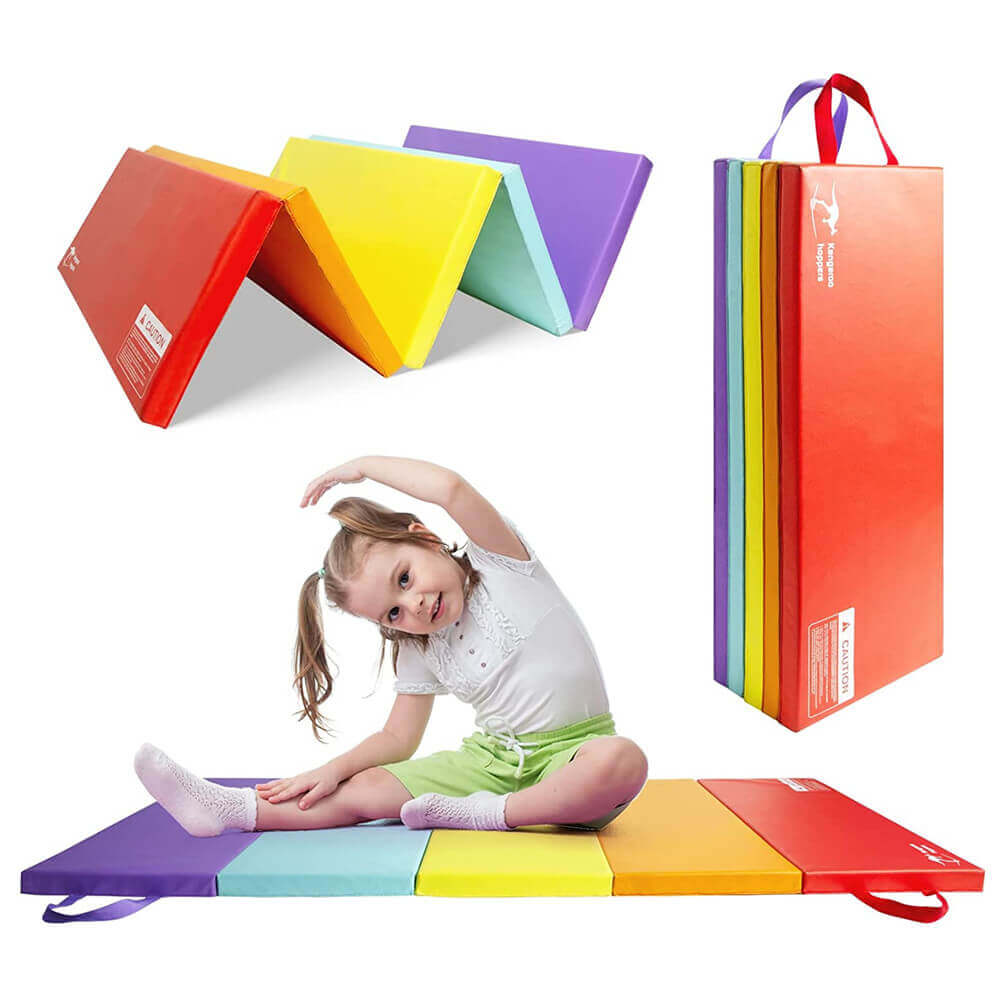
Gymnastics Panel Mats (Folding Mats)
- Purpose: Floor conditioning and basic rolling skills.
- Application: A high-density folding mat is the absolute baseline for shape training. Whether you are holding a hollow body, practicing a dismount, or executing basic forward and backward rolls, a supportive mat cushions the spine and joints. The result prevents bone bruising during prolonged static holds and ensures a safe surface for core drills.
Air Tracks (Inflatable Tumbling Mats)

- Purpose: Dynamic transitions and impact absorption.
- Application: When moving from static shapes to dynamic jumps, leaps, and tumbling passes, an Air Track is invaluable. Its adjustable air pressure provides enhanced rebound while absorbing the shock of landings, significantly reducing the repetitive impact stress on ankles, knees, and the lower back.
Practice Balance Beams (Floor or Adjustable)

- Purpose: Core stability and spatial awareness under balance constraints.
- Application: Perfecting the straight (layout), tuck, or straddle shape on a beam forces the body to engage stabilizing muscles that are often missed on the floor. Low-profile or adjustable balance beams allow athletes to safely practice their alignment and weight distribution without the injury risk associated with high falls.
Gymnastics Training Bars (Kip Bars)

- Purpose: Support shapes, hanging shapes, and pendulum mechanics.
- Application: For shapes that require suspension or upper-body support, such as the front support, hollow hang, or arch, a stable, adjustable training bar is essential. It allows for the safe repetition of the hollow-to-arch swings and the upper-body conditioning required for higher-level apparatus routines.
Equipping your practice space with these dedicated tools ensures that you can drill your static positions effectively, protect your musculoskeletal system during dynamic transitions, and build the physical resilience needed for a safe, long-term gymnastics journey.
Teaching and Learning the Basic Shapes
Progressions and Drills
Learning these shapes starts on the floor. Instructors often use floor drills where students hold a shape for a set time. Wall drills help correct alignment for straight and hollow shapes. Conditioning exercises, such as hollow rocks and arch holds, build the specific muscle memory needed to maintain these positions during movement.
Simple daily template
Do 2 rounds: hollow hold for 20 seconds, arch hold for 20 seconds, front support for 20 seconds, tuck hold for 15 seconds, and rest for 40 seconds.
Common Mistakes and Fixes
Beginners often struggle with bent knees and relaxed feet, which ruins the aesthetic and function of the shape. Another common issue is over-arching the back when attempting to be straight, which indicates a weak core. Losing shape during movement, such as opening a tuck too early in a flip, is a timing issue that requires repetitive drill work to fix.
Quick fixes: reduce the range, slow the tempo, hold the pass standard for 5 seconds, then add motion.
Integrating Shapes into Training Routines
Effective training integrates shape work into the daily warm-up. By dedicating time to perfect hollow, arch, and candlestick control before apparatus work, gymnasts prime their bodies for success. Coaches often cue shapes rather than individual body parts, using shapes as a shared language to correct complex gymnastics moves quickly.
Add a short shape warm-up before every session: 6 to 10 minutes of holds, rocks, and wall line drills.
Safety and Physical Preparation
Proper physical preparation is non-negotiable. A thorough warm-up prepares muscles for the ranges of motion required by pike and straddle positions. Holding these shapes also requires real strength. If a gymnast cannot hold a static shape with clean form on the floor, they are not ready to attempt the dynamic skill that uses it. Knowing when to stop a drill when form breaks is crucial for preventing injury.
Use a simple rule: if you lose the pass standard twice in a set, reduce the difficulty or end the drill for that shape.
FAQs
Why are basic gymnastics shapes important for beginners?
Mastering basic gymnastics shapes builds the necessary strength and body awareness for safe aerial movements. These static positions train your muscles to remain tight under pressure. Better shapes create faster rotation and cleaner swing timing. Correct alignment also reduces joint strain and lowers your overall injury risk.
How do you perform the hollow gymnastics shape correctly?
You must press your lower back firmly into the floor while lifting your shoulders and legs slightly. This position engages your core and glutes intensely. You should keep your ribs down and your legs together. You must stop the drill if your lower back pops off the ground.
What causes a bent back when practicing straight gymnastics shapes?
A bent back indicates a weak core and a loss of proper body tension. You fall into an uncontrolled curve when you fail to engage your core muscles. You can fix this by keeping your ribs down and squeezing your glutes. Pushing tall through your shoulders also restores the line.
When should you transition from static gymnastics shapes to dynamic skills?
You should only attempt dynamic skills after you can hold the static shape with clean form on the floor. Your knees must be locked and your toes pointed during the hold. You are not ready for aerial moves if you lose your body alignment during simple floor conditioning exercises.
How often should athletes practice fundamental gymnastics shapes?
Athletes need to integrate fundamental shape work into their daily warmups. You should dedicate time to perfect your hollow and arch control before using any apparatus. A daily session of short holds and wall drills primes your body for success. Consistent practice ensures a safer journey in the sport.
Conclusion
The basic shapes, tuck, pike, straddle, straight, hollow, and arch, are the building blocks for all gymnastics moves. While they may seem simple, their mastery separates the novice from the expert. Gymnasts should prioritize these fundamentals before rushing toward advanced skills. By practicing these shapes consistently in daily training, athletes build the foundation for a safer, stronger, and longer-lasting journey in the sport.


Leave a comment
This site is protected by hCaptcha and the hCaptcha Privacy Policy and Terms of Service apply.