
Table of Contents
A cheese mat in gymnastics is a wedge-shaped incline mat that helps kids learn rolls, handstands, bridges, and early tumbling skills more safely. In most cases, a cheese mat, wedge mat, and incline mat refer to the same piece of equipment, with the name "cheese mat" coming from its triangular shape. For parents, coaches, and beginners, it is one of the most useful training tools for building confidence, body awareness, and basic movement patterns at home or in class.
Key Takeaways
- A cheese mat is usually the same thing as a wedge mat or incline mat in gymnastics.
- The sloped shape helps kids learn forward rotation, backward movement, and body control with less fear.
- Cheese mats are useful for preschool movement, beginner gymnastics, cheer drills, conditioning, and home practice.
- Kids can practice rolls, handstand drills, bridge work, cartwheel progressions, and basic strength exercises on a cheese mat.
- The best cheese mat should match the child’s age, size, skill level, floor surface, and storage needs.
What Is a Cheese Mat in Gymnastics?
Basic Definition
A cheese mat is a triangular foam mat with an incline on one side and a flat base on the other. It is usually made with supportive foam, a durable vinyl cover, and a non-slip bottom to help keep the mat stable during practice.
The name comes from the way it looks. From the side, it resembles a wedge of cheese, which is why many parents and coaches casually call it a cheese mat instead of a wedge mat.
Purpose of a Gymnastic Cheese Mat
The main purpose of a gymnastic cheese mat is to make beginner skills easier to learn. The incline changes body angle, reduces fear, and helps children feel the direction of movement more clearly.
This matters because many early gymnastics skills depend on momentum, shape, and confidence. A wedge helps kids roll more smoothly, shift weight more naturally, and practice inversion with better support than a flat floor alone.
Where You Will Find Cheese Mats for Gymnastics
Cheese mats are common in preschool gymnastics classes, beginner tumbling programs, cheer training, physical education settings, and home playrooms. They are popular because one mat can support many drills without taking up as much room as larger tumbling mats.
For home use, a wedge mat is often one of the first gymnastics pieces parents buy. It works well for young children who are still building coordination, balance, flexibility, and comfort with going upside down.
Is a Cheese Mat the Same as a Wedge Mat?
Cheese Mat vs. Wedge Mat: Terminology
Yes, in most cases a cheese mat is the same as a wedge mat. You may also see the terms "incline mat," "gymnastics wedge," or "tumbling wedge," but they usually describe the same basic shape and function.
"Cheese mat" is the nickname. "Wedge mat" is the more product-focused term. "Incline mat" is the more descriptive training term. For most shoppers, they all point to the same category.
Minor Differences You Might See
Not every product is identical, even if the category is the same. When comparing a gymnastics cheese mat, you may notice differences in the following areas:
- Length and incline angle: A longer wedge creates a gentler slope, while a shorter wedge creates a steeper incline. Different slopes suit different heights, confidence levels, and skill progressions.
- Foam firmness: Lighter children often do well with slightly softer support, while older or heavier kids usually need firmer foam that holds shape better under repeated use.
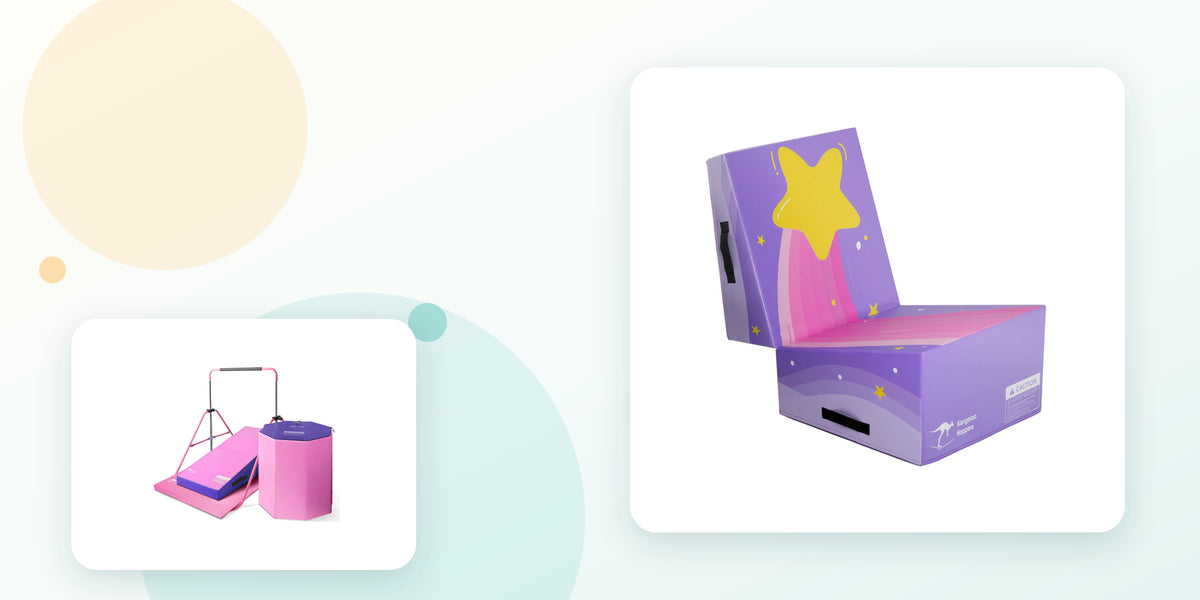
- Foldable or solid design: Some mats fold for easier storage and can double as a block for drills. Others are solid wedges with a smoother, uninterrupted incline.
- Size category: Toddler wedges, preschool wedges, and school-age wedges are often sold separately because children need different lengths, widths, and foam support.
These are product variations, not different equipment categories. The core idea remains the same.
Benefits of Using a Cheese Mat for Gymnastics
1. Safety and Confidence for Kids
A wedge mat can make early skill learning feel less intimidating. The slope supports movement, helps children understand direction, and lowers the fear that often comes with rolling backward or going upside down.
This confidence matters because young athletes learn better when they feel secure. A child who is less afraid is more likely to repeat the movement, improve body awareness, and build correct habits over time.
2. Technical Skill Development
A cheese mat does more than soften the floor. It helps children learn key shapes and positions that matter in gymnastics, such as tight body posture, hollow body control, tucked rotation, shoulder push, and balanced weight transfer.
For example, a downhill surface can make forward rolls smoother, while an uphill handstand walk-up drill can improve shoulder engagement and straight-line awareness. The mat becomes a teaching tool, not just a cushion.
3. Versatility Across Ages and Activities
Cheese mats are useful for toddlers, preschoolers, beginner gymnasts, and many recreational athletes. They can support gymnastics basics, cheerleading drills, tumbling preparation, movement games, animal walks, stretching, and general conditioning.
That versatility makes them a strong value item for both gyms and families. One wedge can be used for skill learning, active play, and physical development in many different ways.
What Skills Can Kids Practice on a Cheese Mat?
1. Basic Preschool and Beginner Skills
For very young children, the wedge helps turn movement into a clear and manageable path. It encourages momentum while still feeling controlled.
Common beginner drills include:
- Forward rolls: The incline helps children rotate more naturally and finish the roll with better flow.
- Downhill log rolls: These improve body awareness, coordination, and comfort with rotation.
- Backward rolls with support: The slope makes it easier for kids to shift their hips and understand the movement pattern.
- Walking, crawling, and sliding: These simple activities build balance, coordination, and confidence for toddlers and preschoolers.
- Bear walks and crab walks: These strengthen the shoulders, arms, core, and legs while improving movement control.
2. Handstands and Inversions
A wedge is a useful entry point for learning how to go upside down. It gives children a better angle for stacking the body and shifting weight into the hands.
Helpful inversion drills include:
- Handstand walk-ups: Hands stay on the floor while feet walk up the wedge, helping kids learn shoulder strength and straight body alignment.
- Belly to mat handstand holds: These teach tight posture and help children feel a more stable inverted position.
- Donkey kicks: These introduce jumping weight into the hands and improve confidence with inversions.
- Kick up drills: A wedge can make the transition into a handstand feel less abrupt and more controlled.
3. Bridges and Backbends
The incline can also support flexibility and back extension work. Many children find bridge practice easier when the body is placed on a slope instead of a flat surface.
Useful drills include:
- Bridge holds up the incline: This can reduce the feeling of compression and help children open the shoulders more comfortably.
- Bridge rocks and shoulder pushes: These build strength for later back walkover progressions.
- Backbend kickover drills down the wedge: The slope helps children feel momentum and direction as they work toward a more complete movement pattern.
4. Cartwheel and Round Off Progressions
Lateral skills can also improve on a wedge mat, especially when children are still learning rhythm, hand placement, and body direction.
Good drills include:
- Cartwheel entry drills: Children can practice side hand placement and leg path with better visual control.
- Downhill cartwheels: The slope can encourage faster rotation and smoother movement from hand to foot.
- Snap down basics: Older beginners can use the wedge to start understanding how the body moves down quickly from an inverted position.
- Early round-off preparation: The wedge can help introduce timing and body tension before full round-off practice on flat ground.
5. Backward and Forward Tumbling Progressions
As children become more advanced, the wedge still has value. It can support progressions that build strength, confidence, and directional awareness.
Examples include:
- Back walkover progressions: Starting from a bridge at the top of the wedge can help children learn the kickover path.
- Front walkover preparation: The incline can support the forward-reaching action and improve comfort with the movement.
- Rebound and snap-down drills: These help connect shapes and timing for future tumbling development.
- Back handspring shape drills: These are best used for body shaping, sitting action, and jumping mechanics, not unsupervised, full-skill attempts at home.
6. Strength, Conditioning, and Flexibility
A cheese mat is not only for tumbling. It can also be used for general physical development.
Practical exercises include:
- Climbing up the incline: This builds leg drive, coordination, and full-body effort.
- Animal walks: These improve strength, movement control, and spatial awareness.
- Hollow body holds and tuck-holds: These support key gymnastics shapes.
- Pike and straddle stretches: The wedge can help position the body for more comfortable flexibility work.
- Core control drills: Simple sit-ups, V-shape holds, and balance drills can all be adapted to the incline.
How to Choose a Cheese Mat for Gymnastics
Size and Age Appropriateness
The best cheese mat for gymnastics should match the child’s size and stage, not just the product photo or price. A very small wedge may be fine for a toddler, but it may feel too short or too steep for an older child learning larger movement patterns.
As a general rule, toddlers and preschoolers do well with smaller wedges for crawling, rolling, and simple balance play. School-age children usually need a longer and wider mat for cartwheels, handstand drills, and early tumbling progressions.
Quality and Safety Features
A good wedge mat should feel supportive, stable, and durable. Look closely at the details that affect real use:
- Non-slip bottom: This helps reduce sliding on hardwood, laminate, tile, or other firm surfaces.
- Supportive foam: The foam should hold shape well and not collapse too easily under repeated pressure.
- Strong cover material: Heavy-duty vinyl is easier to wipe clean and tends to handle long-term use better.
- Reinforced seams and stitching: These details matter because wedge mats are often pulled, climbed on, and folded repeatedly.
- Easy cleaning: This is especially important for home gymnastics setups and shared youth training spaces.
Foldable vs. Non-Foldable
Foldable gymnastic cheese mats are popular for home use because they store more easily and sometimes create a second training shape when folded. That can be useful for small rooms, closets, or multi-use play spaces.
A nonfoldable wedge may be better for dedicated training areas because it offers one continuous incline with no center fold line. For many families, the choice comes down to storage convenience versus uninterrupted training surface.
Safety Tips for Using a Cheese Mat
A cheese mat can support safer skill practice, but it does not make every movement safe in every setting. Supervision, progression, and setup still matter.
Use these safety basics:
- Always place the mat on a flat, clear surface.
- Check that the base does not slide before each session.
- Start with simple rolls, climbing drills, and beginner shapes before harder tumbling.
- Match the wedge size and firmness to the child using it.
- Use extra surrounding mats when practicing movements with more speed or height.
- Avoid treating a wedge mat like a full landing mat for repeated hard impacts.
- For walkovers, handspring progressions, or more advanced inversions, seek coaching or hands-on supervision.
A wedge is a progression tool, not a substitute for proper coaching.
FAQs
Is a cheese mat the same as a gymnastics wedge mat?
Yes, they are exactly the same training tool. The term "cheese mat" is simply a popular nickname based on the triangular shape of the equipment. Parents and coaches use this inclined mat to help young kids build confidence and learn basic tumbling skills with better body control.
What basic skills can children practice on a cheese mat?
Kids can practice forward rolls, backward movements, and handstand drills on this slope. The incline helps toddlers and beginners understand weight transfer and body rotation naturally. Practicing bridges and cartwheel progressions on the padded wedge makes early gymnastics conditioning much easier and less intimidating for young athletes.
How should parents choose the right size cheese mat?
You must match the wedge size to the age and skill level of your child. Toddlers need smaller wedges for simple rolling and crawling activities. School-age gymnasts require longer and wider mats to safely support advanced handstands, cartwheels, and tumbling progressions without sliding off the sturdy foam edge.
Should I buy a foldable or solid cheese mat?
You should buy a foldable mat for easier home storage and versatile block drills. A nonfoldable wedge provides a smoother incline without any center seam. Families with small rooms prefer folding designs, while dedicated training spaces benefit from the continuous surface of a solid tumbling wedge.
Are chair mats safe to use on hardwood floors?
Yes, they are generally safe if you purchase a model with a non-slip bottom. Hardwood floors require extra caution to prevent the equipment from sliding during active practice. Always ensure the base remains completely stable before letting children attempt any inverted skills or tumbling movements.
Conclusion
A cheese mat is one of the most practical beginner gymnastics tools because it helps children learn movement patterns with more confidence, better body awareness, and less fear. In most situations, a cheese mat and a wedge mat are the same thing, and the best one is the version that matches your child’s size, goals, and training environment. For rolls, handstands, bridges, cartwheel drills, and general coordination work, a quality wedge mat can be a smart and versatile choice.

Leave a comment
This site is protected by hCaptcha and the hCaptcha Privacy Policy and Terms of Service apply.