
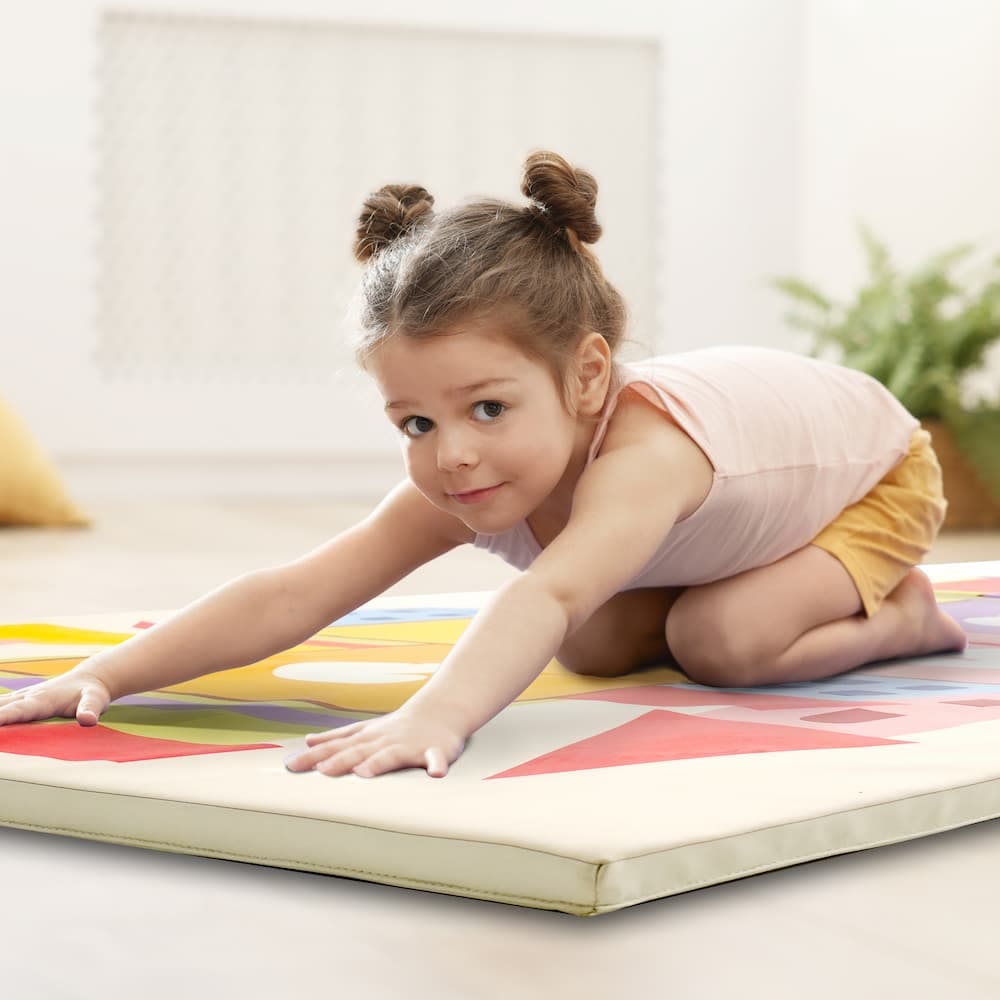
Yes, tumbling mats can be safe for toddlers when parents choose a firm, non-toxic, well-made mat and use it for supervised active play. A good mat can soften everyday bumps, support gross motor development, and make playrooms safer than hard floors alone. Still, no mat removes all risk. The safest setup depends on mat material, firmness, slip resistance, room placement, cleaning habits, and close adult supervision.
Key Takeaways
- Tumbling mats are generally safe for toddlers when they are firm, non-toxic, slip-resistant, and used with active supervision.
- The best toddler tumbling mats support walking, crawling, rolling, and climbing practice without being too soft or too slick.
- Parents should watch for safety risks such as exposed foam, loose closures, slippery bottoms, strong chemical odors, and gaps near walls or furniture.
- A mat works best as part of a safe play zone on a flat surface away from stairs, sharp edges, and elevated jumping hazards.
- Regular cleaning, inspection, and timely replacement are just as important as choosing the right mat in the first place.
Are Tumbling Mats Safe for Toddlers?
The short answer is yes. Tumbling mats are generally safe for toddlers when they meet appropriate safety standards and are used the right way. These padded surfaces can reduce the impact of normal slips, bumps, and tumbles during active indoor play.
That said, a tumbling mat is not a substitute for supervision, safe room setup, or age-appropriate play. It helps lower the risk of minor injuries, but it cannot prevent every fall or make risky behavior safe. Parents get the best results when they choose a high-quality mat, place it in a hazard-free area, and match activities to the child’s age, balance, and coordination level.
Potential Benefits of Tumbling Mats for Toddlers
Physical Development
Toddlerhood is a key stage for gross motor development. A supportive tumbling mat gives young children a softer place to practice rolling, crawling, standing, jumping, and beginner tumbling movements. This kind of active play helps build balance, coordination, body awareness, core strength, and confidence.
A mat can also encourage movement variety. Toddlers are more likely to explore climbing, turning, kneeling, and landing when the surface feels safer than wood or tile.
Better Protection Than Hard Floors
Compared with hardwood, tile, laminate, or concrete, a foam mat provides more shock absorption. That extra cushioning can help reduce bruises, minor bumps, scraped knees, and discomfort from typical toddler falls.
This is especially helpful in playrooms, bedrooms, daycare settings, and indoor activity corners where children move quickly and unpredictably.
Encouraging More Active Play
A tumbling mat can turn an empty corner into a safer movement zone. Instead of defaulting to quiet screen-based activities, toddlers can use the space for obstacle play, parent-child movement games, soft block play, stretching, and imaginative indoor exercise.
For many families, a mat also creates a visual boundary that tells the child where active play belongs. That can improve both safety and routine.
Safety Concerns Parents Should Know
Choking and Small Part Risks
Not every mat is made well. Lower-quality mats may have loose stitching, exposed zipper pulls, peeling surface layers, weak Velcro, or torn corners. Once the cover breaks, toddlers may pick at the foam or try to chew small pieces.
Before buying or using a mat, check that seams are tight, closures are covered, and no loose parts are within reach.
Suffocation and Entrapment Risks
A mat for toddlers should feel supportive, not overly plush. If the surface is too soft, a very young child may sink in too much, which is not ideal for face-down positioning or unsupervised rest. Tumbling mats are for play, not for overnight sleep.
Entrapment risks also matter. Fold lines, spaces between multiple mats, and gaps between the mat and nearby furniture can trap small hands, feet, or toes. A one-piece mat or a tightly aligned setup is often easier to manage for very young children.
Falls, Slips, and Trips
Some mats slide on smooth floors. Others have raised edges or corners that curl over time. Both can create tripping hazards. Stacking mats too high or placing them on rugs, uneven flooring, or unstable surfaces can make falls more likely.
For toddlers, the safest option is usually a single mat on a flat floor with a non-slip base and a lightly textured top surface.
Chemical and Allergen Concerns
Parents should pay attention to what the mat is made from, not just how thick it looks. Some foam products release strong odors after opening, especially if the materials are lower quality. Covers and foams may also contain ingredients parents prefer to avoid, such as phthalates, lead-based components, harsh dyes, or materials that irritate sensitive skin.
Look for clear labeling that states the mat is non-toxic and free from common concerning substances. Low odor is also a practical sign that the product may be a better fit for indoor toddler use.
Hygiene and Cleanliness
Toddlers bring snacks, drool, dirty feet, spills, and sticky hands everywhere. If a mat is hard to clean or allows moisture into the foam, it can become unhygienic fast. In home daycares, shared playrooms, or playdate settings, regular cleaning matters even more.
A good toddler tumbling mat should have a wipe-clean, water-resistant cover and sealed construction that helps keep liquids from soaking into the inside.
How to Choose a Safe Tumbling Mat for Toddlers
Material and Safety Certifications
Start with material quality. Choose a mat labeled non-toxic, BPA-free, phthalate-free, and lead-free whenever possible. Parents should also look for clear product information from brands that explain materials, intended use, and safety testing.
A mat with very little odor after opening is often a better choice for indoor family spaces. If a product has a strong chemical smell that lingers, that is a sign to be cautious.
Thickness, Firmness, and Support
For most toddlers, about 1 to 2 inches of thickness works well for general indoor play. The goal is balance. The mat should be cushioned enough to soften minor falls but firm enough to support standing and walking without sinking deeply.
If the mat is too soft, toddlers may wobble more and tire quickly. If it is too hard, it offers less protection and may not feel inviting for active play. A firm foam core with supportive cushioning is usually best for crawling, cruising, and beginner tumbling.
Surface Texture and Anti-Slip Features
The mat should stay in place during play. A non-slip backing is important on hardwood, tile, or laminate. The top should also provide enough traction for little feet and hands.
Very glossy finishes can feel slick. Extremely rough finishes can be uncomfortable for skin. Look for a lightly textured surface that supports grip without feeling abrasive.
Size, Shape, and Design
A toddler mat should provide enough room for rolling, crawling, and simple movement without constant edge contact. If the child easily tumbles off the side, the play area is too small.
Families should also think about layout. Foldable tumbling mats are convenient for storage, while one-piece mats can reduce pinch points and gaps. In smaller homes, a foldable design may be practical. In a permanent playroom, a larger flat mat may offer a cleaner setup.
Cover Quality and Construction
Durability matters because toddlers use mats hard. The cover should resist tears, wipe clean easily, and feel strong at the seams. Hidden zippers, covered closures, and reinforced corners are all helpful details.
A quality cover also supports long-term hygiene. Smooth, sealed surfaces are easier to wipe after messy play than soft fabric covers that absorb spills.
What Parents Should Check Before Buying
Use this quick buying filter before choosing a mat:
- Firmness: Can a toddler stand and walk without sinking too deeply?
- Slip resistance: Does the bottom help the mat stay stable on smooth flooring?
- Cover safety: Are zippers hidden and seams secure?
- Material quality: Is it labeled non-toxic and low-odor?
- Cleaning ease: Can parents wipe it down quickly after daily use?
- Fit for space: Does it cover enough floor area for the child’s actual play pattern?
- Use case: Is it intended for toddler play, not just older kids doing higher-impact tumbling?
Safe Setup and Everyday Use
Where to Place the Mat
Placement affects safety as much as the mat itself. Always place tumbling mats on a flat, level surface. Keep them away from stairs, fireplaces, sharp furniture corners, hard table edges, and unstable equipment.
It is smart to create a dedicated play zone. This could be in a bedroom, playroom, basement, homeschool room, or daycare corner. Keeping active play in one clearly defined area makes supervision easier and reduces random hazards.
Supervision and Age-Appropriate Play
Even the best mat cannot replace an attentive adult. Toddlers should always be supervised during active play, especially when climbing, jumping, or using nearby soft play equipment.
Activities should match the child’s developmental stage. A newly walking toddler needs a very different setup from a confident three-year-old. Keep house rules simple and consistent:
- No flips
- No diving
- No jumping from furniture onto the mat
- No rough pushing or wrestling
- No unsupervised play on stacked mats
Combining Mats with Other Equipment
Tumbling mats pair well with soft play blocks, climbing triangles, balance toys, and low toddler slides when used carefully. The key is height control. The higher the child climbs, the more serious the fall risk becomes.
Parents should avoid turning a mat into a crash surface for furniture jumping, indoor trampoline-style play, or unstable homemade obstacle courses. A mat is a safer landing surface for low-level active play, not a green light for risky setups.
Cleaning, Maintenance, and Replacement
Cleaning Routine
A regular cleaning routine keeps the mat safer and more pleasant to use. For daily care, wipe the surface with a damp cloth to remove dust, crumbs, and sticky marks. For deeper cleaning, use mild soap and water.
Avoid harsh cleaners that may damage the cover or leave behind residue that can irritate skin. After cleaning, let the mat dry completely before folding or storing it.
Inspection Checklist
Parents should inspect the mat often, especially in high-use spaces. Check for:
- Ripped or peeling cover material
- Exposed foam
- Loose seams or threads
- Broken or visible zipper parts
- Flattened or uneven foam
- Corners that curl up
- Lingering odor or signs of moisture inside
A quick visual check before play is a smart habit in homes with daily use.
When to Replace a Tumbling Mat
Foam breaks down over time. Replace the mat if it no longer feels supportive, has deep dents, smells musty, shows major tearing, or shifts around because the backing has worn out. Once the padding becomes uneven or the cover is compromised, the mat may create risk instead of reducing it.
FAQs
Are tumbling mats safe for toddlers to sleep on?
No, they should not be used for unsupervised or overnight sleep. A tumbling mat is designed for active play, not for toddler sleep safety. If a child falls asleep briefly during supervised daytime play, move them to an appropriate sleep surface as soon as possible.
What age can toddlers start using tumbling mats?
It depends on development more than a strict age number. Babies who are rolling or crawling can benefit from a firm, non-toxic padded surface. Once children enter the toddler stage and begin standing, cruising, and walking, tumbling mats become even more useful for active movement practice.
Are tumbling mats safer than area rugs or carpet?
In many cases, yes. Carpets and rugs may feel soft, but they usually do not provide the same level of shock absorption as a foam tumbling mat. Mats are also generally easier to sanitize and maintain in active play settings.
Can tumbling mats be used outdoors?
Sometimes, but only if the product is suitable for temporary outdoor use and the ground is flat and clean. Long-term outdoor exposure can damage the cover and inner foam. Moisture, dirt, and sun can all shorten the life of the mat.
Are foldable tumbling mats safe for toddlers?
They can be, as long as the folds lie flat, the seams are well made, and there are no pinch points or gaps that catch small feet or hands. Families with very young toddlers may prefer one-piece mats if space allows, while others may choose foldable mats for easier storage.
What is the difference between a tumbling mat, a play mat, and a crash mat?
A tumbling mat is usually firmer and more supportive for rolling, walking, stretching, and beginner movement. A play mat is often thinner and designed for general floor play. A crash mat is much thicker and softer, usually intended for bigger landings, which may be too unstable for everyday toddler walking and balance practice.
Quick Safety Checklist for Parents
- Choose non-toxic, low-odor materials.
- Look for a non-slip bottom and a textured top surface.
- Pick supportive thickness, usually around 1 to 2 inches for general toddler play.
- Avoid mats with exposed zippers, loose parts, or weak seams.
- Place the mat on a flat surface away from stairs, sharp corners, and hard hazards.
- Use it for supervised active play, not for overnight sleep.
- Clean and inspect the mat regularly.
- Replace it when foam support or cover integrity starts to fail.
Conclusion
Tumbling mats can be a smart and safe addition to a toddler play space when parents choose the right product and use it thoughtfully. The safest mat is firm, low odor, slip resistant, easy to clean, and used in a hazard-free area with close supervision. When matched to your child’s stage of development and your home setup, a quality tumbling mat can support active play, motor skill growth, and greater peace of mind.

Leave a comment
This site is protected by hCaptcha and the hCaptcha Privacy Policy and Terms of Service apply.