
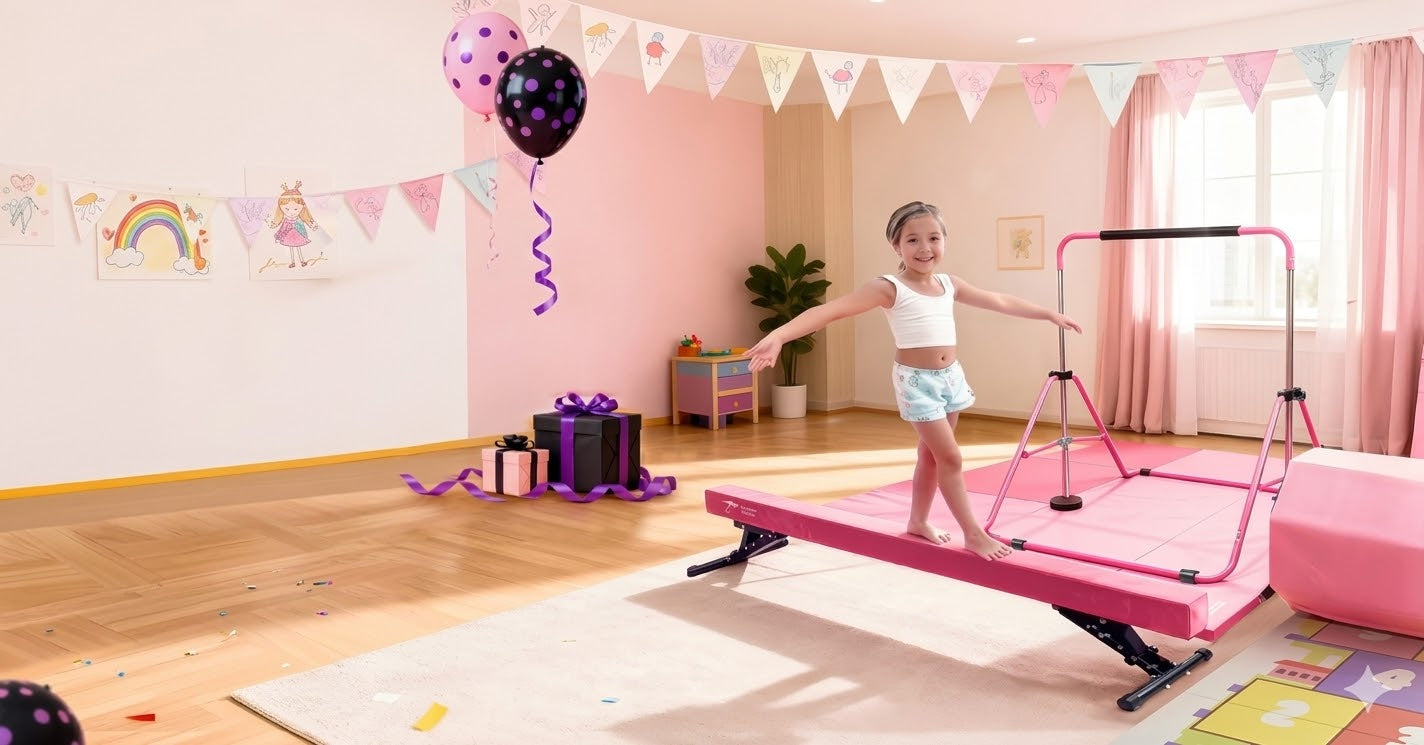
A kids' balance beam is one of the best ways to build coordination, confidence, and body control at home. The right choice depends on your child’s age, skill level, available space, and whether you need a soft beginner beam or a more realistic practice surface.
Key Takeaways
- A foam floor beam is the safest and easiest starting point for toddlers and first-time users.
- An 8-foot folding beam is the best all-around option for most families because it balances practice space and storage.
- A wood core beam with a synthetic suede cover offers a more realistic gym feel for kids taking gymnastics classes.
- Adjustable height beams are best for older kids who need a beam that can support skill progression over time.
- Safety matters as much as beam type, so use mats, keep practice supervised, and avoid high-risk acro skills at home.
Quick Summary: Top Balance Beams for Kids at Home
Choosing the best home balance beam starts with matching the beam type to the child’s stage and your space. Some options are designed for soft indoor play, while others are built to feel closer to a gym beam.
| Type of Beam | Ideal Age Range | Key Material | Best For | Price Range |
|---|---|---|---|---|
| Foam Floor Beam | 2–5 Years | High-Density Foam | Toddlers, safe indoor play | Budget-Friendly |
| Folding Floor Beam | 5–9 Years | Wood Core / Suede Cover | Small spaces, beginners | Mid-Range |
| Sectional Modular Beam | 5+ Years | Foam Topper / Synthetic Suede | Growing with the athlete | Mid-Range |
| Adjustable Height Beam | 8+ Years | Steel Legs / Wood Core | Progressive skill training | Premium |
| Competition-Feel Beam | Advanced | Wood / Suede / Steel | Serious at-home practice | Premium |
If your goal is safe indoor play for a toddler, choose a low foam beam with a forgiving surface. If your child already takes gymnastics classes, a firmer wood-core beam with a suede-style cover will support more realistic practice.
How to Choose the Best Balance Beam for Home
Safety First
Safety should be your first filter when choosing a balance beam for kids. Look for a stable base, a non-slip bottom, and a surface that helps beginners feel secure while learning.
A softer beam works well for early balance practice because it reduces fear and softens minor falls. You should also check the weight limit and think about whether the beam will sit on carpet, tile, or hardwood.
Age and Skill Level
The best beam for a toddler is not the best beam for a child already practicing routines. Start with the child’s current confidence and training level, not just age alone.
-
Toddlers and Preschoolers, Ages 2 to 5
Low, wide foam beams are the best fit for this stage. The goal is safe movement, active play, and early motor skill development. -
Young Kids and Beginners, Ages 5 to 9
A slightly narrower beam helps introduce real beam awareness without adding unnecessary height. Floor-level or very low-profile models are usually the smartest choice. -
Older Kids and Advanced Gymnasts, Ages 8+
A standard 4-inch beam with a firmer surface is better for more precise footwork and skill progression. Adjustable height models are useful when an athlete is ready for a greater challenge.
Beam Type and Design
Home balance beams come in several practical formats, and each one solves a different need. The right design depends on how often the beam will be used and where it will be stored.
- Floor beams: Floor beams sit directly on the ground and are best for reducing fear. They are ideal for first-time users and daily basic practice.
- Folding beams: Folding beams are excellent for families who need easy storage. They usually offer a better practice feel than soft foam models while still fitting under a bed or in a closet.
- Sectional beams: Sectional beams are flexible and easy to move around the house. They are useful for families who want a beam that can adapt to changing space or budget needs.
- Adjustable height beams: Adjustable beams support progression by allowing the height to increase over time. They are best for older kids who need a more gym-like training experience.
Size and Space
Before buying, measure the room where the beam will actually be used. A beam that fits your child but not your living space will be frustrating in daily use.
Most home beams range from 4 feet to 10 feet long. An 8-foot beam is often the best balance because it gives enough room for repeated skills while still being practical to store.
Material and Feel
Material affects both safety and training quality. The difference between foam, vinyl, wood core, and synthetic suede will shape how the beam feels underfoot.
A premium beam usually combines a wood core, a foam top layer, and a synthetic suede cover. This setup creates a stable feel with enough comfort for regular practice and better grip than slick vinyl covers.
Budget Considerations
You do not need the most expensive beam to create a useful home practice setup. The best value comes from choosing the features that match the child’s current needs instead of overbuying too early.
Budget-friendly options work well for toddlers, gifts, and first-time users. If your child is training consistently, paying more for stability, grip, and long-term durability is often worth it.
Detailed Reviews of Home Balance Beams
Best Overall Balance Beam for Kids at Home
- Who it’s best for: Beginners to intermediate users who need a dependable beam for regular practice at home.
- Key features: An 8-foot folding beam with a wood core, synthetic suede cover, and non-slip base.
- Why we recommend it: This style offers the best mix of realistic practice feel and home-friendly storage. It is firm enough for skill work but still practical for everyday family use.
Best Foam Floor Balance Beam for Toddlers and Young Kids
- Who it’s best for: Toddlers and preschoolers learning basic balance and coordination.
- Key features: extra-wide design, lightweight build, and high-density foam construction.
- Why we recommend it: A foam beam is the most forgiving option for early play and movement. It works especially well for obstacle courses, confidence building, and low-stress indoor activity.
Best Folding Balance Beam for Small Spaces
- Who it’s best for: Families living in apartments or homes where equipment must be stored after each use.
- Key features: compact folding design, manageable weight, and easy closet or under-bed storage.
- Why we recommend it: This option gives you a more useful training surface without taking over the room. It is one of the smartest choices for shared spaces.
Best Low Wood Core Beam for Beginner Gymnasts
- Who it’s best for: Kids who recently started gymnastics classes and want to practice at home.
- Key features: Standard 4 inch width, low profile design, and stable wood core construction.
- Why we recommend it: This type helps bridge the gap between play equipment and true skill practice. It gives beginners a more realistic feel while keeping the height low and manageable.
Best Adjustable Height Beam for Progressive Training
- Who it’s best for: Growing athletes who need a beam that can support skill progression over time.
- Key features: Adjustable metal legs, secure locking system, and a firmer beam surface.
- Why we recommend it: This beam can start at a lower setting and grow with the athlete’s confidence. It is a strong long-term option for families committed to regular training.
Best Budget Balance Beam for Kids
- Who it’s best for: Value-focused shoppers and anyone looking for a practical gift under $150.
- Key features: Simple foam core or folding design with a durable outer cover.
- Why we recommend it: Budget beams are often enough for beginners who need safe, basic home practice. They may not feel as rigid as higher-end models, but they still support balance work effectively.
Best Premium Gym Like Home Balance Beam
- Who it’s best for: Advanced gymnasts and families creating a serious at-home practice area.
- Key features: heavy-duty construction, synthetic suede finish, stable support system, and a strong competition-style feel.
- Why we recommend it: This is the best category for athletes who want the closest home version of a gym beam. It provides the most stable and authentic practice experience for repeated use.
Safety Tips for Using a Home Balance Beam
- Adult Supervision: Children should always use a home balance beam with adult supervision. This is especially important when they are learning new movements or practicing on raised equipment.
- Keep Skills Appropriate for the Home: Home practice should focus on basic skills such as walking, turns, scales, and simple jumps. High-risk acro skills such as back handsprings or aerials should stay in the gym under professional coaching.
- Use Mats: Place mats under and around the beam, especially if the beam is raised. Even floor beams are safer and more comfortable when used over a soft gymnastics surface.
- Clear the area: Set up the beam away from walls, tables, sharp corners, and household clutter. A clear practice zone reduces the risk of slips, collisions, and awkward dismounts.
- Choose the Right Footwear: Bare feet or proper gymnastics shoes usually provide the best control on a suede-style surface. Socks can increase slipping and should usually be avoided.
Fun Balance Activities and Games
A home balance beam can be a training tool, but it can also be a fun part of everyday play. Simple games help younger kids stay engaged while building useful movement skills.
Try walk and freeze, heel-to-toe challenges, or beanbag balance games across the beam. You can also add the beam to a home obstacle course for sensory play, homeschool PE, or rainy day movement breaks.
Care, Maintenance, and Storage
Regular care helps a balance beam last longer and feel better in use. A few simple habits can prevent wear, stains, and storage damage.
Spot clean synthetic suede with a damp cloth and mild soap, and avoid soaking the material. Keep the beam away from direct sunlight, protect it from pets, and store folding or sectional designs neatly when not in use.
Frequently Asked Questions
What age can kids start using a balance beam at home?
Children as young as 2 can use a low foam beam for simple balance play. Standard width practice beams are usually more appropriate once a child has better body control and basic coordination.
Is a foam balance beam enough for a child in gymnastics?
A foam beam is great for beginners and early confidence building. A child taking gymnastics classes regularly will usually benefit more from a firmer wood core beam over time.
How long should a home balance beam be?
An 8-foot beam is the most versatile size for home use. It gives enough length for repeated skills while still being realistic to store in most homes.
Do I need a mat under a balance beam for kids?
Yes, a mat is strongly recommended even for low floor beams. It adds protection for slips, supports safer landings, and makes practice more comfortable.
Final Recommendations
The best balance beam for kids is the one that fits the child’s current stage, your home space, and your safety setup. For most families, an 8-foot folding beam offers the best mix of function, storage, and long-term value.
Choose foam for toddlers, folding wood core models for most beginners, and premium or adjustable beams for more serious practice. Add mats, supervise every session, and the right beam can support years of active, confidence-building fun.

Leave a comment
This site is protected by hCaptcha and the hCaptcha Privacy Policy and Terms of Service apply.