
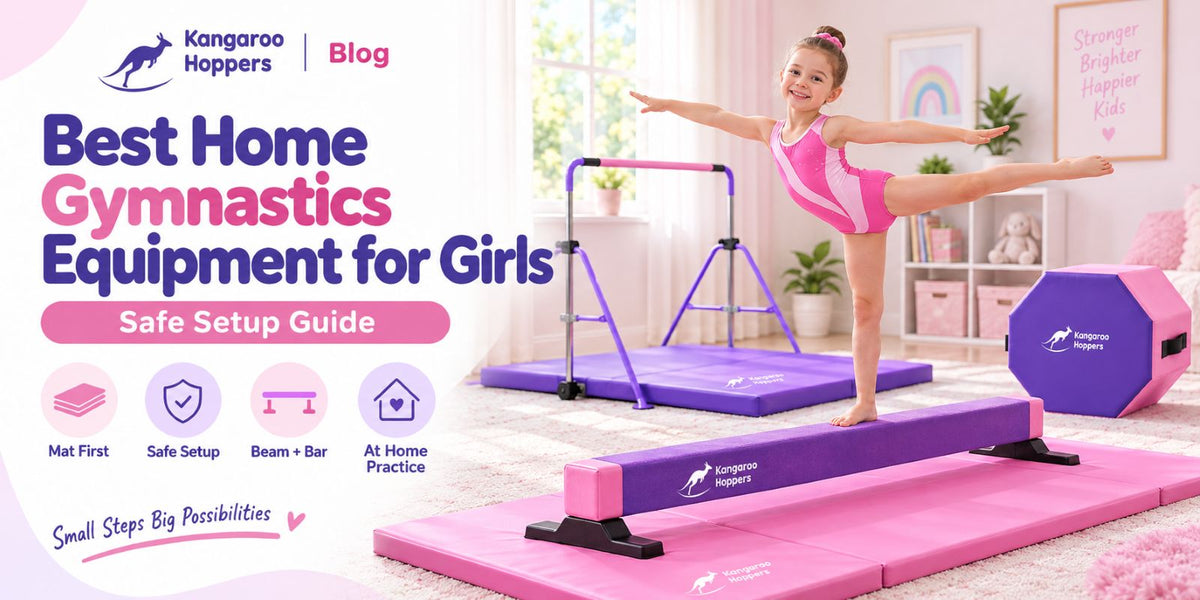
The best home gymnastics equipment for girls usually starts with a quality mat, then expands to a floor beam or training bar based on age, skill level, and available space. For most families, the safest and most useful setup is a simple home practice corner built around soft landing support, low-profile equipment, and clear adult supervision.
Key Takeaways
- A high-quality gymnastics mat is the first and most important piece of home equipment.
- The best setup depends on age, skill level, ceiling height, floor space, and storage needs.
- Floor beams, wedge mats, and beginner bars are often the most practical next purchases for home use.
- Safety matters more than quantity, so a small, well-chosen setup is usually better than a crowded room of equipment.
- Home practice should support basics, drills, flexibility, and confidence, not replace coached training for advanced skills.
Key Factors to Consider Before Buying Equipment
Safety First
Safety should guide every purchase. Look for stable construction, reliable materials, secure hardware, non-slip contact points, and weight limits that still make sense as your child grows.
Adult supervision is especially important when girls use raised equipment such as bars or elevated practice stations. Home equipment should support skill development, but it should not encourage risky progressions beyond what a child can control safely.
Space and Storage
Measure both floor space and ceiling height before buying anything. A home gymnastics setup only works well when there is enough room around the equipment for movement, mounting, landing, and safe exits.
Smaller homes usually benefit from foldable mats, portable beams, and bars that can be stored between sessions. A compact setup often gets used more consistently because it is easier to keep safe and organized.
Age and Skill Level
A preschool beginner needs very different equipment than an older child training bar fundamentals or beam drills. Young learners usually do best with soft shapes, floor-based equipment, and simple movement practice that builds body awareness.
Older children and more experienced athletes may need sturdier equipment that can handle more force and repetition. Even then, home equipment should still match the athlete’s current training level rather than the skills she hopes to do later on.
Budget and Durability
The cheapest option is not always the smartest one. Better foam support, stronger stitching, more stable bases, and longer-lasting covers usually make a bigger difference than saving a small amount upfront.
A smaller durable mat or beam is often a better value than a large low-quality piece that slides, tears, or wears out quickly. Good equipment protects both safety and long-term usability.
Essential Home Gymnastics Equipment
The Gymnastics Mat: The Nonnegotiable First Purchase
A gymnastics mat should be the first item in almost every home setup. It creates a safer practice surface for stretching, floor drills, rolls, cartwheels, handstands, and general movement preparation.
Parents usually choose among three common categories:
-
Panel mats
These fold for easier storage and work well for general home practice, warm-ups, basic tumbling drills, and flexibility work. -
Tumbling mats or air tracks
These provide a longer practice lane for repeated movement patterns and are useful when a child has enough space for straight-line drills. -
Crash mats
These are thicker and softer for higher-impact landings, but they are not a substitute for professional spotting or a full gym environment.
When comparing mats, focus on thickness, foam support, surface grip, stitching quality, cover durability, and ease of cleaning. A mat should feel supportive without feeling unstable, and it should stay in place on the floor during normal home practice.
The Core Combo: Mats and Bars
Why a Bar Is Popular at Home
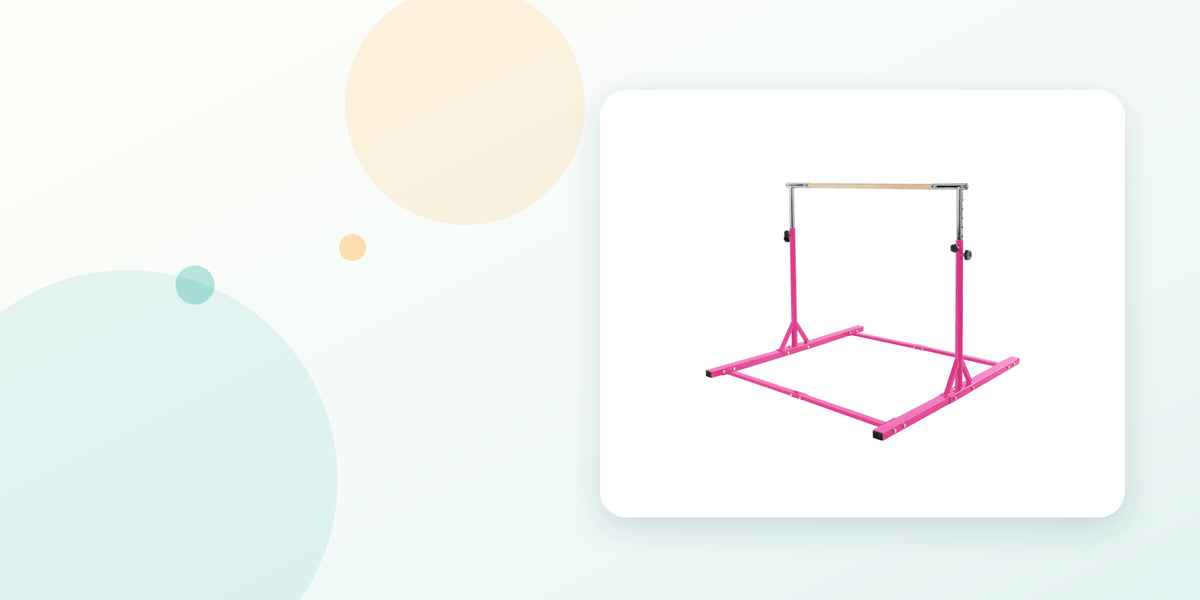
A home bar can be a valuable addition for girls who are already practicing bar basics in a gym setting. It supports repetition for strength building, straight-arm support, pullovers, casts, and controlled shaping drills.
For many families, a girls' gymnastics mat and bar setup feels like the first real home training station. It can be highly effective, but only when the matting, floor surface, and surrounding clearance are just as carefully considered as the bar itself.
Types of Home Bars
Most home options fall into three practical groups:
-
Adjustable training bars
These are useful for growing children because height changes can support different body sizes and beginner progressions. -
Kip bars or heavier-duty bars
These are designed for stronger athletes and usually require more attention to stability, swing force, and safe landing space. -
Foldable or portable bars
These work well for families who need easier storage, though they still need to feel solid during use.
When comparing bars, pay close attention to frame stability, locking mechanisms, height range, weight capacity, and base design. A bar that wobbles, shifts, or feels undersized is not the right long-term choice.
Choosing the Right Mat for Under the Bar
A bar should never sit over hard flooring without appropriate padding. Light static practice may work with a firm panel mat for small beginners, but more active bar work usually needs thicker impact protection and a wider landing zone.
The space around the bar matters just as much as the mat directly underneath it. Girls need room for safe mounts, controlled dismounts, and unexpected step-outs without contacting nearby furniture or walls.
Other Useful Home Gymnastics Equipment
Balance Beam Options
A floor beam is one of the best home gymnastics tools for girls because it builds balance, posture, focus, and movement control without raising impact risk too much. It is also easier to fit into small rooms than many larger training pieces.
For home use, low-profile floor beams and foldable beams are usually the most practical choice. They allow girls to practice walks, holds, turns, jumps, lever shapes, and basic beam confidence while staying close to the ground.
Wedges and Skill Shapes
Wedge mats are especially helpful for beginners. They support rolling drills, body tension practice, beginner inversion work, and certain shaping exercises in a way that feels more approachable than a flat surface.
Octagons and other skill shapes can also support progressions for bridges, walkovers, and controlled body positioning. These tools are most useful when parents see them as drill support equipment rather than toys.
Conditioning and Flexibility Tools
Gymnastics performance depends heavily on strength, control, mobility, and body awareness. Simple tools such as resistance bands, sliders, stretch straps, and basic pull-up assistance options can add a lot of value without taking much space.
These tools are often overlooked because they are less exciting than bars or beams. In reality, they help girls build the strength and flexibility that make equipment practice safer and more productive.
Matching Equipment to Age and Level
Young Beginners
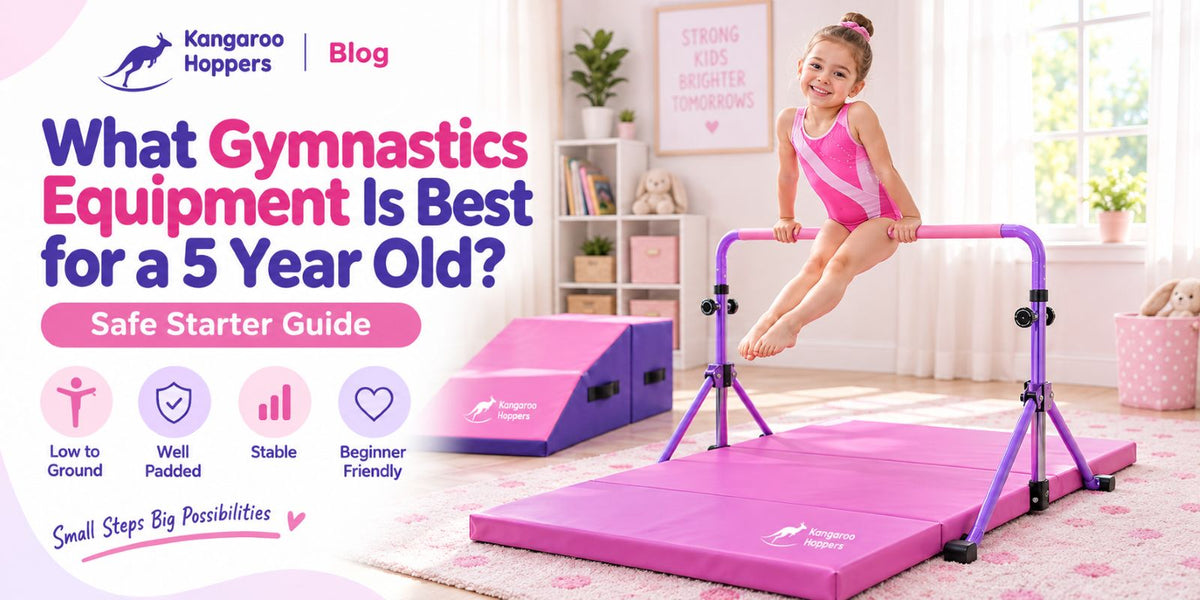
For young beginners, start with the safest and simplest setup. A panel mat, a low floor beam, and soft skill shapes are usually enough to support playful movement, coordination, and confidence.
At this stage, home gymnastics should feel structured but low pressure. The goal is not advanced skill chasing, but safer repetition of basic patterns, balance, and body control.
Elementary to Pre Teen
This is the stage when many families begin adding a training bar. A girl's gymnastics mat and bar set can make sense here if the child already shows consistent interest and the home has enough safe space.
A floor beam, wedge mat, and beginner conditioning tools also become more useful at this age. Together, they create a balanced setup for strength, flexibility, and skill support without overcomplicating the space.
Teens and Competitive Gymnasts
Older girls and more serious gymnasts usually need stronger equipment and stricter setup standards. Higher capacity bars, thicker landing mats, and longer tumbling surfaces become more relevant as force and skill demands increase.
Even so, advanced home practice should be approached with caution. A home setup can support drills, shaping, and conditioning, but it should not be treated as a full substitute for a properly coached gymnastics environment.
Safety Tips for Using Home Equipment
-
Clear the area before every session
Remove furniture, toys, cords, and anything that could create a slip, trip, or collision hazard. -
Warm up before using equipment
Basic mobility work, light cardio, and joint preparation can reduce stiffness and improve control. -
Set clear rules for home practice
No unsupervised new skills, no reckless play, and no using gymnastics equipment as general climbing furniture. -
Inspect equipment regularly
Check bolts, stitching, covers, grip surfaces, frame stability, and any signs of shifting or wear. -
Keep practice appropriate for the environment.
Home is best for basics, drills, conditioning, flexibility, and confidence building, not high-risk progressions.
How to Set Up a Simple Home Gymnastics Corner
A good home gymnastics corner does not need to be large. In many homes, the most effective setup is a panel mat as the base, a low beam nearby, and a bar only if there is enough room for safe clearance and proper landing support.
Storage matters because equipment that is hard to move often gets in the way or gets used less. Foldable mats, portable beams, and space-conscious equipment help families keep practice realistic and sustainable.
FAQs
Do girls really need a bar at home, or is a mat enough?
A mat is enough for many beginners, especially when the focus is floor basics, stretching, handstands, and early coordination. A bar becomes more useful when a child is already practicing bar fundamentals and the family can provide proper supervision and padding.
How much space is required for basic equipment?
A standard panel mat often needs about 4 by 8 feet of clear practice space. A bar usually needs a larger footprint, plus extra clearance around all sides and enough ceiling height for safe use.
Can this equipment be used by siblings of different ages?
Yes, but only if the equipment suits the heaviest user and can still be adjusted safely for smaller children. Shared use works best with adjustable bars, portable floor beams, and mats that are large enough for controlled movement.
How often should at-home equipment be replaced?
Replacement depends on wear, stability, and whether the equipment still matches the child’s size and training needs. Mats should be replaced when foam support breaks down or covers split, and bars should be replaced if they become unstable or undersized for the user.
Conclusion
The best home gymnastics equipment for girls starts with a dependable mat and grows from there based on age, goals, and available space. For most families, a simple setup with safe flooring, a low beam, and possibly a beginner bar creates the right balance of practice value, confidence building, and everyday safety.

Leave a comment
This site is protected by hCaptcha and the hCaptcha Privacy Policy and Terms of Service apply.