
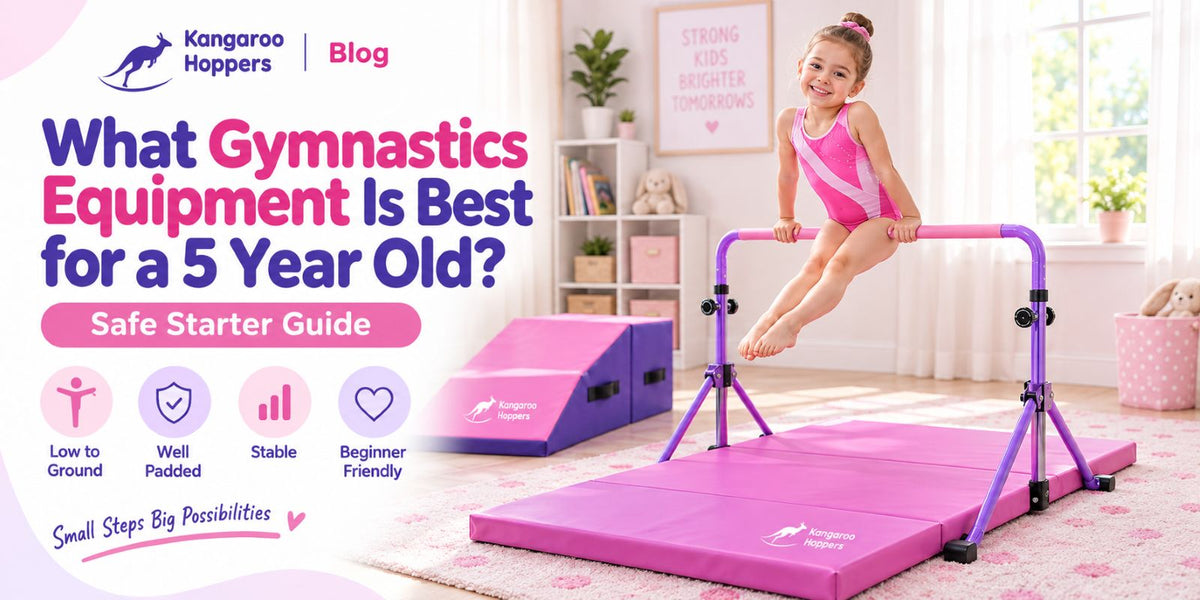
Gymnastics equipment for a 5-year-old should be low to the ground, stable, well padded, and built for beginner movement rather than advanced skills. For most families, the best starting setup is a quality gymnastics mat, then one confidence-building piece such as a low balance beam, foam wedge, or preschool bar based on the child’s interests, space, and ability to follow safety rules.
Many parents consider gymnastics for young children because it builds balance, coordination, strength, body awareness, and confidence through active play. If you are wondering what gymnastics equipment is best for a 5-year-old, the answer is usually not the biggest setup, but the safest and most age-appropriate one that fits your home, your child’s skill level, and the way they like to move.
Key Takeaways
- The best gymnastics equipment for a 5-year-old is simple, low, padded, and easy to supervise at home.
- A folding mat is the first item most families should buy because it supports tumbling, balance practice, active play, and safer landings.
- Low balance beams, foam wedges, soft play shapes, and beginner bars are usually better choices than taller or more advanced equipment.
- Equipment should match the child’s current motor skills, attention span, and interest in balancing, hanging, rolling, or jumping.
- Home practice should stay short, playful, and closely supervised, with no flips or high-risk tumbling skills.
What to Consider Before Buying Gymnastics Equipment for a Five-Year-Old
Safety First
Safety should guide every buying decision because five-year-olds are still developing balance, control, and judgment. Choose equipment with stable bases, padded surfaces, non-slip contact points, clear weight limits, and enough floor cushioning to reduce impact on hard surfaces.
Age and Skill Level
Most five-year-olds are ready for foundational movement, not advanced gymnastics skills. The best equipment supports rolling, balancing, small jumps, climbing, hanging, and body control without encouraging risky progressions too early.
Space and Storage
Your available space matters as much as the equipment itself because crowded rooms create hazards and limit safe movement. Foldable mats, floor beams, soft shapes, and compact beginner equipment are often the best choices for apartments, playrooms, and shared family spaces.
Supervision and Rules
Adult supervision is essential even when equipment is designed for beginners. Set simple rules from the start, including one child at a time, no rough play, no jumping from unsafe heights, and no trying skills that have not been taught safely.
Best Types of Gymnastics Equipment for a Five-Year-Old
Gymnastics Mats
Gymnastics mats are the most important pieces of equipment because they support nearly every beginner activity and create a safer practice surface. Folding panel mats, trifold mats, and basic tumbling mats work well for forward rolls, cartwheel drills, stretches, animal walks, and assisted handstand practice against a wall.
When choosing a mat, focus on thickness, surface grip, foam support, cover durability, and easy storage. A mat with enough cushioning and a non-slip underside is usually more valuable than buying several fun items without a proper landing surface.
Low Balance Beams
A low balance beam is one of the best tools for building coordination, focus, posture, and confidence. For a five-year-old, a floor beam or very low beam is the safest option because it allows balance practice without the fear of falling height of elevated equipment.
Good beam activities include walking forward, walking backward, side-stepping, pausing in balance positions, and stepping over small markers. A padded top and stable base matter more than making the beam look like a competition model.
Preschool Gymnastics Bars
Preschool training bars can be a strong option for children who already enjoy hanging from monkey bars and can follow directions well. The right bar should sit at a beginner-friendly height and have a wide, sturdy base with secure locking points and thick mat coverage underneath.
At this age, the goal is grip strength, hanging confidence, small controlled swings, and basic upper body engagement. A bar should not be treated as equipment for flips, aggressive circling, or unsupervised skill practice.
Mini Trampolines and Rebounders
Mini trampolines can help energetic children practice controlled jumping, rhythm, and coordination. A rebounder with a handlebar, covered springs, stable legs, and a clear one-child-only use is the better choice for this age group.
Parents should view a mini trampoline as active play equipment, not as a tool for gymnastics skill development. It can be fun and useful, but it still needs a safe setup area, close supervision, and firm rules against flips and reckless jumping.
Soft Play Shapes and Wedges
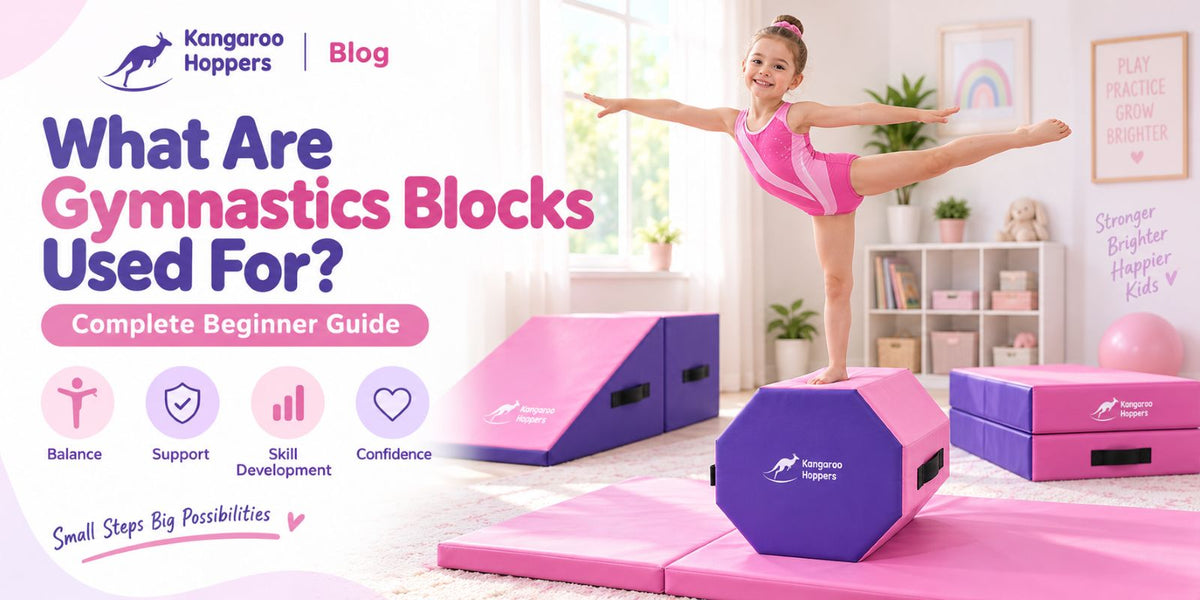
Soft play shapes are excellent for early gymnastics-style movement because they let children climb, crawl, roll, and change levels with less fear. Foam wedges, cylinders, blocks, and incline mats can be used for forward rolls, supported bridges, obstacle courses, and beginner body awareness games.
These pieces are especially helpful for children who are new to structured movement or who are not ready for bars or beam work yet. They also work well in homes where parents want flexible equipment for both gymnastics-style play and general motor development.
Floor Training Aids
Floor training aids can make practice more visual, playful, and easier to understand. Cartwheel mats with hand and foot guides, spot markers, and simple hand placement tools help children learn movement patterns without needing long verbal explanations.
These aids are not essential, but they can support attention, repetition, and confidence. They work best when paired with a quality mat and simple skill goals rather than being used as a substitute for safe equipment.
Equipment to Avoid or Use With Extra Caution
Not all gymnastics equipment is appropriate for five-year-olds at home. Full-height balance beams, high bars, elevated rings, and advanced tumbling surfaces can create injury risk well beyond what most beginners can manage safely.
Air tracks and other bouncier tumbling surfaces may look appealing, but they can encourage children to try skills they are not ready to control. Any equipment that promotes flips, aerials, handspring progressions, or repeated hard landings should be reserved for coached environments with proper spotting and training progressions.
How to Choose the Best Gymnastics Equipment
Match Equipment to Interests
Start with how your child naturally likes to move because that usually predicts what they will actually use. A child who loves balancing may benefit most from a floor beam, while a child who enjoys rolling and climbing may get more value from a mat and wedge.
Prioritize Versatility
Versatile equipment gives you more useful play options and better value over time. Mats, wedges, soft blocks, and floor beams can support many beginner drills, movement games, and confidence-building activities without taking over the room.
Quality Versus Budget
Budget matters, but safety and function matter more. It is usually smarter to buy one reliable mat or one stable low beam than to buy a larger, low-quality set that slides, tips, or wears out quickly.
Check Reviews and Safety Information
Read reviews with a focus on stability, foam support, assembly quality, and real family use. Confirm age guidance, weight limits, surface materials, and setup instructions before buying, especially for bars and rebounders.
Tips for Safe and Enjoyable Home Practice
Set Up a Safe Practice Area
Choose a clear area away from furniture edges, fragile items, and slippery traffic zones. Place mats under and around active equipment where hands, feet, or landings are most likely to happen.
Keep Sessions Short and Fun
Five-year-olds usually learn best in short, playful sessions rather than long practice blocks. Ten to twenty minutes is often enough to build skills, keep attention high, and reduce fatigue-related mistakes.
Focus on Basic Skills
Beginner home practice should center on balance, safe rolling, jumping control, hanging, crawling, and simple shape positions. Good movement quality and confidence are far more important than trying to impress with difficult tricks.
Consider enrolling in a formal class.
A preschool gymnastics class can give children structured progressions, coaching feedback, and safer exposure to new skills. Home equipment then works best as a way to reinforce basic movement patterns, not replace professional instruction.
FAQs
Is gymnastics safe for a five-year-old?
Yes, gymnastics can be safe and beneficial for a five-year-old when activities stay age-appropriate and equipment stays low, stable, and well-padded. The biggest safety factors are supervision, controlled practice, and avoiding advanced skills at home.
How much should they practice at home?
Home practice should stay play-based and manageable. Short sessions a few times per week are usually enough for this age, especially when the goal is movement confidence rather than formal training volume.
Do I need a full set of equipment?
No, most families do not need a full gymnastics setup. A good mat plus one well-chosen item such as a floor beam, wedge, or beginner bar is often more practical and more useful than buying multiple pieces at once.
Can they learn flips at home?
No, flips should not be taught at home for most five-year-olds. These skills need professional instruction, correct progressions, proper spotting, and a safer training environment than most homes can provide.
What if we do not have much space?
A folding mat and a floor beam are usually the most space-efficient starting point. Soft foam shapes can also work well because they support many activities and are often easier to move and store than larger equipment.
Conclusion
The best gymnastics equipment for a 5-year-old is equipment that helps them move safely, build confidence, and enjoy beginner practice at home. A quality mat should come first, followed by one age-appropriate piece such as a low beam, foam wedge, soft play shape, or preschool bar, with safety, supervision, and simple foundational movement kept at the center of every choice.

Leave a comment
This site is protected by hCaptcha and the hCaptcha Privacy Policy and Terms of Service apply.