
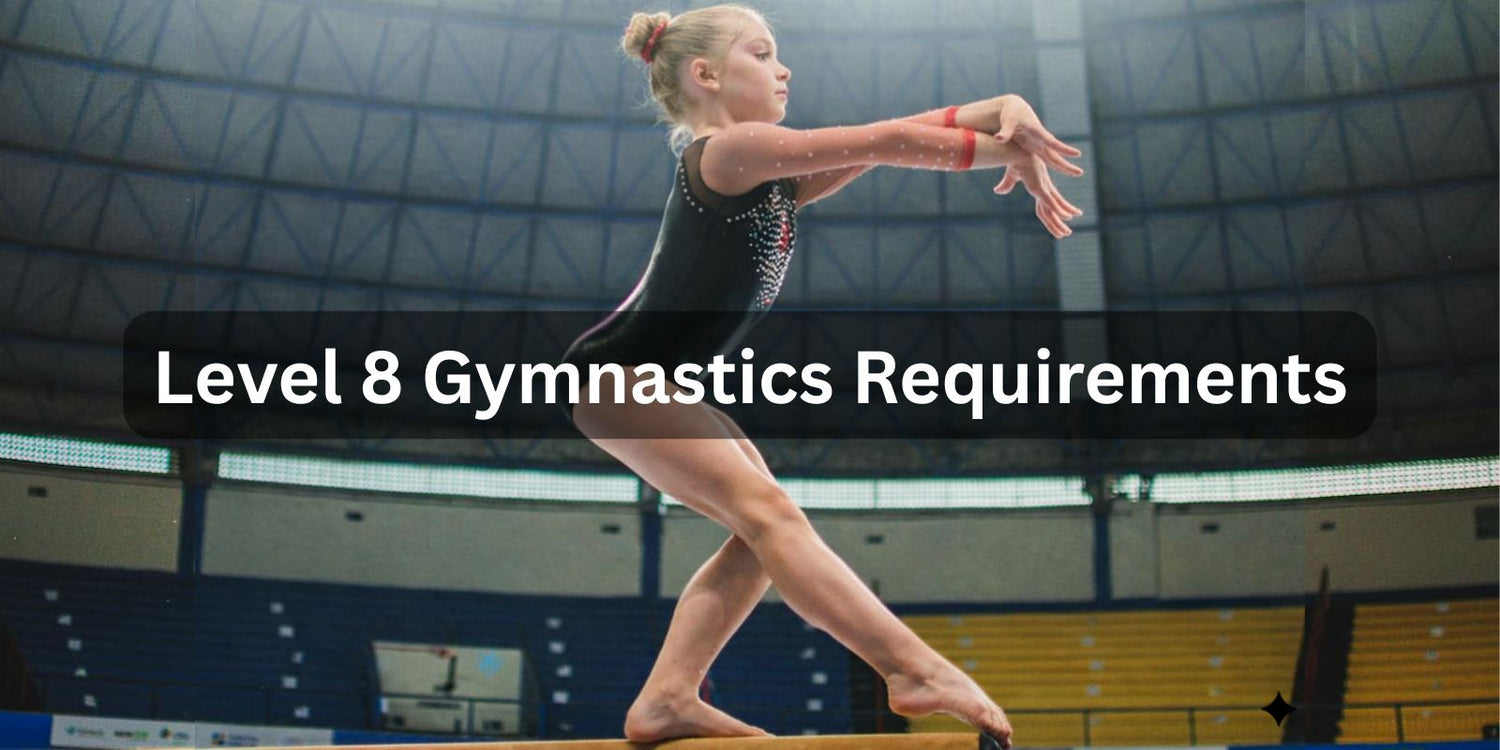
Level 8 is an optional Gymnastics Levels in women’s gymnastics that requires stronger composition, cleaner execution, and more advanced skill selection than the lower optional stages. For the 2026 season, athletes, parents, and coaches should treat it as a major transition point where routine construction, judging expectations, and readiness all matter as much as raw difficulty.
Key Takeaways
- Level 8 is an optional level where composition, execution, and consistency carry major scoring weight.
- Athletes need event specific special requirements, not just harder skills, to build complete routines.
- Beam and floor demand stronger connection quality, while bars and vault require cleaner technique and better amplitude.
- Mobility, age eligibility, and season structure should always be confirmed through current USA Gymnastics materials and local meet policies.
- Strong basics still drive Level 8 success because body shapes, rhythm, and landing control determine both scores and long term progress.
General Eligibility and Rules
Level 8 athletes must meet the age and mobility standards set by USA Gymnastics and compete under the current Women’s Development Program rules. It is also an optional level where composition is evaluated, difficulty remains restricted, and routines must earn full credit through both skill choice and execution quality.
Athletes usually move into Level 8 after achieving the required qualifying score at Level 7 and reaching the minimum age requirement. Coaches and families should still verify eligibility, season policies, and advancement details through the current Rules and Policies document and the Development Program materials before building a competition plan.
Event by Event Requirements
Vault
Vault at Level 8 rewards a clean, aggressive run, strong block, and a controlled landing more than reckless difficulty, so athletes should compete a vault family they can perform with height, distance, and body tension. Front handspring entry, Tsukahara entry, and Yurchenko pathway development are commonly discussed in Level 8 planning, but the exact allowable choices and start values should always be checked against the current official vault materials.
Uneven Bars
Level 8 bars require a bar change, two B elements with the required distribution, and a salto dismount, which means routines must show real structure rather than a random collection of skills. The best routines also keep rhythm through casts, clear circling actions, flight or turn based value, and a confident finish without excessive pauses, bent knees, or late hand changes.
Balance Beam
Level 8 beam follows the same beam special requirement framework as Level 7 except the acro series must include at least two elements with one flight element, so connection quality becomes a major separator. Athletes score better when they show stable posture, split accuracy, committed series rhythm, and a dismount that looks prepared instead of survived.
Floor Exercise
Level 8 floor requires one acro pass with two saltos, three different saltos overall, a dance passage with at least two different Group 1 elements including a leap with 180 degree split, and a final isolated salto or salto in the last acro connection. That makes floor a routine construction event as much as a power event, because judges expect enough variety, clear dance fulfillment, and landings that stay controlled inside the boundaries.
Skill Progression
Level 8 success still depends on basic shapes and foundational movement quality, because stronger optional routines are built on the same body tension, handstand alignment, split positions, and landing mechanics learned much earlier. A gymnast who understands how early drills connect to later optional work usually progresses more safely and performs advanced skills with better consistency.
That progression matters on every event. Early beam balance becomes series confidence, early bar swing shapes become clearer circling and release preparation, and early tumbling patterns become cleaner saltos with stronger rebound and direction control.
Training and Conditioning Expectations
Level 8 training usually demands more hours, more event specific repetition, and more physical preparation than the lower levels because routines now need both difficulty and polish. Athletes must develop enough core strength, shoulder stability, lower body power, and active flexibility to repeat skills under pressure without losing shape.
Mental preparation also becomes more important at this stage. Confidence, focus, and recovery habits help athletes manage fear on beam and bars, stay composed after mistakes, and compete routines that reflect training instead of tension.
Common Challenges and Technical Tips
Most Level 8 athletes struggle with connection hesitation, inconsistent landing control, and routine construction gaps that quietly reduce start value or execution, so the fastest way to improve is often to clean the basics before chasing upgrades. Better body shapes, earlier heel drive on tumbling, tighter casts and turns on bars, and more assertive beam rhythm usually raise scores faster than adding one risky new skill.
Recovery and injury prevention matter just as much as skill work. A smart program uses warm ups, landing management, flexibility work, shoulder care, and sensible workload planning to protect athletes through a long season.
Preparing to Advance
Advancing beyond Level 8 usually depends on repeatable scores, confident routine construction, and upgraded skills that are already becoming competition ready rather than barely made in practice. Coaches often begin this process by refining shapes, increasing amplitude, and introducing higher level progressions without rushing the athlete away from solid basics.
The clearest sign of readiness is not one big score. It is the ability to hit all four events with stable form, limited composition risk, and enough technical margin to stay composed at larger meets.
Specific Notes and Updates
For the current code cycle, Level 8 sits inside the USA Gymnastics Women’s Development Program optional system where composition is evaluated and event requirements are defined through the code, appendices, and rules updates rather than by general advice articles. Because replacement pages and seasonal updates can affect interpretation, coaches and families should confirm routine details against the latest official materials before the season and again when major updates are released.
FAQs
What are the beam connection rules for Level 8 gymnastics?
The balance beam routine needs an acro series with two elements and one flight element. This makes connection quality a huge factor for scores. Athletes perform much better when they demonstrate stable posture, accurate split positions, and a committed rhythm throughout their entire routine.
Does Level 8 gymnastics require a specific vault type?
No, athletes can choose a vault family they perform with height and distance instead of just reckless difficulty. Judges reward a clean run, a strong block, and a controlled landing above all else. Coaches usually plan pathways using front handspring or Tsukahara entry styles.
How can athletes prepare for Level 8 gymnastics routines?
Gymnasts should build more core strength, lower body power, and active flexibility to repeat skills under pressure. This stage demands more training hours and physical preparation than lower levels. Mental focus and recovery habits are also necessary to manage fear and prevent injuries.
Is Level 8 gymnastics scored mostly on raw difficulty?
No, execution and consistency carry major scoring weight alongside specific composition requirements. The smartest approach is building routines that fully meet the rules and match current strengths. Athletes with the strongest fundamentals and the fewest avoidable deductions usually earn the highest competition scores.
Summary
Level 8 requires more than harder skills because athletes must combine composition, execution, amplitude, and consistency across all four events. It is a demanding optional level, but the athletes who score best are usually the ones with the strongest basics, the clearest routine construction, and the fewest avoidable deductions.
For 2026, the smartest approach is to build routines that fully meet the rules, match the athlete’s current strengths, and leave room for clean confident performance. When strong fundamentals support smart composition, Level 8 becomes a level where real competitive growth starts to show.



Leave a comment
This site is protected by hCaptcha and the hCaptcha Privacy Policy and Terms of Service apply.