
Table of Contents
A tumbling mat is mainly designed for connected skills such as round offs, handsprings, and tumbling passes, while a gymnastics mat is a broader category used for general practice, station work, and landing protection. If you mainly need a long, cushioned surface for movement across a straight line, choose a tumbling mat. If you need more versatile support for home gymnastics practice, a balance beam station, or a kids' gymnastics bar setup, a gymnastics mat is usually the better all around option.
Key Takeaways
- A tumbling mat is built for continuous movement, rebound, and repeated tumbling drills.
- A gymnastics mat is a wider category that includes panel mats, crash mats, landing mats, and skill training mats.
- Tumbling mats are usually longer and more runway focused, while gymnastics mats come in more shapes, sizes, and firmness levels.
- For home practice, many families benefit from both a tumbling mat and a general purpose gymnastics mat.
- Kangaroo Hoppers gymnastics mats, balance beams, and gymnastics bars can work together to create a safer and more complete kids' training space.
Introduction
When families shop for home training equipment, the terms "tumbling mat" and "gymnastics mat" are often used as if they mean the same thing. They do overlap, but they are not identical, and understanding the difference helps you choose the right surface for skill development, landing safety, joint comfort, and home practice efficiency.
What Is a Tumbling Mat?
A tumbling mat is designed for skills that travel forward or backward across a long surface. It is commonly used for tumbling passes, cartwheels, round offs, back walkovers, front walkovers, handsprings, and basic acrobatic drills.
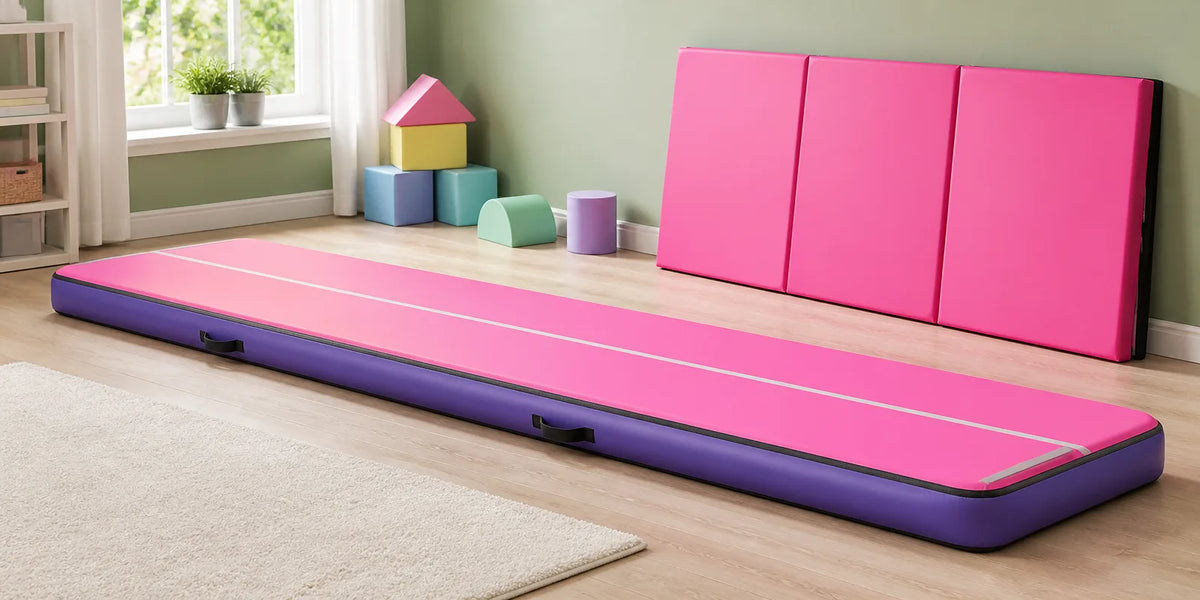
These mats are popular in cheer training, home gymnastics practice, martial arts drills, and entry level acrobatics. In many home settings, the most common version is an inflatable air track, though foldable panel style tumbling mats are also used for lighter drills and beginner progressions.
Key characteristics of a tumbling mat
-
Long training surface
A tumbling mat is usually much longer than a standard home practice mat. That extra length gives athletes enough room to connect multiple skills in one pass. -
Shock absorption with movement flow
Many tumbling mats are built to reduce impact while still allowing smooth movement across the surface. Inflatable air track styles also add a springier feel that can help beginners build confidence. -
Portable home practice setup
Inflatable tumbling mats are often easy to deflate, store, and move. That makes them practical for families who want to set up practice space in a living room, backyard, or garage.
What Is a Gymnastics Mat?
A gymnastics mat is a broader term that covers many types of mats used across gymnastics training. Instead of focusing only on connected tumbling lines, gymnastics mats support a wide range of drills, stations, events, and landing needs.
You will see gymnastics mats used under a kids' balance beam, next to a gymnastics bar, around floor skill stations, and in general conditioning areas. In a home environment, they are often the foundation for safer daily practice because they work with more than one type of activity.
Common categories of gymnastics mats
-
Panel mats
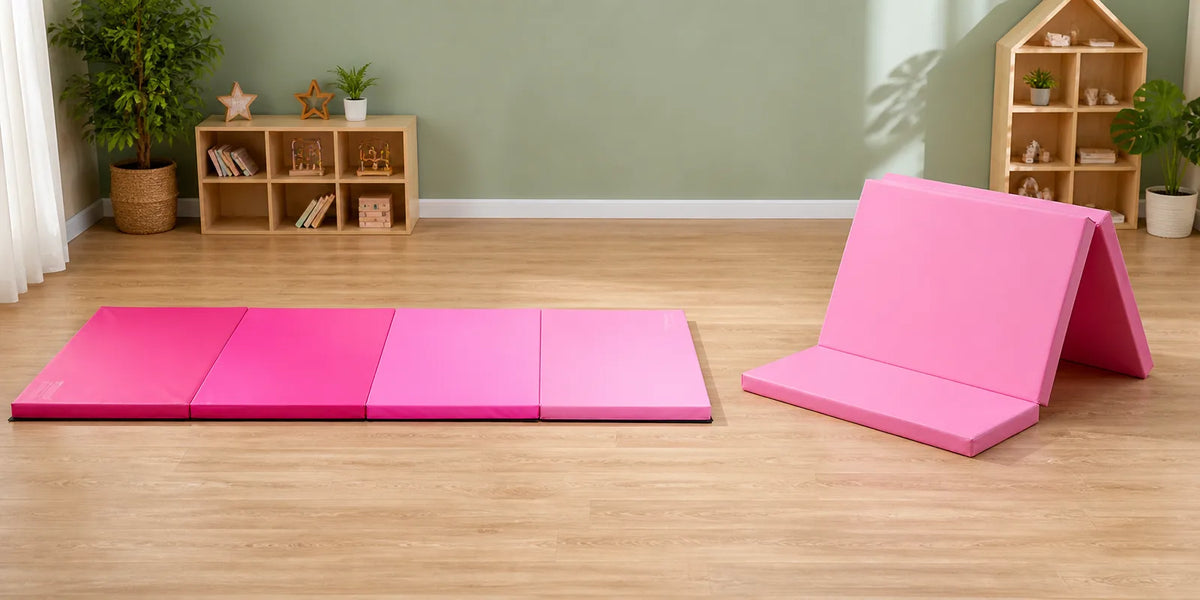
Panel mats are foldable foam mats that work well for stretching, rolls, handstands, basic drills, and general kids' practice. They are often the first mats families buy for a home gymnastics area. -
Landing mats and crash mats
These mats are thicker and softer for higher impact landings. They are useful under a gymnastics bar, beside a balance beam, or anywhere a child may need extra fall protection. -
Skill training mats
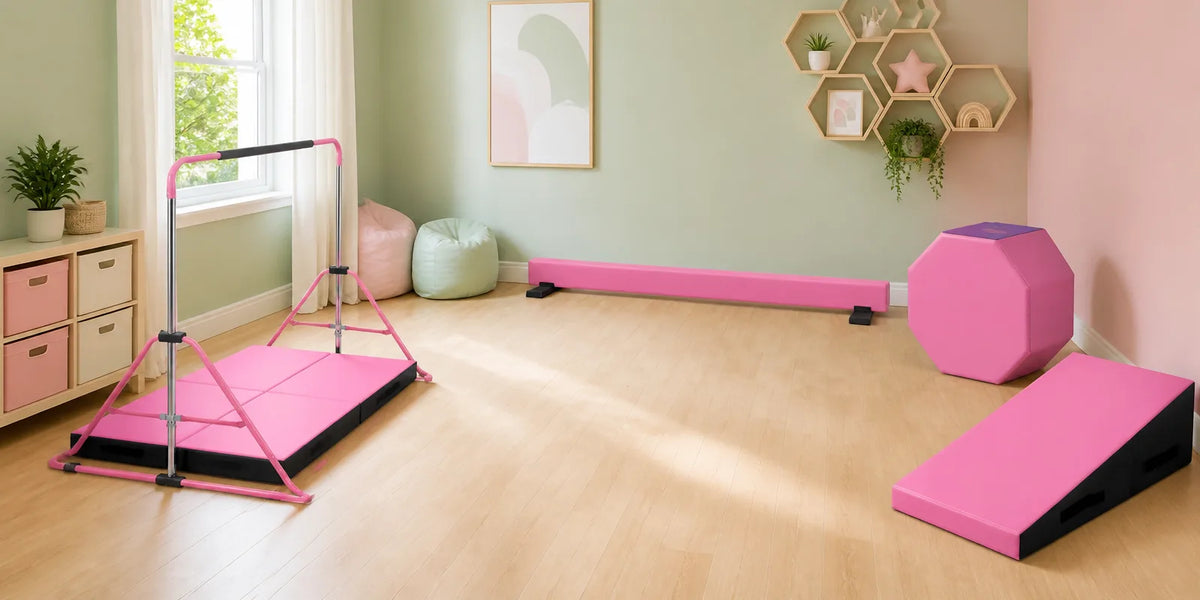
This category includes wedge mats, incline mats, octagons, and other shapes used to teach body position and progressions. These are especially helpful for beginner gymnasts learning how to move safely and correctly.
Key characteristics of a gymnastics mat
-
More versatile use
A gymnastics mat can support many types of practice, not just tumbling. It fits better in mixed training spaces where children work on flexibility, coordination, beam drills, bar drills, and basic floor skills. -
More options in size and density
Gymnastics mats come in multiple thicknesses and firmness levels. Some are firm for stability, while others are softer for landing protection. -
Better station coverage
A gymnastics mat is often the better choice when you need to protect the area around a Kangaroo Hoppers balance beam or gymnastics bar. It creates a safer zone for repeated practice and everyday movement.
Key Differences Between a Tumbling Mat and a Gymnastics Mat
Both products improve safety, but they are designed for different training priorities. The simplest way to compare them is by purpose, size, firmness, construction, portability, and skill use.
1. Purpose and Use
A tumbling mat is best for connected motion. It is made for athletes who move across the mat in a straight line and repeat tumbling skills over distance.
A gymnastics mat is built for broader practice use. It supports stations, drills, landings, conditioning, and equipment based practice across different events.
2. Size and Shape
Tumbling mats are usually long and narrow. Their shape is meant to create a runway for repeated passes.
Gymnastics mats come in more formats. You can find folding rectangles, thick landing mats, wedge shapes, beam mats, and other training surfaces designed for specific setups.
3. Thickness and Firmness
Tumbling mats often aim for a balance of cushioning and motion. Air track styles can feel softer and more responsive, while panel style tumbling mats tend to feel firmer.
Gymnastics mats vary more by use case. A panel mat may feel supportive and stable for basics, while a crash mat is much softer for landings and higher skill practice.
4. Material and Construction
Many tumbling mats use inflatable drop stitch construction or foldable foam panels. The design goal is to support movement flow, impact reduction, and easy setup.
Most gymnastics mats use foam cores with durable vinyl covers. The design goal is stable support, repeated use, and safer training around apparatus such as a balance beam or gymnastics bar.
5. Portability and Setup
Inflatable tumbling mats are very portable once deflated. They are a strong option for families that need flexible setups and storage.
Gymnastics mats range from portable to semi permanent. A folding mat is easy to move, while thicker landing mats are heavier and better for fixed training zones.
6. Safety and Skill Level
Tumbling mats help reduce repeated impact during skill progressions. They are especially useful when athletes practice the same tumbling action again and again.
Gymnastics mats are often more equipment specific. They are essential when you need safe support near a bar station, balance beam station, or landing area.
Tumbling Mat vs. Gymnastics Mat at a Glance
Choose a tumbling mat if you need
- A long surface for round offs, handsprings, and pass work
- Better flow for connected movement
- A portable air track for home or backyard practice
- A surface focused on tumbling rather than all purpose station work
Choose a gymnastics mat if you need
- A general home practice mat for everyday skills
- Protection around a balance beam or kids' gymnastics bar
- A firmer surface for basics, drills, stretching, and conditioning
- A more flexible setup for multiple activities and age levels
Which One Do You Need?
The right choice depends on how the mat will actually be used. Many families do not need the most advanced option. They need the mat that best matches the child’s skills, equipment, and available space.
For Home Practice
If your goal is general skill building, a panel gymnastics mat is usually the best starting point. It works well for rolls, handstands, cartwheels, stretching, and everyday practice around Kangaroo Hoppers equipment.
If your child focuses on tumbling lines and repeated pass work, an inflatable tumbling mat may be the better upgrade. It offers more runway space and a softer feel for frequent impact.
For Cheer and Tumbling Training
Athletes who spend more time on roundoffs, back handsprings, and connected passes should usually prioritize a tumbling mat. The longer surface supports better rhythm, repetition, and confidence during skill development.
A general gymnastics mat can still play a supporting role. It is useful for warm ups, drills, and extra padding near training stations.
For Artistic Gymnastics Training
Artistic gymnastics usually requires more than one mat type. A tumbling mat can support floor pass practice, while gymnastics mats are still needed around bars, beam stations, and landing areas.
For families building a more complete home setup, a gymnastics mat works well under or around a Kangaroo Hoppers balance beam or gymnastics bar. That makes the space more versatile and safer for skill repetition.
For Schools, Kids' Programs, and Multipurpose Spaces
A multi use training area benefits from versatility first. Panel mats and landing mats usually cover the widest range of beginner activities, group classes, and station work.
If tumbling is a major part of the program, then adding a tumbling strip or air track improves the setup. This combination gives coaches and parents more flexibility without limiting practice to one skill type.
How to Choose the Right Mat
Before buying a mat, look at the actual practice environment rather than the product name alone. The best choice depends on space, skill level, equipment, and training goals.
- Space Available: Measure the floor area before choosing a size. A long tumbling mat needs clear run space, while a gymnastics mat can fit more easily into smaller rooms or under a beam or bar station.
- Type of Skills: Match the mat to the skills being practiced most often. Tumbling passes need length and movement flow, while drills near a balance beam or gymnastics bar usually need stable landing coverage.
- Athlete Age and Level: Young beginners often do well with a panel mat because it is simple, stable, and versatile. As skills progress, families may add a tumbling mat for passes and a thicker landing mat for higher confidence.
- Equipment Pairing: Think about what the mat must work with. A Kangaroo Hoppers gymnastics mat can pair naturally with a balance beam, incline trainer, or kids' gymnastics bar to create a more complete practice station.
- Storage and Portability: Choose an inflatable mat if you need to pack it away often. Choose a folding foam mat if you want faster everyday use with less setup time.
- Durability and Surface Feel: Look at both thickness and density, not just one specification. A thicker mat is not always better if the surface becomes too soft for the skill being practiced.
Common Buying Mistakes
Families often choose a mat by size or thickness alone. That can lead to a setup that looks impressive but does not actually match the child’s training needs.
Mistake 1: Thinking all gymnastics mats are the same
A panel mat, crash mat, and tumbling mat do very different jobs. Buying the wrong category can limit skill practice or reduce safety around equipment.
Mistake 2: Using a basic panel mat for advanced landings
A standard folding mat is useful for fundamentals, but it is not the same as a landing mat. Higher impact skills often need more protection.
Mistake 3: Buying a tumbling mat when the real need is station padding
Some families mainly need coverage under a balance beam or gymnastics bar. In that case, a general gymnastics mat may be more useful than a long tumbling strip.
Mistake 4: Ignoring the rest of the training setup
A mat works best as part of a system. When paired correctly with a Kangaroo Hoppers gymnastics bar, balance beam, or skill station, the entire practice area becomes safer and more effective.
Frequently Asked Questions
Is a tumbling mat the same as a gymnastics mat?
No. A tumbling mat is a more specific type of surface designed for connected skills and pass work, while a gymnastics mat is a broader category used for many kinds of training and protection.
Can I use a tumbling mat for gymnastics?
Yes, especially for floor based skills and tumbling drills. However, it does not replace every type of gymnastics mat needed for bars, beam work, or landing zones.
Can a gymnastics mat be used with a balance beam or gymnastics bar?
Yes. In fact, that is one of the most common home uses. A quality gymnastics mat helps create a safer practice area around a Kangaroo Hoppers balance beam or kids' gymnastics bar.
What is the best mat for beginner home gymnastics?
For most beginners, a foldable panel gymnastics mat is the best first choice. It is versatile, easy to store, and useful for a wider range of basic skills.
Are inflatable tumbling mats good for kids?
Yes, when used correctly and on a clear surface. They are especially helpful for kids who practice repeated tumbling drills and need more cushioning and runway space.
Do I need both a tumbling mat and a gymnastics mat?
Sometimes yes. Families who want a more complete home setup often use a tumbling mat for passes and a general gymnastics mat for station work, bar practice, beam practice, and everyday drills.
Conclusion
The main difference is simple: a tumbling mat is built for long, connected tumbling movement, while a gymnastics mat is built for broader training use across skills, stations, and equipment setups. If you are creating a home practice area, many families start with a versatile gymnastics mat and then add a tumbling mat as skills progress. When paired with Kangaroo Hoppers gymnastics mats, balance beams, and gymnastics bars, the right setup supports safer practice, better progression, and more confident movement at home.

Leave a comment
This site is protected by hCaptcha and the hCaptcha Privacy Policy and Terms of Service apply.