
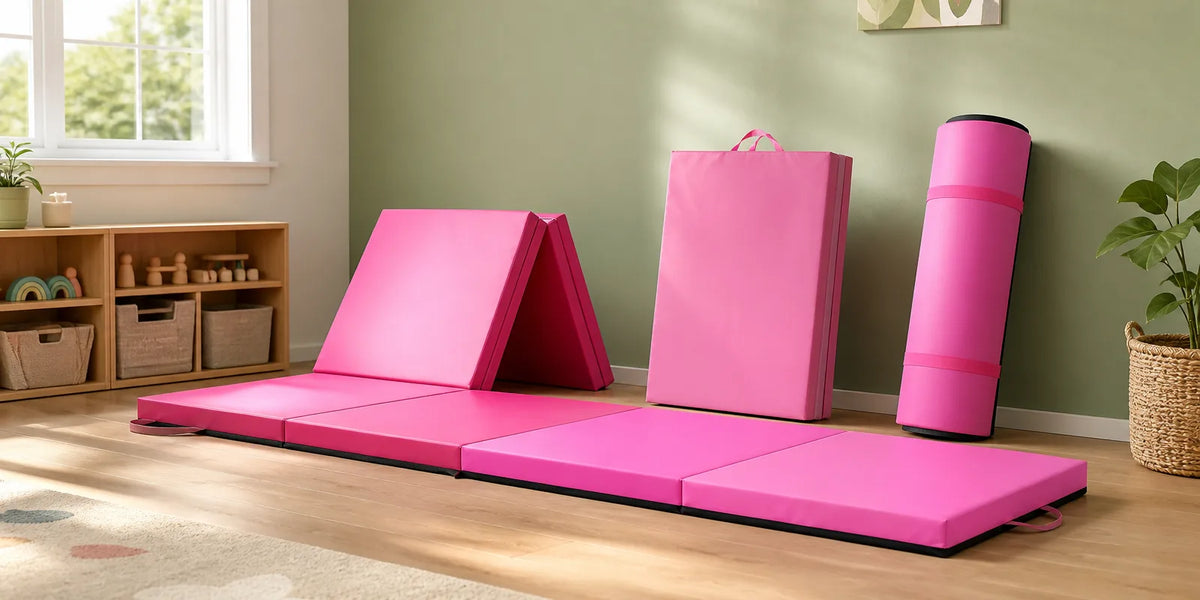
Finding an affordable tumbling mat matters to most families, but price should never be the first decision point. For parents, the better question is whether a mat creates a safe, stable, and confidence building experience for kids at home. At Kangaroo Hoppers, we believe the best mat is not the cheapest one. It is the one that fits your child’s age, activity level, floor surface, and practice needs while still delivering reliable support, grip, and comfort.
Key Takeaways
- A lower price does not automatically mean better value if the mat feels unstable, slippery, or under padded.
- For parents, safety, comfort, and confidence during use matter more than chasing the absolute cheapest option.
- Good tumbling mats should be judged by foam support, thickness, cover durability, grip, and intended use.
- Budget friendly mats can still be a smart choice when they are well made and matched to beginner home practice.
- Kangaroo Hoppers encourages families to choose mats that support safe movement and a positive at home training experience.
Understanding Tumbling and Gymnastics Mats
Tumbling and gymnastics mats are designed to reduce impact, improve traction, and create a safer practice surface at home. The right mat helps protect joints, wrists, knees, elbows, and hips during basic drills, conditioning work, and beginner skill practice.
Common Types of Mats
- Panel mats and folding mats: These are the most common home gymnastics mats because they are versatile, easy to store, and practical for rolls, cartwheels, handstands, stretching, and beginner drills. They are usually the best starting point for families looking for a balance of price, portability, and daily usability.
- Tumbling tracks and air tracks: These inflatable mats provide more rebound and are popular for longer tumbling passes, cheer practice, and advanced skill progressions. They often cost more than folding mats and require inflation, storage space, and more careful maintenance.
- Crash mats and landing mats: These thicker mats are made for higher-impact landings and skilled dismounts, not for fast traveling passes. They are important when a skill creates more force than a standard folding mat can safely absorb.
- Gymnastics rolls and carpet bonded foam: These options are better for covering larger practice areas or creating a more permanent home training space. They are usually chosen for dedicated gyms, basements, garage setups, or multi-athlete households.
Key Features That Affect Price
Mat pricing is mostly driven by thickness, foam density, cover material, construction quality, size, and brand consistency. Premium features such as reinforced stitching, anti-tear vinyl, non-slip backing, hook-and-loop connections, and better shock absorption usually increase the price but also improve safety and lifespan.
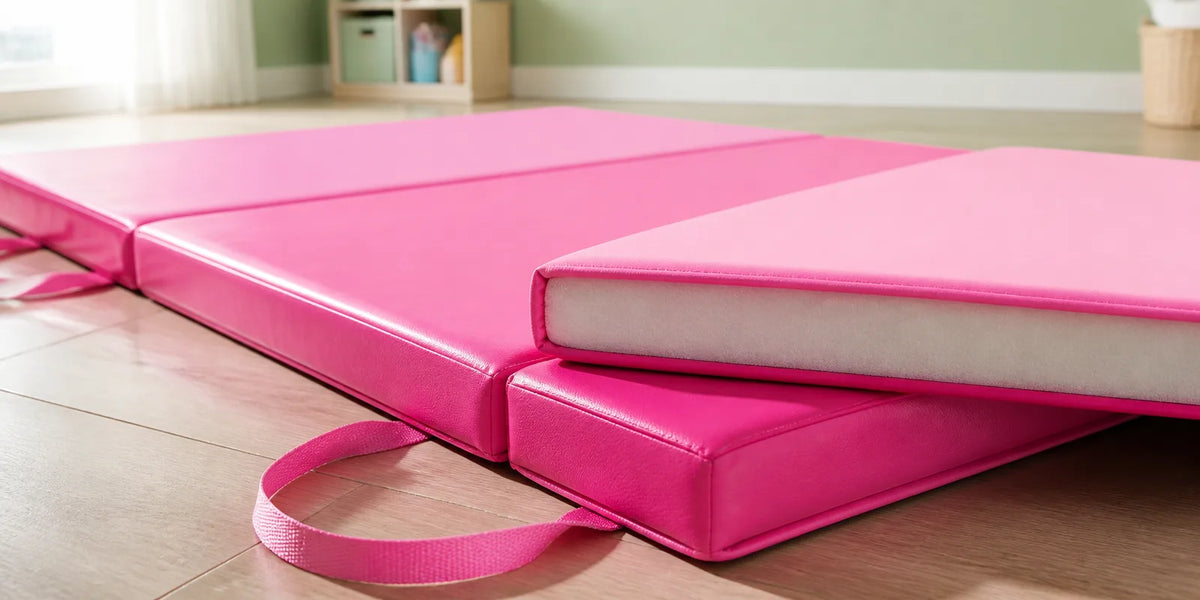
- Foam density: Denser foam usually provides better support and resists bottoming out under repeated impact. Low-density foam may feel soft at first, but it often compresses too easily and loses protection faster.
- Thickness: Thicker mats generally absorb more impact, but thickness only helps when the foam quality is good enough to support bodyweight and landing force. A thick mat with weak foam can still feel unstable or collapse too much during use.
- Cover material: Heavy-duty vinyl or reinforced PVC covers tend to last longer and clean more easily than thin, flimsy outer layers. A better cover also helps reduce tearing around high-stress seams and fold lines.
- Construction quality: Tight stitching, clean seams, consistent panel alignment, and reliable fasteners all contribute to a safer mat. Poor construction often shows up early through splitting corners, loose threads, or shifting internal foam.
- Size and configuration: Larger mats cost more because they use more foam and cover material. Folding sections, connecting edges, and specialty shapes can also affect price.
Where Can I Buy Affordable Tumbling Mats?
You can usually find budget-friendly tumbling mats through online marketplaces, specialty equipment retailers, local sellers, and direct manufacturer websites. The best buying channel depends on whether you value the lowest upfront price, detailed specifications, a stronger warranty, or the chance to inspect a used mat in person.
Major Online Marketplaces
Amazon, Walmart, and Target are common starting points because they offer broad selection, fast shipping, and simple returns. They are useful for comparing sizes, prices, customer photos, and common complaints across multiple brands.
These platforms work best when you read beyond star ratings. Look closely at reviews mentioning foam firmness, slipping, stitching, odor, cover durability, and whether the mat feels suitable for actual gymnastics drills rather than casual play.
Specialist Gymnastics and Sports Retailers
Gymnastics, cheerleading, martial arts, and fitness equipment retailers often provide more reliable specifications than general marketplaces. They usually list thickness, material, intended use, and safety details more clearly, which makes comparison easier.
These stores are often better for families who want a true home training mat rather than a general exercise pad. Even when prices are slightly higher, the value can be better because the product information is more transparent and the mat is more likely to match real training needs.
Local Options
Sporting goods stores, warehouse clubs, and seasonal big box inventory can sometimes offer decent mats at competitive prices. These are worth checking if you want to feel the surface, test firmness, and avoid uncertain shipping damage.
Facebook Marketplace, Craigslist, local gymnastics gyms, and cheer facilities can also be useful for finding secondhand mats. A used premium mat in good condition can be a better buy than a brand new budget mat with weak foam and poor construction.
Direct From Manufacturers
Buying directly from a brand website can be a smart option if you want better warranty terms, bundle offers, or access to full specifications. For example, brands such as Kangaroo Hoppers may provide clearer product details, intended use guidance, and family focused support than general marketplace listings.
How to Recognize a Good Affordable Mat vs. a Risky Cheap Mat
An affordable mat gives you safe, practical value for the intended activity. A risky cheap mat reaches a low price by cutting corners on the exact features that matter most for impact protection, traction, and durability.
Minimum Safety Criteria to Look For
- Adequate thickness: For general home use and basic tumbling drills, many buyers look for about 1.5 to 2 inches of support. Higher-impact skills usually require more protection than a basic folding mat can provide.
- Supportive foam: The foam should compress under force without collapsing completely. If you can easily feel the hard floor underneath during landing drills, the mat is not providing enough protection.
- Durable cover and base grip: A quality outer cover should resist tearing, wipe clean easily, and stay stable during use. A non-slip bottom or strong surface grip is especially important on hardwood, tile, laminate, or concrete-based floors.
- Strong seams and stitching: The seams should stay flat and tight under repeated pressure. Weak stitching can lead to splitting, bunching, or separation during movement.
- Appropriate size for the activity: The mat should provide enough usable area for the drill being practiced. A narrow or undersized mat can force awkward landings and increase the chance of stepping off the surface.
Red Flags of Unsafe Cheap Mats
Be cautious when a product listing is vague about thickness, foam type, or cover material. Missing specifications often signal that the product is being sold on price alone rather than on real performance.
Very thin mats marketed for tumbling, flipping, or advanced gymnastics are another major warning sign. If the mat looks more like a play pad or exercise cushion than an impact surface, it is probably not appropriate for hard landings.
Watch for overly soft foam that fully compresses under bodyweight, slick bottoms that slide on the floor, poor stitching, a strong chemical odor, or inconsistent sizing. Limited brand information, unclear return policies, and repeated reviews about flattening or seam failure are also serious concerns.
Are Cheap Gymnastics Mats Safe?
Cheap gymnastics mats can be safe in some situations, but not in all situations. Safety depends on the user, the skill, the landing force, the floor underneath, and whether the mat meets a minimum level of thickness, support, grip, and build quality.
When Lower-Cost Mats Can Be Safe Enough
Budget mats can work well for toddler movement, basic stretching, floor play, general conditioning, beginner rolls, and very light home practice. In these cases, the main goal is usually comfort, simple impact reduction, and a cleaner practice surface.
A lower price can also be reasonable when the mat saves money by reducing premium branding, decorative finishes, or oversized dimensions rather than by sacrificing core safety features. In other words, inexpensive is not the problem; underbuilt is the problem.
When Cheap Mats Become Dangerous
Low-quality mats become risky when users attempt cartwheel series, round-offs, back handsprings, flips, aerials, or repeated hard landings on foam that is too thin or too soft. That risk increases even more when the mat sits directly over concrete, tile, or other unforgiving surfaces.
Mats can also become dangerous when they slide, buckle, separate at folding lines, or shift during movement. A mat that moves under the athlete is not just inconvenient; it creates a direct fall hazard.
Safety Considerations by User Group
- Kids and Beginners: Children and first-time users need more protection than many parents expect because early drills often involve uneven landings and inconsistent body control. Extra thickness, stable footing, and active supervision matter more than getting the largest mat at the lowest price.
- Recreational Athletes: Recreational gymnasts, cheer athletes, and active kids doing repeated skill work need better foam support and more reliable construction. The mat should match the intensity of the training, not just the available budget.
- Adults Training at Home: Adults need to pay close attention to support because bodyweight and landing force are usually greater than those of children. A mat that works for a small child may feel completely inadequate for an adult using it for tumbling drills, conditioning circuits, martial arts, or jump training.
Practical Buying Checklist
Use this checklist before you buy any tumbling mat for home use.
1. Identify your main use.
Decide whether the mat is for toddler play, beginner gymnastics, stretching, martial arts, cheer drills, or landing practice. The safer choice becomes much clearer once the intended use is specific.
2. Check the floor surface.
Hardwood, tile, basement concrete, and garage floors usually require more protection than carpeted rooms. The harder the surface below, the more important foam support and non-slip grip become.
3. Choose the right mat type.
A folding panel mat is often best for general home practice, while crash mats and air tracks fit more specialized needs. Buying the wrong category is one of the most common reasons people end up with an unsafe setup.
4. Set a realistic budget.
A very low budget narrows safe options quickly if the mat will be used for actual tumbling. It is often smarter to buy a smaller, better-constructed mat now than a larger but unreliable one that needs replacing soon.
5. Compare at least three to five options.
Look at thickness, foam feel, cover quality, seam strength, grip, dimensions, and real user feedback. Comparing several products helps expose vague listings and misleading value claims.
6. Review the return policy and warranty.
A clear return window and product support policy reduce the risk of getting stuck with a poor-quality mat. This matters even more when buying online without testing the product first.
7. Inspect the mat immediately after delivery.
Check for strong odor, crushed foam, loose stitching, damaged corners, and sliding on your floor's surface. A new mat should feel stable, supportive, and consistently built right away.
Tips to Save Money Without Sacrificing Safety
Shop during back-to-school periods, holiday sales, and clearance events when mats are more likely to be discounted. Price drops are most useful when they apply to a well-made mat, not when they tempt you into buying an unsuitable one.
Consider choosing a slightly smaller mat from a reputable brand instead of a larger mat with poor foam and weak stitching. This is often the better long-term value because you get more reliable support and a longer usable lifespan.
Open box deals and lightly used mats can also be smart budget options if you inspect them carefully. The key is to focus on foam condition and structural integrity because surface appearance alone can be misleading.
Finally, protect your investment with good storage habits. Regular cleaning, dry indoor storage, and avoiding direct sunlight or extreme heat can help preserve the cover, stitching, and foam performance over time.
FAQs
How thick should a tumbling mat be for home use?
For general home practice and beginner drills, many families start with about 1.5 to 2 inches of thickness. More advanced skills and harder landings usually need thicker landing protection than a standard folding mat can provide.
Can I use yoga mats instead of gymnastics mats?
No, yoga mats are not designed for tumbling impact. They are too thin and do not offer the foam support needed for jumping, rolling, or landing drills.
How long do tumbling mats typically last?
A quality mat can last several years with regular indoor use, proper cleaning, and careful storage. Lifespan depends on foam quality, usage frequency, user bodyweight, and whether the mat is exposed to heat, moisture, or heavy compression.
Is it okay to buy secondhand mats for kids?
Yes, second-hand mats can be a good value if the foam is still supportive and the cover is intact. Check for flattened areas, deep tears, seam separation, mildew smell, and signs that the foam has hardened or broken down.
What is better for home tumbling, foam mats or air tracks?
Foam mats are usually more versatile, lower maintenance, and more affordable for everyday home use. Air tracks provide more rebound and longer tumbling space, but they typically cost more and require more setup and care.
Conclusion
Affordable tumbling mats can be a smart choice, but the best family decision is not about finding the lowest price. It is about choosing a mat that gives children a safer, more supportive, and more positive experience at home. At Kangaroo Hoppers, we believe parents should look for value through safety, comfort, durability, and confidence, because those factors matter far more than a cheap price tag.

Leave a comment
This site is protected by hCaptcha and the hCaptcha Privacy Policy and Terms of Service apply.