
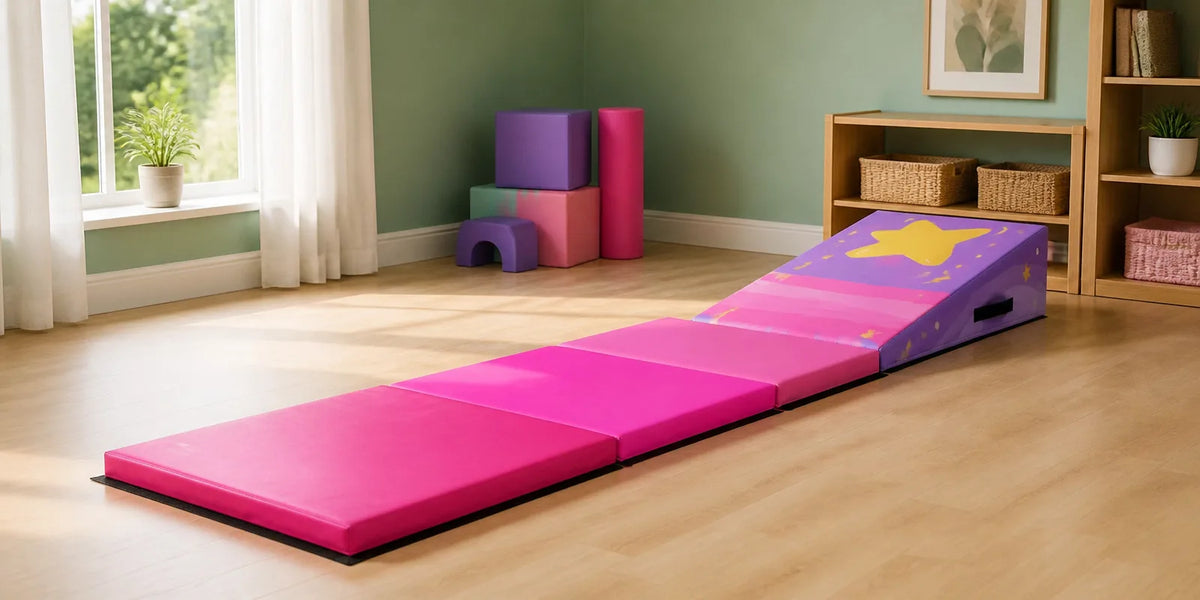
A wedge mat is used to create a stable incline for gymnastics drills, kids’ motor play, stretching support, light conditioning, and some positioning exercises at home or in activity spaces. It helps beginners practice movement patterns with more confidence, gives caregivers and coaches a softer training surface, and makes certain drills easier to learn than they are on a flat floor.
Key Takeaways
- A wedge mat is mainly used for beginner gymnastics, kids’ climbing and gross motor play, stretching support, and light home fitness.
- The sloped shape helps with movement progression by changing body angle, reducing fear, and making some drills easier to learn.
- Wedge mats are not all the same, since foam firmness, surface grip, size, and incline angle all affect safety and performance.
- A mat for toddler play may not be the right choice for tumbling drills, cheer practice, or repeated skill work.
- The best wedge mat is the one that matches the user’s age, skill level, space, and primary use, while still offering stable foam and a durable cover.
What Is a Wedge Mat?
A wedge mat is a sloped foam mat shaped like a wedge, which is why it is also called an incline mat or cheese mat. It creates an angled surface that supports movement training, play, mobility work, and beginner skill development.
Most wedge mats use foam wrapped in a vinyl or PU cover that is easy to wipe clean after use. Many also include a non-slip base, reinforced seams, and carry handles to improve day-to-day safety and convenience.
Main Uses of a Wedge Mat
Gymnastics and Cheerleading
A wedge mat is commonly used in gymnastics and cheer because the incline helps beginners learn basic movement patterns with less fear and better body positioning. It is especially useful for forward rolls, backward rolls, bridges, kickover progressions, handstand drills, and introductory tumbling practice.
The slope helps guide momentum in a more controlled way than a flat floor. That makes early drills feel more approachable for kids, beginners, and home users who are still building confidence.
Physical Therapy, Mobility, and Recovery Support
Some people use a wedge mat for gentle mobility exercises, supported stretching, and low-impact floor work. The incline can help certain users change body position more comfortably during movement practice, warm-ups, or cooldown routines.
It can also be useful for transitioning from lying to seated positions during light exercise sessions. However, a general fitness wedge mat is not a medical device, so anyone with pain, injury, or recovery needs should follow professional guidance before using one for rehabilitation.
Yoga, Pilates, and General Fitness
A wedge mat can support modified yoga and Pilates positions by changing the working angle of the body. This may reduce the challenge of some planks, stretches, and seated movements while helping beginners maintain better alignment.
Home users also use incline mats for ab work, mobility drills, and bodyweight training. In small home gyms, the wedge shape adds variety without taking up as much space as larger specialty equipment.
Children’s Play and Motor Development
A wedge mat is widely used for early movement exploration, especially in homes, playrooms, preschools, and activity centers. Babies, toddlers, and young children can use a gentle incline for supervised tummy time, crawling, climbing, sliding, and balance play.
The angled surface encourages body awareness, coordination, and gross motor development in a softer environment than a hard floor. For many families, this is one of the most practical uses of a foam wedge mat.
Comfort, Posture, and Daily Use
Some adults use smaller wedge mats for floor sitting support, leg elevation during rest, or general comfort during stretching. The incline can make certain positions feel more natural than sitting or lying directly on a flat surface.
This type of use is more about comfort and positioning than athletic training. It is best suited to light everyday use rather than medical treatment or long-term posture correction.
Benefits of Using a Wedge Mat
Safer Skill Progression
A wedge mat helps beginners work through movement progressions more safely than practicing directly on a hard floor. The incline creates a more forgiving learning surface and can reduce hesitation during early attempts.
This is one reason wedge mats are so popular in youth gymnastics and beginner tumbling environments. They help users build confidence before moving to flatter or firmer training surfaces.
Better Movement Confidence
The sloped shape changes how the body moves through space, which often makes drills feel less intimidating. That can be especially helpful for children, first-time users, and anyone learning new bodyweight skills.
Confidence matters because nervous movement often leads to poor body position and inconsistent practice. A wedge mat supports step-by-step learning in a more approachable way.
More Versatility at Home
A good wedge mat can serve several roles in one home setup, including gymnastics drills, climbing play, stretching, mobility work, and light fitness. That makes it one of the more flexible pieces of soft equipment for families and multi-use spaces.
Instead of buying separate pieces for every activity, many households choose one medium-sized incline mat that covers several needs reasonably well. This is especially useful in apartments, playrooms, and compact home gyms.
Joint Friendly Support
The foam surface is softer than wood, tile, or concrete, which makes floor-based activity more comfortable. For light movement and supported stretching, that extra cushioning can make sessions easier to stick with.
That said, softness alone is not enough. A wedge mat still needs enough structure to stay stable and supportive during use.
Types of Wedge Mats
By Size and Thickness
Small wedge mats work well for stretching support, positioning, and light floor exercises. Medium sizes are often the most practical for home use because they balance versatility, storage, and usable surface area.
Larger wedge mats are better for gymnastics drills, climbing play, and more active movement sessions. They generally provide more room for body positioning and safer landings during beginner progressions.
By Intended Use
Some wedge mats are designed mainly for tumbling drills and beginner gymnastics. These usually use firmer foam and a shape that supports rolling, inversion work, and skill progressions.
Others are built more for toddler play, sensory activity, mobility, or comfort-based use. These may feel softer and work well for crawling and climbing, but they are not always ideal for repeated tumbling drills.
By Material and Firmness
Foam density changes how a wedge mat performs. Firmer foam usually feels more stable for gymnastics, while softer foam may feel more comfortable for play and light mobility work.
Cover material matters too. Durable vinyl or PU covers are easier to clean and usually hold up better to frequent family or gym use than lighter materials.
How to Choose the Right Wedge Mat
Define Your Primary Use
Start with the main reason you need the mat. A wedge mat for beginner gymnastics should be chosen differently from a wedge mat for toddler play, stretching, or general home fitness.
This first decision makes the rest easier. Once the primary use is clear, it becomes much easier to choose the right size, firmness, and incline angle.
Consider Size and Angle
Choose the size based on the user’s age, body size, and activity. A longer and wider wedge gives more room for movement, while a smaller wedge is often enough for stretching support or light floor work.
Incline angle matters just as much as size. A steeper wedge may help more with tumbling momentum, while a gentler incline is usually better for crawling, supported stretching, and beginner fitness use.
Check Foam Stability and Cover Quality
Look for foam that feels supportive rather than unstable or hollow. If the wedge compresses too easily, it may bottom out or feel less secure during active drills.
The outer cover should also be easy to clean and built for repeat use. Strong stitching, reinforced corners, and a non-slip base are all signs of better long-term value.
Think About Storage and Daily Use
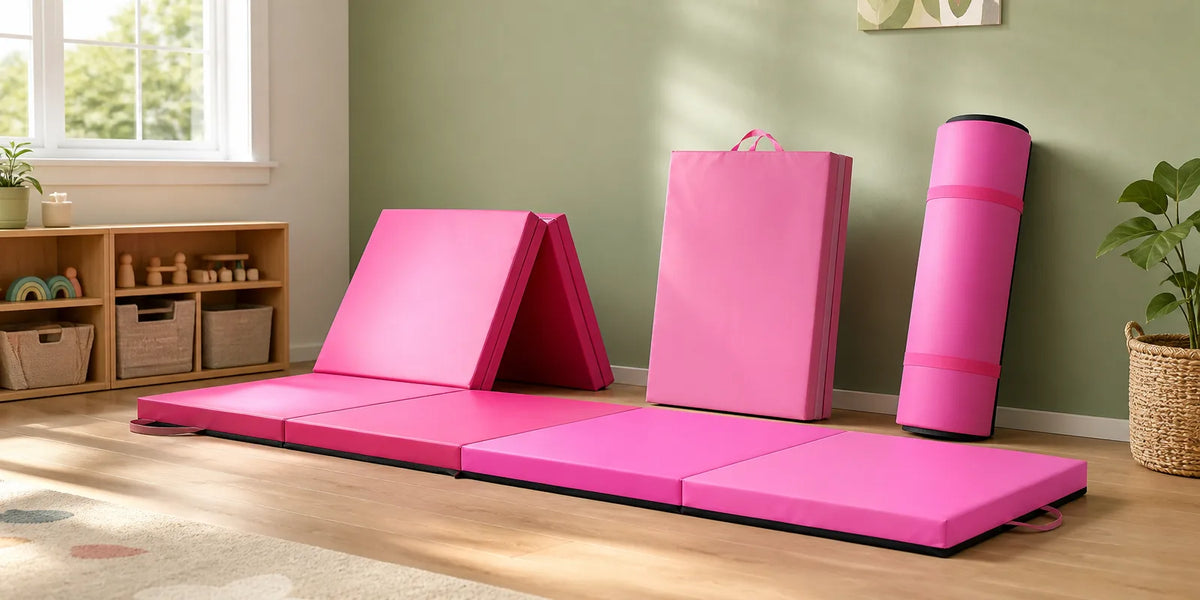
A wedge mat should fit both your activity goals and your available space. Foldable styles are useful when the mat needs to be stored in a closet, moved between rooms, or used in a smaller home.
Handles can also make a difference for families and coaches who move equipment often. Convenience matters because equipment that is hard to store or carry often gets used less.
How to Use a Wedge Mat Safely
General Safety Guidelines
Place the wedge mat on a flat, stable surface before every session. Keep it away from sharp furniture edges, hard walls, and slippery flooring conditions that could reduce stability.
Children should use wedge mats with active adult supervision. Users practicing gymnastics or tumbling drills should also stay within their skill level and avoid treating a wedge mat like full crash protection.
Basic Exercises and Activities
For beginner gymnastics, start with simple drills such as assisted forward rolls, backward roll progressions, bridge work, and basic inversion drills appropriate to the user’s level. For play-based use, supervised crawling, climbing, and controlled sliding are common starting points.
For fitness, the incline can be used to modify planks, stretches, and some bodyweight exercises. Starting with easier positions helps users learn how the angle changes balance and movement.
Care, Cleaning, and Maintenance
Wipe the cover with mild soap and water after regular use, especially in shared spaces or kids’ activity areas. Avoid harsh chemicals that may damage the outer surface over time.
Store the mat flat or as directed by the manufacturer to help preserve its shape. If the foam becomes uneven, overly soft, cracked, or unstable, it is time to replace the mat.
FAQs
What is the difference between a wedge mat and a flat gymnastics mat?
A wedge mat has an incline that helps with movement progression, positioning, and climbing play. A flat gymnastics mat provides a level surface and is usually better for general floor coverage, landings, and basic practice areas.
Is a wedge mat good for home gymnastics?
Yes, a wedge mat is often one of the most useful home gymnastics tools for beginners. It supports drills like rolls, bridges, and introductory tumbling progressions without requiring a full gym setup.
Can one wedge mat be used for both kids’ play and exercise?
In many cases, yes. A medium-sized wedge mat with supportive foam can work for supervised play, stretching, and light home workouts, though it may not be ideal for every advanced or high-impact use.
What firmness is best for a wedge mat?
The best firmness depends on the job. Firmer foam is usually better for gymnastics and repeated drills, while softer foam may feel more comfortable for crawling, sensory play, and light floor exercises.
Is a wedge mat the same as a cheese mat?
In most cases, yes. Many people use the terms "wedge mat," "incline mat," and "cheese mat" interchangeably, especially in gymnastics and children’s activity settings.
Conclusion
A wedge mat is used to create a safer and more useful incline for gymnastics drills, children’s movement play, stretching support, and light home exercise. The right mat depends on who will use it, what activities matter most, and whether the foam, angle, and surface are appropriate for that purpose. Choose based on real use, not just price or size, and a good wedge mat can become one of the most versatile pieces in your home or training space.

Leave a comment
This site is protected by hCaptcha and the hCaptcha Privacy Policy and Terms of Service apply.