

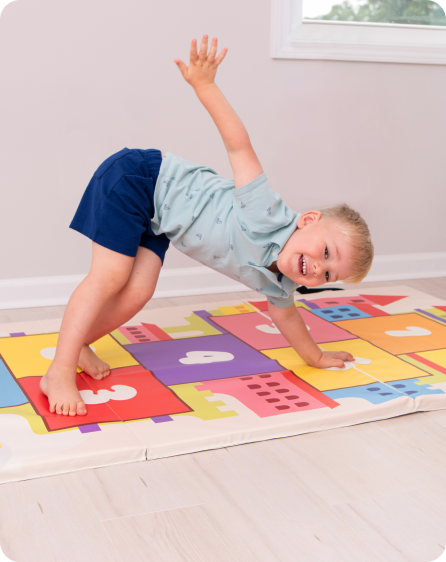
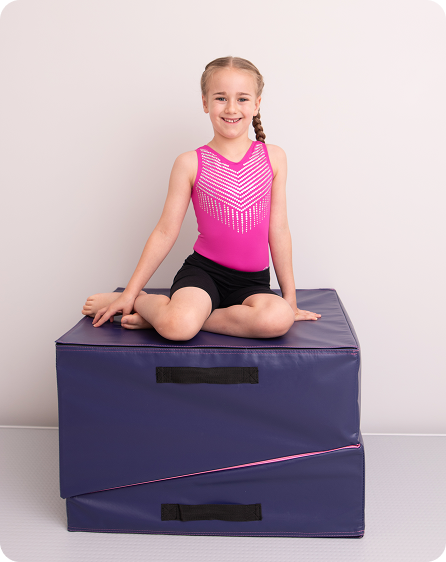
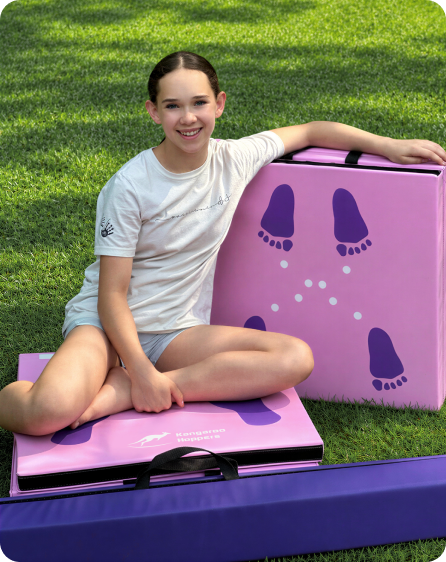
Adjustable parallel bars for kids give young gymnasts a stable place to practice support holds, swings, and short routines at home. This guide explains how the settings work, which Kangaroo Hoppers configuration fits your family, and how to build a safe practice corner in 2026.
Parallel bars suit children ages 3 to 12 with adult supervision, and the right height and width change as they grow. You will find sizing steps, space planning, mat pairing, age based progressions, and the setup mistakes that parents most often miss.
Quick Answer: Adjustable parallel bars for kids let families change rail height from 3.3 to 5.6 ft and rail width from 2 to 3.2 ft as a child grows. Kangaroo Hoppers sells two versions, a set with a folding gymnastics mat and a frame only, both rated for ages 3 to 12.
Key Takeaways
- Two configurations: The mat bundle pairs one adjustable frame with a folding gymnastics mat, while the pink frame ships without a mat.
- Wide adjustment range: Rail height moves from 3.3 to 5.6 ft and rail width from 2 to 3.2 ft in 5 cm steps, and the two settings lock separately.
- Three setups in one frame: The same unit works as a single bar, double bars, or uneven bars for different drills.
- Space comes first: Confirm floor space for the frame plus a mat before ordering, because the mat defines the landing zone.
- Supervision stays: The bars are built for ages 3 to 12, and an adult should check the locks and feet before every session.
What Are Adjustable Parallel Bars for Kids?
Adjustable parallel bars for kids are a two rail gymnastics frame whose height and width settings change as a child grows. The Kangaroo Hoppers frame moves from 3.3 to 5.6 ft in height and from 2 to 3.2 ft in width, so one unit can serve a preschooler and a preteen.
The frame is built around a single steel chassis that converts between three training forms.
- Single bar: One rail at working height for support holds and short walks.
- Double bars: Both rails in parallel for front support, swings, and dip drills.
- Uneven bars: Rails set at two heights for transitions and mixed routines.
Hardware matters in a home setting, so the frame lists rounded safety corners, solid wood non slip rails, thickened powder coated steel tubing, and non slip rubber feet. Height changes turn on twist lock knobs, and the rail spacing uses a separate pin lock.
The Adjustable Kids Parallel Bars Set with Gymnastics Mat bundles this frame with a folding mat. Parents who want the full layout first can review the adjustable parallel bars guide before choosing a room.
Which Kangaroo Hoppers Setup Fits Your Family?
The mat bundle is the better choice for a family starting from zero, while the frame only version suits a home that already owns a gymnastics mat. Both configurations share the same adjustable frame, so the decision comes down to whether a landing surface is already in place.
| Configuration | What Is Included | Best For | Price at the Time of Writing |
|---|---|---|---|
| Adjustable Kids Parallel Bars Set with Gymnastics Mat | One adjustable frame plus one folding gymnastics mat | Families building a first home training area who want the frame and a landing surface in one order | $436.99, list price $459.99 |
| Pink Adjustable Parallel Bars | One adjustable frame, no mat | Homes that already own a mat sized for the frame footprint | $349.99, list price $399.99 |
Both rows describe Kangaroo Hoppers configurations with identical frame specifications. Prices reflect the product pages at the time of writing and can change.
Choose the bundle if you want one delivery and a mat that matches the frame footprint the first time. Families who already own a mat can order the Pink Adjustable Parallel Bars and put the difference toward other pieces.
Either path fits into a wider home setup, and the gymnastics bundles collection shows how frames, mats, and smaller tools are grouped for families.
How Do You Set the Height and Width for Your Child?
Set the rails at a height where your child can grip both bars with slightly bent arms while standing, then move up one 5 cm step at a time. Height and width adjust on separate locks, so the rails can widen without changing the height your child just learned.
- Height: Loosen the twist lock knobs on both uprights, slide to the matching setting, and tighten until the rail stops moving.
- Width: Set the pin lock so both pins sit in matching holes, then press down on each rail before your child mounts.
- Recheck: Retest the setting whenever a child grows or a new child uses the frame.
| Specification | Value |
|---|---|
| Height range | 3.3 to 5.6 ft (about 40 to 67 in) |
| Width range | 2 to 3.2 ft (about 24 to 38 in) |
| Height increments | 5 cm (about 2 in) |
| Weight capacity | 330.7 lb |
| Assembled weight | 92.1 lb |
| Training forms | Single bar, double bars, uneven bars |
Figures come from the Kangaroo Hoppers product pages for both configurations.
The frame arrives partially pre-assembled with tools and instructions in the box, and adjustments need no tools once it stands. The assembly guides cover the bolt order and the lock checks worth repeating after the first week.
How Much Space Do You Need and How Should You Place the Mat?
Reserve floor space for the widest width setting plus walking room on every side, then center a mat so it reaches beyond both rails. A 4 by 8 ft mat covers the largest landing zone, while 2 by 8 ft and 3 by 6 ft sizes fit tighter rooms.
The bundled mat folds into four panels with side handles, and velcro edges let two mats join into one longer surface. Thickness comes in 1.5 in or 2 in, which changes how the surface feels underfoot without changing the frame settings.
Set the frame on a level, hard floor so the rubber feet sit flat, and keep the mat unfolded under the rails rather than folded against a wall. Carpet and rugs let the feet sink, which makes the frame feel less planted during swings.
Families comparing surfaces can browse the gymnastics mat collection or check the tri fold gymnastics mat for a foldable landing surface that stores against a wall.
How Should Kids Ages 3 to 12 Progress on the Bars?
Kids progress on parallel bars by adding control before adding difficulty, and the frame supports that ladder because height and width move in small steps. Most home routines begin with supported holds and short walks, then add swings and longer support work as grip and confidence improve.
- Ages 3 to 5: Two hand support with an adult within arm's reach, plus short walks beside the rails.
- Ages 6 to 8: Front support holds, gentle swings, and step down dismounts onto the mat.
- Ages 9 to 12: Longer support holds, L-sit attempts, and transitions between rails set at two heights.
Keep sessions short and finish while your child still wants more, because tired hands are where form slips. The bars collection groups the frames by training focus, and the Kids Gym Pro progression set adds smaller pieces for the same routine.
What Setup and Usage Mistakes Should Parents Avoid?
The most common mistakes are skipping the lock check, raising the bars faster than a child is ready, and treating the frame as a climbing structure. Each one is simple to prevent once you know what to watch for.
- Skipping the wobble test: Press down on both rails before every session and tighten anything that moves.
- Chasing height: Move up one 5 cm step only after your child holds the current setting with steady arms.
- Leaving a mat seam open: Join panels flat with the velcro edges so a foot cannot catch in a gap.
- Using the frame as a kip bar: A kip bar is a single rail built for kip drills and different skills, while parallel bars train two rail support work, and neither replaces the other.
- Practicing unsupervised: Children ages 3 to 12 need an adult present for every session.
Review the home gymnastics safety tips before the first session, and if your child also wants kip drills, the adjustable foldable kip bars are the frame built for that separate skill.
How Do You Keep the Bars Safe Between Sessions?
Wipe the frame and wooden rails with a damp cloth and mild detergent, then dry them, and skip abrasive cleaners that dull the powder coating. Add a hardware check to the same routine so a loose knob or worn foot never reaches a training session.
- Twist lock knobs: Confirm both uprights tighten fully and the rail cannot slide.
- Pin lock: Make sure both pins sit in matching holes at the chosen width.
- Rubber feet: Replace any foot that looks worn, cracked, or shiny from slipping.
- Wood rails: Run a hand along each rail and pause training if the surface feels rough.
Hand support work puts steady load on young wrists, so the kids gymnastics wrist guards give children a padded option during longer sessions.
"Build up to new skills gradually by practicing drills and progressions first."
Emily Sweeney, MD, Pediatric Sports Medicine Physician, Children's Hospital Colorado
FAQs About Adjustable Parallel Bars for Kids
What age range are adjustable parallel bars designed for?
Kangaroo Hoppers adjustable parallel bars are designed for children ages 3 to 12 with adult supervision. Younger children use the lowest settings for supported holds and short walks, while older kids raise the rails for swings and support work. Check the height and width locks before every session.
How do I set the right bar height for my child?
Start with a height where your child can grip both rails while standing with slightly bent arms, then raise one 5 cm step at a time. Height and width lock independently, so you can widen the rails without changing height. Retest the setting each time your child grows.
How much floor space do the bars need?
Plan for a footprint that covers the widest width setting plus room to walk around the frame, and add a mat that extends beyond the rails on both sides. A 4 by 8 foot mat covers the largest landing zone, while a 2 by 8 foot mat suits narrow rooms.
Can my child use the bars without a mat?
Yes. The pink adjustable parallel bars ship as a frame only, which suits families who already own a gymnastics mat. A mat still helps because it gives kids a defined landing surface under the rails and protects hard floors during dismounts and hand support drills.
Do these bars replace a kip bar?
No. Adjustable parallel bars support two rails for support holds, swings, and dips, while a kip bar is a single rail built for kip drills and different skills. Many home gyms keep both because each one trains a separate movement pattern, and neither is a substitute for the other.
How much weight can the bars hold?
The frame carries a weight capacity of 330.7 lb and the assembled unit weighs 92.1 lb, so it stays planted during supported skills. That rating covers normal use by children ages 3 to 12, and it does not extend to rough play, climbing on the rails, or unsupervised sessions.
How should I clean and check the bars?
Wipe the frame and wooden rails with a damp cloth and a mild detergent, then dry them, and skip abrasive cleaners that dull the powder coating. Check the twist lock knobs, pin locks, and rubber feet before each session and stop using the bars if any part feels loose.
Conclusion
Adjustable parallel bars for kids work best when the frame fits both the child and the room. Measure the practice corner, choose the mat bundle or the frame only version, and raise the rails one step at a time.
Start by measuring your space and confirming which configuration fits, then browse the new release gymnastics equipment for pieces that grow with the same routine.
Disclaimer
Parallel bars are training equipment, not a medical or rehabilitation device, and this guide does not replace advice from a pediatrician or a qualified coach. Supervise children at all times, follow the assembly instructions, and stop using the equipment if any part is damaged or loose.

Leave a comment
This site is protected by hCaptcha and the hCaptcha Privacy Policy and Terms of Service apply.