

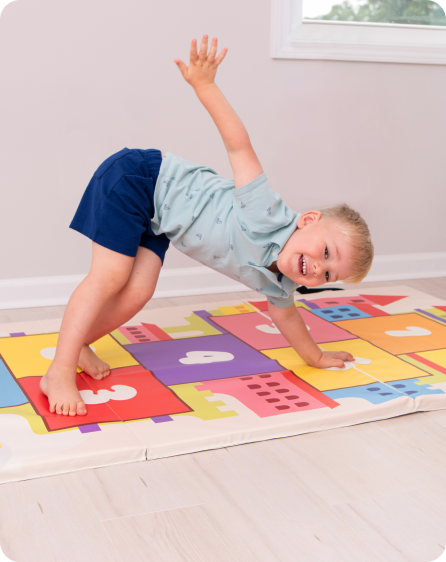
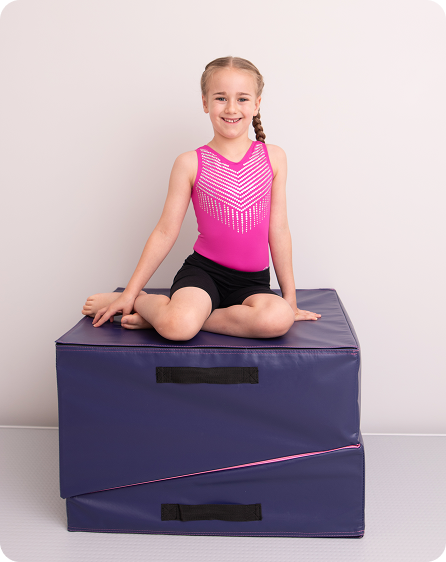
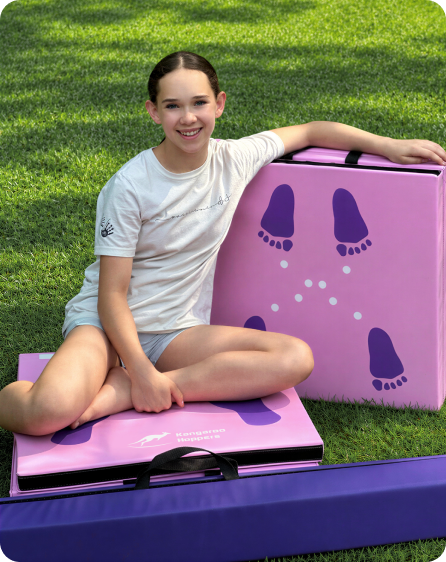
A balance trainer with music and lights for kids turns a wobbly drill into something children ask to do, and in 2026 the Kangaroo Hoppers Kids Balance Trainer with Music & Lights is the pick for most families. The 25.6 inch dome, adjustable handrail and built-in speaker cover what a 3 to 8 year old needs in a playroom.
This guide covers age and weight limits, the features that actually matter, how a trainer differs from a beam, and how to set up a safe corner. You also get a simple progression plan and the safety rules that keep practice calm.
Quick Answer: The best balance trainer with music and lights for kids is the Kangaroo Hoppers Kids Balance Trainer with Music & Lights, a 25.6 inch dome for ages 3 to 8 with a 110 lb limit, an adjustable handrail, LED lights and Bluetooth audio. It suits families who want short, supervised balance sessions at home.
Key Takeaways
- Best overall pick: The Kangaroo Hoppers Kids Balance Trainer with Music & Lights pairs a 25.6 inch non-slip dome with an adjustable handrail, LED lights and Bluetooth audio for children ages 3 to 8.
- Weight limit comes first: The trainer holds up to 110 lb, which covers most preschoolers and early grade schoolers but not adults or heavier siblings.
- Audio and lights drive habit, not balance: Music and light feedback make a short session easier to start, while the unstable dome does the actual training work.
- Space plan: Leave a clear circle of about 4 feet around the dome so the handrail and outstretched arms never meet furniture.
- Where it fits: A trainer builds ankle and core control, a folding beam adds beam specific skills, and a full set adds a bar and mat for gymnastics practice.
Why Does a Balance Trainer with Music and Lights Keep Kids Practicing?
A balance trainer with music and lights keeps kids practicing because the audio and light feedback turn a short drill into a game children start on their own. The balance work underneath is what changes stability, and that work only pays off when sessions happen often.
The training effect is real in young children. In a 12-week program with 24 children aged 3 to 6, static and dynamic balance improved more than in the control group that kept normal activity.[1]
Engagement matters as much as the drill. A meta-analysis of trials found that game-based training improved balance and agility in children under 14.[2]
- Music covers the boredom gap: A nursery rhyme or a favorite playlist gives a child a reason to stay on the dome for one more song.
- Lights give instant feedback: LEDs that react to movement tell a child that a squat or a wobble registered, which feels like a score.
- Short sessions win: Three 5 minute sessions a week beat one long session that ends in tears or a loss of interest.
The practical result is a child who steps on the dome without being asked, which is the habit every balance skill depends on. Pair it with gymnastics workout plans for home practice when you want a weekly structure rather than random play.
What Age and Weight Limits Should You Check Before Buying?
A kids balance trainer should match your child's age, weight and height before any other feature, and the Kangaroo Hoppers Kids Balance Trainer with Music & Lights is rated for ages 3 to 8 and up to 110 lb. Staying inside those limits keeps the dome and handrail stable under a child who is still learning to step on.
- Age 3 to 5: These children need the handrail at its lowest setting and an adult within arm reach for every session.
- Age 6 to 8: Most children in this range can use one hand on the rail, then no hands, and they start adding squats and marches.
- Weight: The 110 lb limit is generous for the 3 to 8 age band but rules out adults, teenagers and heavier siblings who want a turn.
- Height and reach: Check that your child can grip the rail with a slight bend in the elbows when standing on the dome.
- Portability: At 13 lb the trainer is light enough to slide into a closet, which matters if your practice space doubles as a living room.
A trainer that is too big or too tall for a child gets used twice and then ignored, so measure first and buy inside the range. Families with two children three years apart usually find one trainer covers both when the rail adjusts.
Which Features Matter Most on a Kids Balance Trainer?
The features that matter most on a kids balance trainer are a non-slip dome surface, an adjustable handrail, a wide stable base and a power source you can recharge. Music and lights decide whether a child keeps using it, but the surface, rail and base decide whether the session is safe.
| Specification | Kangaroo Hoppers Kids Balance Trainer with Music & Lights |
|---|---|
| Recommended ages | 3 to 8 years |
| Diameter | 25.6 inches |
| Weight capacity | 110 lb |
| Net weight | 13 lb |
| Handrail | Height adjustable, anti-slip |
| Base | Wide octagonal base |
| Materials | ABS, PVC and polystyrene |
| Audio and lights | Bluetooth speaker and movement synced LED lights |
| Power | Built-in rechargeable battery with charging cable |
| Listed price | $119.99 sale, $159.99 regular |
Specifications and prices are taken from the Kangaroo Hoppers product listing as of November 2026 and can change without notice.
- Textured dome: The curved surface follows the shape of a child's foot and the bumps add grip, which helps bare feet and socks without tread.
- Adjustable handrail: Multiple lock heights let the rail sit at chest height for a 3 year old and at hip height for an 8 year old.
- Octagonal base: A wide footprint resists tipping during jumps and side steps, which is the moment most wobbles happen.
- Rechargeable power: One battery runs both the speaker and the lights, so there are no loose batteries to chase in a playroom.
Buy the version whose safety features you can explain to a babysitter in one sentence, because the adult on duty is the last line of protection.
How Does It Compare With a Balance Beam or a Full Home Set?
A balance trainer, a folding beam and a full home set solve different problems, so the right choice depends on the skill your child is chasing next. The trainer builds standing balance and core control in a tiny footprint, a beam builds walking and beam skills, and a full set adds a bar and mat for real gymnastics practice.
| Option | What it trains | Best for | Listed price |
|---|---|---|---|
| Kids Balance Trainer with Music & Lights | Standing balance, ankle control, core stability, squats and marches | Children ages 3 to 8 in a playroom or apartment | $119.99 |
| 8FT Folding Gymnastics Balance Beam for Kids | Beam walks, turns, scales on a 4 inch top | Kids ready to walk a raised line and practice beam skills | $54.99 |
| All-in-One Kids Strength & Balance Training Set | Beam skills, bar hangs and pull-overs, mat work for landings | Families building a full practice corner for older kids | $358.99 |
Prices reflect the Kangaroo Hoppers listings in November 2026 and do not include shipping or taxes.
Choose the trainer if your child is new to balance work, gets bored quickly, or practices in a small room. The 8FT Folding Gymnastics Balance Beam for Kids makes more sense once a child can hold a single-leg stand for 5 seconds and wants to walk a line under 4 inches wide.
That beam folds to 4 feet for storage, and the All-in-One Kids Strength & Balance Training Set fits a child who already takes classes. The set adds a bar, an adjustable beam from 7.3 to 22.2 inches and a 2.1 inch mat at home.
Many families end up with two pieces, and the balance training collection groups the pieces that pair without duplicating function. Whatever you pick, check that the piece you add trains a skill the first one cannot.
How Much Space Do You Need and Where Should It Go?
A kids balance trainer needs a clear circle of about 4 feet around the 25.6 inch dome, plus a level floor that will not slide. A playroom corner, a finished basement or a garage bay all work when the handrail has room and an adult can stand beside it.
- Floor surface: Hard floors and low pile carpet both work, but remove throw rugs that bunch up under the base.
- Clearance: Keep 3 to 4 feet on the open sides so outstretched arms and a tipped rail never hit a table edge.
- Wall position: Place the trainer near a wall but not against it, so a child can reach for support without hitting the rail on drywall.
- Landing zone: A octagon trainer mat for kids or a tri-fold gymnastics mat beside the dome softens a missed step without covering the base.
- Storage: The trainer weighs 13 lb, so it slides against a wall or into a closet between sessions.
This short walkthrough shows how one family turned an ordinary room into a workable practice space, which makes it easier to judge where a trainer would sit in your home.
How Should a 3 to 8 Year Old Progress on a Balance Trainer?
A 3 to 8 year old should move from two-hand support to a free single-leg stand across several months, adding one challenge only after the last one looks steady. Short, frequent sessions with the handrail at the right height keep that learning safe and predictable.
- Step 1, weeks 1 and 2: Step on and off the dome with both hands on the rail, 5 times each direction, until the child stops grabbing for balance.
- Step 2, weeks 3 and 4: Two-hand squats to a slow count of three, 5 reps per session, with the rail at chest height.
- Step 3, weeks 5 to 8: One hand on the rail for a 5 second single-leg stand on each foot, repeating 3 times per side.
- Step 4, weeks 9 to 12: No hands for 5 seconds with the rail lowered to hip height, which lets a child catch a wobble without a full fall.
- Step 5, beyond 12 weeks: Marches in place, slow side steps and light ball tosses while the music plays, all inside the same 5 minute block.
Rhythm can support this kind of practice. In one small trial of 30 children, adding rhythmic audio to a movement program three times a week for three months improved gross motor scores compared with the movement program alone.[3]
Coordination style training also produced larger gains in balance and jumping than routine activity in a study of 51 preschoolers.[4]
Children who want a wider mix of skills can rotate the trainer with a Balance Basics Training Set so the week includes both standing balance and floor work.
"You don't need to be an Olympic-bound athlete to appreciate the wonderful qualities of this sport. Children joining a gymnastics class for the first time are not only going to be learning how to control their body through balance, twisting, jumping, and spatial awareness, but they also will be walking away with a greater understanding of listening skills, overcoming fears of trying new movements, and gaining a sense of accomplishment."
Katera Noviello, Director of the Children's Physical Education & Gymnastics Department, 92nd Street Y (92Y)
Which Safety Rules and Common Mistakes Matter Most?
The safety rules that matter most are adult supervision, bare feet or gripped socks, a clear floor and a hard stop at the 110 lb weight limit. Most home problems come from three mistakes: treating the dome as a trampoline, letting siblings pile on together, and skipping the handrail check before each session.
- Mistake, jumping on the dome: The trainer is built for stepping, squatting and balancing, and repeated jumps from height put stress on the base and the child's ankles.
- Mistake, sharing a turn: One child on the dome at a time, with the second child waiting outside the 4 foot circle rather than holding the rail.
- Mistake, loose rail: Push down on the handrail before every session and confirm each lock height is seated, since a slipping rail causes most falls.
- Mistake, sock feet on a smooth floor: Use bare feet or socks with grip dots, and move the trainer off polished hardwood if it slides.
- Mistake, long sessions: Five focused minutes beats twenty, because tired legs wobble and wobbles near a rail end in bumps.
Families who want a padded area around the trainer often add a balance and tumbling starter set so the landing zone and the balance work arrive together.
How Do You Care for the Battery, Speaker and Surface?
Care for a kids balance trainer by wiping the dome with a damp cloth and mild soap, keeping the speaker area dry and charging the battery before the lights fade. Store it out of direct sun and check the base and handrail fittings once a week.
- Cleaning: Wipe the textured surface after barefoot sessions and avoid submerging the dome, since water can reach the electronics.
- Charging: Top up the built-in battery after every few sessions rather than waiting for a full drain, and use the cable that ships with the trainer.
- Speaker care: Keep drinks and water bottles away from the audio panel, and dry the area immediately if something spills.
- Storage: Keep the trainer indoors and away from a hot garage in summer, because heat shortens battery life.
- Inspection: Look for cracks in the base, worn grip bumps or a wobbly rail, and stop using the trainer until the part is replaced.
A trainer that is wiped, charged and checked stays in service for years, which matters when one purchase has to cover two children.
FAQs About Balance Trainers with Music and Lights
What age is a balance trainer with music and lights suitable for?
This trainer is built for children ages 3 to 8, and the adjustable handrail locks at several heights so it grows with your child. Younger kids should start with an adult holding the rail until they can step up and balance without wobbling.
How much weight can a kids balance trainer hold?
The Kangaroo Hoppers trainer is rated for up to 110 lb, which covers most children in the 3 to 8 age range. Keep adults and heavier siblings off it, and stop practice if the dome, base or rail shows cracks.
Do the lights and music need batteries?
No. The LED lights and the Bluetooth speaker run on a built-in rechargeable battery, and the trainer ships with a charging cable. Charge it when the lights dim or stop reacting to movement, and keep the speaker area dry so the electronics inside keep working.
How do kids connect music to the balance trainer?
Turn on Bluetooth mode on the trainer, open the Bluetooth settings on your phone or tablet, then pair with the device. Any audio from your phone then plays through the built-in speaker, so nursery rhymes, playlists or a timer track all work.
How much floor space does a balance trainer need?
Plan for a clear circle of about 4 feet around the 25.6 inch dome so arms and the handrail never hit furniture. A playroom corner or a basement works, as long as the floor is level and free of rugs that slide.
Is a balance trainer safe for a 3 year old?
Yes, with adult supervision. A three year old should hold the adjustable handrail with both hands while stepping on, and an adult stays within reach the whole time. Use the lowest rail setting, start with 5 minute sessions, and keep a mat or rug under the base.
Can a balance trainer replace a balance beam or a class?
No. A balance trainer builds ankle control, core stability and confidence, while a beam teaches beam specific skills and a class adds coached progression. Many families use the trainer on weekdays and keep the beam or class for weekends, because a trainer fits small rooms better.
Conclusion
The best balance trainer with music and lights for kids is the one your child steps onto without being asked, and the Kangaroo Hoppers trainer earns that with a stable 25.6 inch dome, a handrail that grows with the child and audio that makes five minutes feel short.
Start with the trainer on a level floor, keep an adult within reach and add the next challenge only when the last one looks easy. Browse gymnastics equipment gifts under 100 dollars when you want the next piece for a birthday or a holiday.
Disclaimer
This article offers general information about supervised balance practice for children at home and is not medical or physical therapy advice. Talk with a pediatrician or a qualified coach if your child has a health condition, an injury or a developmental concern that affects balance.
References
1. Yu Q, Pan X, Liu Z, Deng C. Effect of gymnastics on balance ability in children aged three to six years. Front Psychol. 2025;16:1549741. doi:10.3389/fpsyg.2025.1549741. PMCID: PMC11921776.
2. Zhao L, Wang J, Shang H, Liu P, Zhou J, Cheng Y. The effects of video-based exergames on balance and agility in children with and without developmental coordination disorder: a meta-analysis. PeerJ. 2026;14:e21664. doi:10.7717/peerj.21664. PMCID: PMC13546625.
3. El Shemy SA, El-Sayed MS. The impact of auditory rhythmic cueing on gross motor skills in children with autism. J Phys Ther Sci. 2018;30(8):1063-1068. doi:10.1589/jpts.30.1063. PMCID: PMC6110221.
4. Basarir B, Canli U, Sendil AM, et al. Effects of coordination-based training on preschool children physical fitness, motor competence and inhibition control. BMC Pediatr. 2025;25(1):539. doi:10.1186/s12887-025-05897-x. PMCID: PMC12235774.

Leave a comment
This site is protected by hCaptcha and the hCaptcha Privacy Policy and Terms of Service apply.