

A kids balance beam is the simplest way to add real gymnastics practice at home, and the right beam depends on your child's age, skill level and the floor space you can clear. Matching the beam to your child's stage matters more than buying the longest or most expensive model.
This guide compares beam types, covers the safety setup most parents miss, and maps each stage to a current Kangaroo Hoppers beam with real prices. It is written for parents of kids ages 2 to 12 who want supervised practice, not a training plan for competitive athletes.
Quick Answer: The best balance beam for kids at home is a low, stable beam that matches your child's height and skill stage. A folding floor beam fits most beginners, an adjustable 8 foot beam fits kids who practice weekly, and a mat plus adult supervision matter more than beam length.
Key Takeaways
- Match the beam to the stage: A folding floor beam suits ages 3 to 9, and an adjustable beam suits kids who already practice every week.
- Base width beats beam length: An 8 inch base and a non-slip bottom keep a floor beam steady, which is what prevents most home falls.
- Budget for a mat: A 2.1 inch mat under and around the beam is the single cheapest safety upgrade for any home setup.
- Repetition drives progress: Height should rise only after a child completes clean walks at the current level.
- Keep acro skills in the gym: Back handsprings and aerials need a coach, a sprung floor and proper matting.

Why Does a Balance Beam Help Kids Beyond Gymnastics?
A balance beam helps kids build postural control, body awareness and confidence because it asks them to stay stable on a narrow surface while they move. Those skills carry into playground play, bike riding and any sport that needs quick weight shifts.
Balance is not something children simply outgrow. In a study of 80 children ages 6 and 7, posturography scores fell below age reference values in several sensory conditions, and higher body weight was linked to poorer balance.[1]
- Foot placement: A 4 inch top forces precise steps, so kids learn exactly where their feet land.
- Core control: Standing tall on a narrow surface trains the trunk muscles that hold posture.
- Focus: One lapse in attention shows up immediately as a wobble, which teaches concentration.
- Confidence: Finishing a full walk across the beam gives a clear win a child can repeat.
Beam work also pairs well with short strength and flexibility sessions, which is why a simple gymnastics workout plan for home practice usually includes balance drills.
Kids who later want bar skills can add them, but the beam stays the cheapest entry point into home gymnastics.
What Makes a Home Balance Beam Safe?
A home balance beam is safe when it has a wide non-slip base, a height your child can step onto without help and clear floor around it. Supervision and a mat remove most of the risk that comes from speed and height.
- Wide base: An 8 inch base on a floor beam resists tipping far better than a narrow board.
- Grip surface: Suede-like covers and rubber feet hold bare feet in place instead of letting them slide.
- Low start: Beginners should practice with the beam on the floor, not raised on legs.
- Clear zone: Keep 3 feet of open floor at each end and no furniture within arm reach.
Socks are the most common avoidable problem at home, so practice barefoot or in gymnastics shoes.
Parents comparing equipment types can read the guide to gymnastics bars for kids at home before adding a second apparatus.
Which Balance Beam Type Fits Your Child?
The right beam type depends on your child's age and how often they practice. Folding floor beams suit beginners, sectional beams stretch a tight budget and adjustable beams with legs serve kids who train every week.
- Folding floor beam: Sits on the floor, folds for storage and suits ages 3 to 9.
- Sectional beam: Short pieces join with hook and loop ends, so the runway grows with the room.
- Adjustable leg beam: A wood core on metal legs, built for kids who already take classes.
- Competition-style beam: A taller, firmer beam for advanced athletes, rarely needed at home.
Families who are unsure can compare the full gymnastics beam collection and match beam height to their child's stage rather than age alone.
A taller beam is not a better beam. Height only helps once a child can finish a clean walk at the current setting.
How Much Space Does a Home Balance Beam Need?
A home balance beam needs a clear area about 10 feet long and 6 feet wide, which leaves 3 feet at each end for dismounts. Measure the room before you buy, because a beam that crowds the furniture gets used twice and then stored.
- Length: Plan 6 to 8 feet of beam plus landing space at both ends.
- Ceiling: A beam raised to 22.2 inches needs headroom above your child's standing height.
- Floor: Carpet slows a folding beam, and tile needs a non-slip base to stay put.
Test the highest setting with your child standing beside the beam, not on it.
Small rooms still work, because two 4 foot sections joined end to end give a longer runway without permanently claiming floor space.
Which Kangaroo Hoppers Balance Beam Fits Your Child?
Kangaroo Hoppers sells two home beams and two bundles, and the folding beam at 54.99 dollars covers most beginners while the 8 foot adjustable beam at 155.99 dollars fits kids who train every week. The bundles make sense when a family owns no mat and no bar yet.
| Model | Price | Beam style | Best for |
|---|---|---|---|
| 8FT Folding Gymnastics Balance Beam for Kids | 54.99 dollars | Folding floor beam, 4 inch top, 8 inch base | First beam for ages 3 to 9 |
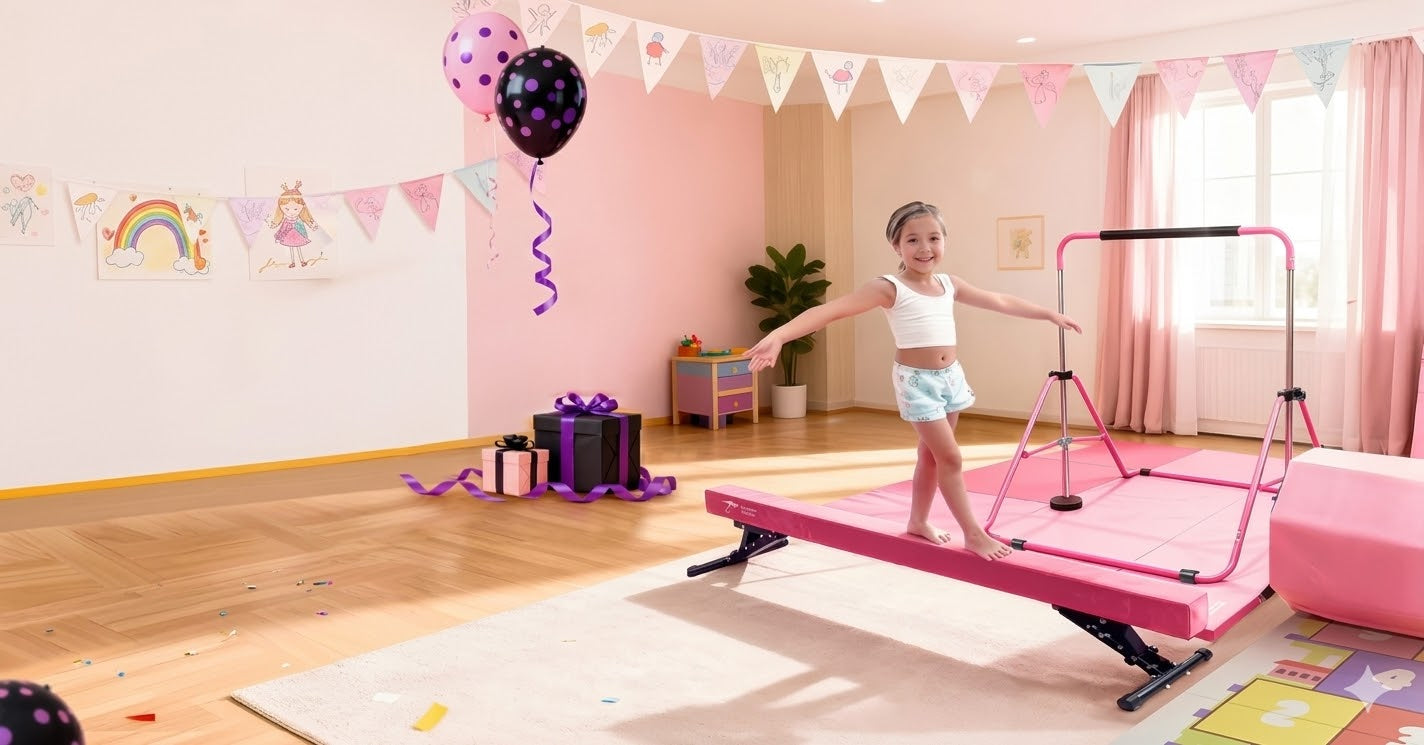
| 8Ft Adjustable Gymnastics Beam | 155.99 dollars | Wood core, 5 heights from 7.3 to 22.2 inches | Weekly practice, ages 8 and up |
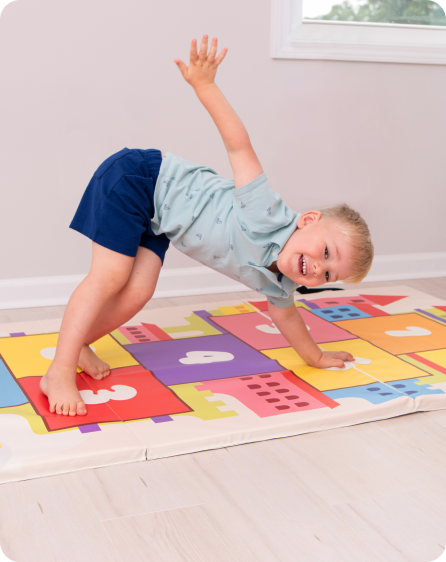
| Gymnastics Playset | 139.99 dollars | Folding mat plus floor beam | Toddler play and small rooms |
| All-in-One Kids Strength and Balance Training Set | 358.99 dollars | Adjustable beam, kip bar and tri-fold mat | One purchase for a full home setup |
Prices and specs reflect the Kangaroo Hoppers product listings on November 5, 2026 and can change without notice.
The folding beam is the lowest cost entry point and the easiest to put away, which makes it the practical pick for a shared living room.
The adjustable beam adds a wood core, iron legs and five height settings, so it can start low and rise as skills settle.
The playset bundles a folding mat with a beam, which helps families who own neither and want one delivery.
The all-in-one set pairs a beam with a kip bar and a mat for kids who already want both apparatus in one order.
Whichever you choose, budget for a mat if the beam will ever be raised, because the mat carries more of the safety load than the beam does.
How Do You Set Up a Safe Practice Corner?
A safe practice corner needs a mat that covers the floor under and around the beam, a clear landing zone on both sides and nothing hard within arm reach. Set the corner up the same way every session so your child learns the boundaries without being told.
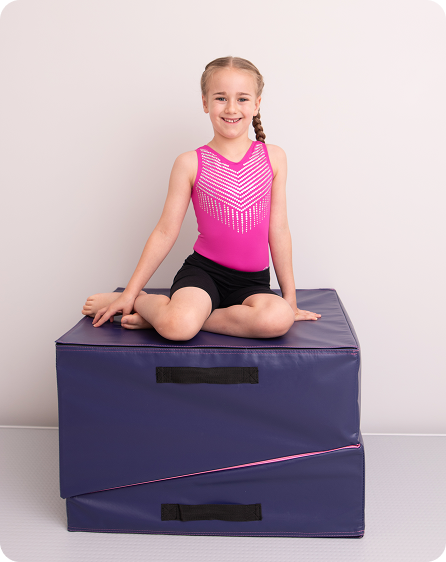
- Mat first: A 2.1 inch folding mat cushions wrists and elbows when a foot slips.
- Check the base: Press the non-slip bottom on tile or hardwood before every session.
- Clear the floor: A rolling ball is the usual cause of a fall, so store loose toys away.
Kangaroo Hoppers sells mats on their own, and the tri-fold gymnastics mat measures 35.5 by 70.5 by 2.1 inches, which covers the floor under an 8 foot beam with room at each end.
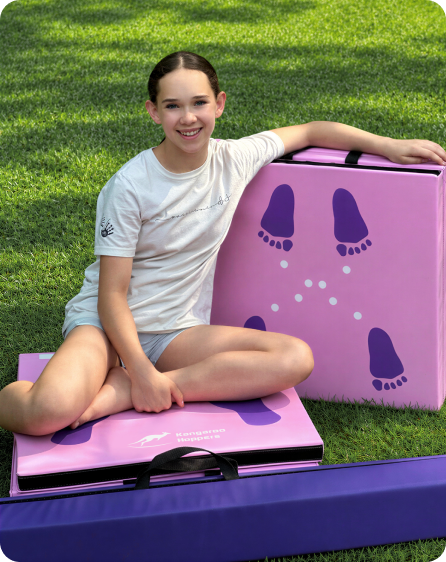
Families who want the mat and beam together can browse the mat and balance pack collection instead of buying twice.
The clip above shows the adjustable beam at home, so parents can judge the height range before ordering.
How Do You Care for a Kids Balance Beam?
A kids balance beam lasts longer when it is wiped after each session, kept out of direct sun and stored flat or folded so the base stays straight. Most home damage comes from stacked weight in storage, not from daily use.
- Suede-like covers: Wipe with a damp cloth and mild soap, then let the surface dry fully.
- Foam and vinyl: Keep both away from sharp toys, radiators and long sun exposure.
- Folding beams: Store them folded rather than leaned against a wall for months.
Check the base and feet once a month, because a worn non-slip pad is the first part to fail and the hardest to notice.
A beam that wobbles is a beam that gets avoided, so fix a loose foot before practice continues.
How Should Kids Progress on the Beam?
Kids should progress from a floor line to a low beam, then to a raised beam, adding repetitions at each level before the height goes up. Height is a reward for consistency, not a shortcut to a new skill.
- Floor line: Tape a 4 inch line and practice walks, turns and one foot balances.
- Low beam: Repeat the same skills on a floor beam until three clean walks in a row.
- Raised beam: Start at the lowest setting and add one level after a week of clean walks.
- Jumps and dismounts: Keep them small and land on the mat, never on bare floor.
Repetition is the mechanism. In a randomized trial, 88 children practiced task-specific balance training twice a week for 3 months, and their balance control and motor proficiency improved.[2]
More hours are not automatically better. Among 131 youth gymnasts, higher specialization was not linked to better functional task performance.[3]
"You build the small steps before that. You start with very small steps like first on the floor, and you do a lot of numbers. Then on the low beam and you do a lot of numbers there, too. Then when they've got the muscles memory ready, you work on the mental aspect."
Bogi Michovsky, gymnastics coach, Gymnastics Zone
FAQs About Balance Beams for Kids at Home
What age can a child start using a balance beam at home?
Children can start on a floor level beam around age 2, when they can walk steadily with an adult nearby. Keep the beam on the ground until about age 5, then raise the height only after your child walks the full length without stepping off.
How long should a home balance beam be?
A home beam of 6 to 8 feet gives most kids enough room for walks, turns and small jumps. Shorter 4 foot sections work in tight rooms, and hook and loop ends let you join two sections when your child is ready for a longer run.
Do you need a mat under a kids balance beam?
Yes, a mat under and around the beam protects wrists and elbows when a foot slips. A 2.1 inch folding mat is enough for floor level practice, and a raised beam needs a wider mat that covers the whole landing zone on both sides.
Is a folding beam or an adjustable beam better for beginners?
A folding floor beam suits beginners because it sits low, stores easily and costs less than a beam with legs. An adjustable beam makes more sense once a child practices every week and needs height changes to work on new skills.
Can a child practice back handsprings on a home beam?
No, back handsprings and other high risk acrobatic skills belong in a gym with a coach, a sprung floor and proper matting. Home beam practice should stay with walks, turns, scales, small jumps and simple dismounts under adult supervision. A home beam builds the basics that lead toward those skills.
How much does a good home balance beam cost?
A folding floor beam for beginners costs about 55 dollars at Kangaroo Hoppers, while an adjustable wood core beam runs about 156 dollars. Bundles that add a mat or a kip bar cost more but often replace two separate purchases. Prices change, so confirm the current listing before you buy.
Conclusion
The best balance beam for kids at home is the one that matches your child's height, stage and floor space, not the most expensive model on the page. A folding floor beam covers beginners, an adjustable beam covers weekly practice, and a mat makes either one safer.
Start with the beam your child can step onto today, then add height as skills settle. Browse the gymnastics equipment gifts under 100 dollars if you are shopping for a birthday rather than a practice corner.
Disclaimer
This article offers general equipment guidance for parents and is not medical, physical therapy or coaching advice. Talk with your child's pediatrician or a qualified gymnastics coach before starting a training program, especially after an injury.
References
1. Lara S, Graup S, Balk RS, et al. Association between postural balance and anthropometric indexes in elementary schoolchildren. Rev Paul Pediatr. 2018;36(1):7. doi:10.1590/1984-0462/;2018;36;1;00011. PMCID: PMC5849375.
2. Fong SS, Guo X, Liu KP, et al. Task-specific balance training improves the sensory organization of balance control in children with developmental coordination disorder: a randomised controlled trial. Sci Rep. 2016;6:20945. doi:10.1038/srep20945. PMCID: PMC4750073.
3. Root H, Marshall AN, Thatcher A, Valier ARS, Valovich McLeod TC, Bay RC. Sport specialization and fitness and functional task performance among youth competitive gymnasts. J Athl Train. 2019;54(10):1095-1104. doi:10.4085/1062-6050-397-18. PMCID: PMC6805067.

Leave a comment
This site is protected by hCaptcha and the hCaptcha Privacy Policy and Terms of Service apply.