
If you feel overwhelmed by gymnastics acronyms and level numbers, this guide will help you quickly understand where your child fits and what each pathway typically looks like. You will hear terms like compulsory, optional, JO, DP, and Xcel. They can sound confusing, but the structure becomes simple once you see the big picture.
This parent-friendly guide breaks down U.S. gymnastics levels in everyday language, explains the main competitive tracks, and gives you practical questions to ask your gym. A key concept we explore is the traditional competitive ladder historically called Junior Olympics, now officially named the USA Gymnastics Development Program.
Last updated: March 4, 2026. Rules and level usage can vary by gym, region, and season. Always confirm details with your coach or meet director.
Key Takeaways
- The U.S. system usually starts with Recreational classes, then Pre-Team, then either the Development Program or Xcel.
- Compulsory levels build clean basics through standardized routines, while Optional levels allow customized routines and music.
- Progress is not linear. Repeating a level is common and often safer for confidence and skill quality.
- Xcel offers flexibility for multi-sport athletes, late starters, and families balancing time and budget.
- Safety and enjoyment matter most. Watch for persistent pain, fear blocks, and burnout signals early.
Big Picture: How Gymnastics Is Structured in the U.S.
Before diving into the numbers, it helps to see the bird's-eye view. In the U.S., the sport is generally divided into a few main pathways:
- Recreational Classes: Non-competitive classes focused on fun, fitness, and fundamentals.
- Pre-Team / Developmental: A bridge program for children showing potential for competition.
- Junior Olympics (JO) / Development Program: The traditional, rigorous competitive track that leads from basic levels up to national competition.
- Xcel Program: A customizable alternative track that offers more flexibility.
It is important to remember that there is no single right path. A child can thrive in Recreational, DP, or Xcel depending on goals, personality, time, and budget.
Recreational Gymnastics: Before Levels Really “Count”
Most children start here. Recreational classes are typically categorized by age rather than strict skill levels. The goals are simple: building body awareness, strength, coordination, and, most importantly, having fun.
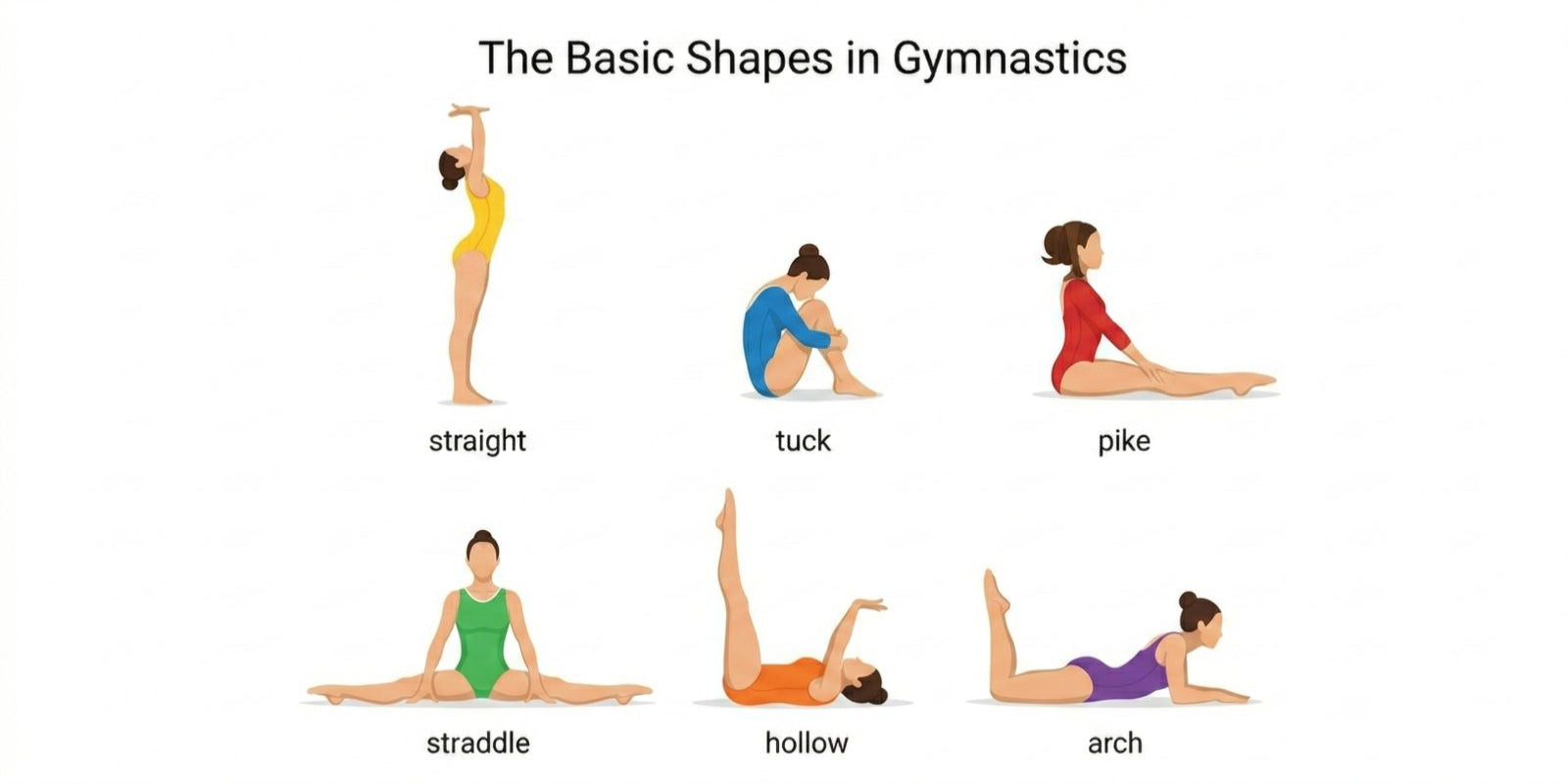
In these classes, children learn basic shapes (tuck, pike, straddle), how to swing on a bar, and how to balance. You might realize your child is ready for more if they demonstrate consistent strength (like holding a chin-up), possess above-average flexibility, or have a burning interest in competing rather than just playing.
Parent tip: Ask your coach what skills and behaviors they look for before inviting a child to Pre-Team. Many gyms value focus and consistency as much as flexibility.
Pre-Team & Developmental Programs
“Pre-team” is exactly what it sounds like: a waiting room for the competitive team. It serves as a bridge between a relaxed recreational environment and the disciplined world of competitive gymnastics.
In pre-team, the focus shifts to form—keeping legs straight and toes pointed—and building the specific strength required for the JO program. The time commitment usually increases, often requiring two or more days a week in the gym. This stage is crucial for determining if a child has the focus and physical ability to handle the demands of the upcoming levels.
This stage is also where coaches evaluate readiness beyond skills, including attention span, recovery habits, and how a child handles repetition, corrections, and pressure.
Understanding the Junior Olympics (JO) / Development Program
For decades, the primary competitive path in the U.S. was called the Junior Olympics. Recently, USA Gymnastics officially renamed it the Development Program (DP). However, old habits die hard; you will still hear coaches, parents, and meet directors refer to it as "JO."
This program is divided into levels 1 through 10. It is a progressive ladder where skills get harder at every step. Within this structure, the levels are split into two major categories: Compulsory and Optional.
Important note: Some gyms do not use every early level in competition. Level usage can depend on the gym’s training philosophy and meet options in your area.
Compulsory Levels (Level 1–5) – Same Routines for Everyone
Overview
In Compulsory levels, gymnasts perform the same routines. Judges look for clean basics and precise technique. The purpose is to build a foundation of safety and consistency before harder skills.
Think of Compulsories as gymnastics handwriting practice. The goal is not creativity yet. The goal is control.
Level-by-Level Parent Snapshot
Level 1
- Status: Level 1 is usually an entry point that introduces basic gymnastics structure, safety habits, and body control. Many gyms use it as a foundational stage for beginners before more demanding skill progressions begin.
- Focus: The main focus is learning rolls, shapes, handstand basics, simple bar support, and confident movement on low beam and floor. Athletes are expected to build coordination, listening skills, and comfort with basic apparatus work.
Level 2
- Status: Level 2 is commonly used as a developmental level that reinforces beginner fundamentals with more consistency. It often helps athletes transition from simple class participation into more organized skill evaluation.
- Focus: The main focus is improving rolls, handstands, basic swings, jumps, and steadier beam movement with better control. Coaches usually look for cleaner shapes, stronger body tension, and safer landings across all events.
Level 3
- Status: Level 3 is often the first true competitive level in many gyms and brings higher expectations for routine execution. Athletes are usually expected to show stronger fundamentals and more confidence under structured judging.
- Focus: The main focus is stronger handstands, pullovers on bars, basic leaps, and tighter form throughout routines. This level also emphasizes better rhythm, sharper positions, and more consistent performance quality.
Level 4
- Status: Level 4 is a major jump in difficulty and is often seen as the first serious compulsory level by many programs. It requires more polish, strength, and consistency rather than just basic skill completion.
- Focus: The main focus is cleaner routine execution, improved bar mechanics, and more precise beam and floor skills. Many athletes begin working around kip development, stronger tumbling basics, and beam cartwheel confidence at this stage.
Level 5
- Status: Level 5 is commonly viewed as the bridge toward Optional gymnastics and demands more maturity in training. It usually requires athletes to handle longer routines, stronger basics, and greater overall endurance.
- Focus: The main focus is building more power in tumbling, progressing bar dismounts such as the flyaway, and maintaining form under fatigue. Athletes also need stronger consistency, tighter execution, and better routine stamina across all four events.
Parent reality check: It is normal for a child to spend extra time in Level 4 or Level 5. Staying longer often improves technique and reduces injury risk later.
Optional Levels (Level 6–10) – Individual Routines
What Optional Means
Once a gymnast reaches Optionals, routines become customized. Athletes include required elements, but the choreography can be tailored to highlight strengths and manage weaknesses.
Scores often feel less brutal than Compulsories because routines can be built around what a gymnast does well, while still meeting requirements.
Level 6 to 7: Introductory Optional
Level 6
- Status: Level 6 is often the first stage where gymnasts begin connecting skills with more freedom while still working within a fairly structured Optional framework. Training hours usually increase at this point, often around 12 to 16 hours per week, depending on the gym and the athlete.
- Focus: The main focus is linking skills smoothly, performing with better rhythm, and building confidence in longer routines. Coaches also place more attention on strength, mobility, and recovery as difficulty and training volume rise.
Level 7
- Status: Level 7 is a more demanding Optional level that usually brings greater routine complexity and higher performance expectations. Athletes are expected to manage more combinations, stronger execution, and increased physical preparation.
- Focus: The main focus is connecting bigger skills, showing more rhythm and confidence, and handling routines with greater control under pressure. This level also demands better strength, mobility, and recovery habits to support safe progress.
Level 8 to 10: Advanced Optional and College-Track Level
Level 8
- Status: Level 8 marks a high competitive standard where routines demand greater difficulty, stronger consistency, and better execution under pressure. Athletes at this level need physical toughness, mental resilience, and the ability to maintain technique even when fatigued.
- Focus: The main focus is performing more complex tumbling, stronger twisting combinations, and cleaner skill connections across events. Coaches also expect more polished presentation, reliable landings, and better control in high demand routines.
Level 9
- Status: Level 9 is an advanced competitive level that raises both routine complexity and performance expectations. Athletes are expected to handle tougher combinations, sharper execution, and more pressure in training and competition.
- Focus: The main focus is upgrading tumbling and twisting combinations, refining technique, and improving consistency across longer and harder routines. Success at this level depends on strength, resilience, and the ability to repeat difficult skills with confidence.
Level 10
- Status: Level 10 is the top of the Development Program ladder and represents an elite standard within junior competitive gymnastics. Many athletes at this stage begin pursuing college recruiting opportunities, although NCAA routines and scoring are not identical to DP competition.
- Focus: The main focus is mastering high difficulty skills, performing with consistency under pressure, and showing strong execution across all four events. Level 10 gymnasts also need advanced physical preparation, mental composure, and competitive maturity to succeed at this stage.
Beyond JO: Elite and Other High-Level Paths
When you watch the actual Olympics on TV, those gymnasts are "Elite." This is a tier above Level 10. Only a tiny fraction of gymnasts ever qualify for Elite testing.
While the junior olympics path feeds into this, moving to Elite requires a specialized, highly intense training regimen that differs from the standard Development Program.
Elite is not the only definition of success. Many gymnasts build lifelong strength, confidence, and leadership without ever pursuing Elite.
Xcel Program: A More Flexible Alternative
Not every family wants a schedule of 20 hours a week. Xcel was created to keep gymnasts in the sport with more flexibility.
Xcel includes divisions such as Bronze, Silver, Gold, Platinum, Diamond, and Sapphire. Rules are often more lenient, allowing gymnasts to compete skills they perform well while avoiding skills that may not be ready.
Xcel can be a great fit for multi-sport athletes, late starters, gymnasts who prefer flexibility, or families balancing school, travel, and budget.
Choosing the Right Path for Your Child
Choosing between DP and Xcel depends on your child’s goals and your family’s schedule and budget. Consider time commitment, recovery needs, and overall stress level.
Ask your gym:
- What is your philosophy on moving up levels
- How do you handle fear blocks and mental barriers
- What are realistic expectations for a child starting at this age
- How do you manage injuries, rest, and return to training
Also ask what success looks like at your gym. Some programs focus on long-term development, while others prioritize fast progression.
Progression, Move-Ups, and “Is My Child Behind?”
In gymnastics, repeating a level is common. It can be the best thing for confidence, clean form, and safety. Progression is rarely a straight line.
A child might move quickly through early levels and then spend extra time at a level where a key skill is difficult, such as the kip or more advanced tumbling.
Avoid the race-to-the-top mindset. There is no universal age requirement for Level 10. Healthy progression values technique, strength, and confidence over speed.
What Competitions Are Like at Each Stage
Meet days can be long and busy. Expect warm-ups, a march-in, rotations, and an awards ceremony.
In Compulsories, scoring can feel strict because everyone is compared to the same ideal routine. In Optionals, scores may rise because gymnasts can tailor routines and manage risk.
Parent tip: Track effort, bravery, and personal bests. Medals change. Confidence and skill quality stay.
Safety, Wellness, and Burnout Prevention
Gymnastics is high-impact and demanding. Safety and long-term health should be non-negotiable.
Listen if your child reports persistent pain. Gymnasts often try to push through discomfort. Watch for burnout signs such as dread before practice, sudden mood changes, sleep issues, or loss of motivation.
Safety red flags: pain that lasts more than a few days, swelling, limping, pain at night, or repeated wrist, elbow, ankle, or back complaints. In these cases, pause training and seek medical guidance.
Well-run programs build recovery into the plan, teach smart progressions, and treat mental skills as part of training, not an afterthought.
FAQs
What is the main difference between the Development Program and Xcel in US gymnastics?
The Development Program is a traditional competitive track leading to national levels, while Xcel offers a flexible alternative for families wanting lower time commitments. The Development Program requires rigorous progression through specific levels. Xcel allows athletes to customize routines based on their current strengths, making it ideal for multisport athletes.
Why do gymnasts often repeat a level in the US gymnastics system?
Repeating a level is completely normal and serves as the best method to build athlete confidence and ensure proper form. Gymnastics progression rarely follows a straight line. Spending extra time at a specific stage allows children to safely master difficult skills, which ultimately reduces the overall risk of future injuries.
What is the primary focus of compulsory levels in US gymnastics?
Compulsory levels mandate that all gymnasts perform the exact same routines to build a strong foundation of safety and technique. Judges strictly evaluate athletes on clean basics and precise control. This structured approach functions like handwriting practice, ensuring that children develop consistency before they attempt harder and more creative skills.
When do gymnasts get customized routines in the US gymnastics system?
Gymnasts begin performing customized routines once they advance to the optional levels. This transition usually happens around level six. Athletes must still include specific required elements, but coaches can tailor the overall choreography and music choices to highlight individual strengths and manage weaknesses for a better competitive scoring outcome.
How can parents identify signs of gymnastics burnout in the US system?
Parents can spot burnout by watching for sudden mood changes and sleep issues or a noticeable loss of motivation. Children might also express dread before attending practice. Persistent pain that lasts more than a few days serves as another major red flag that requires immediate rest and professional medical guidance.
Conclusion
Whether your gymnast aims for college recruiting through the Development Program or prefers the flexibility of Xcel, there is no single correct path. The best outcome is a healthy, positive experience that builds confidence, strength, and resilience.
If you understand the pathways and the purpose of each stage, you can support your child with clearer expectations, smarter questions, and better long-term decisions.


Leave a comment
This site is protected by hCaptcha and the hCaptcha Privacy Policy and Terms of Service apply.