
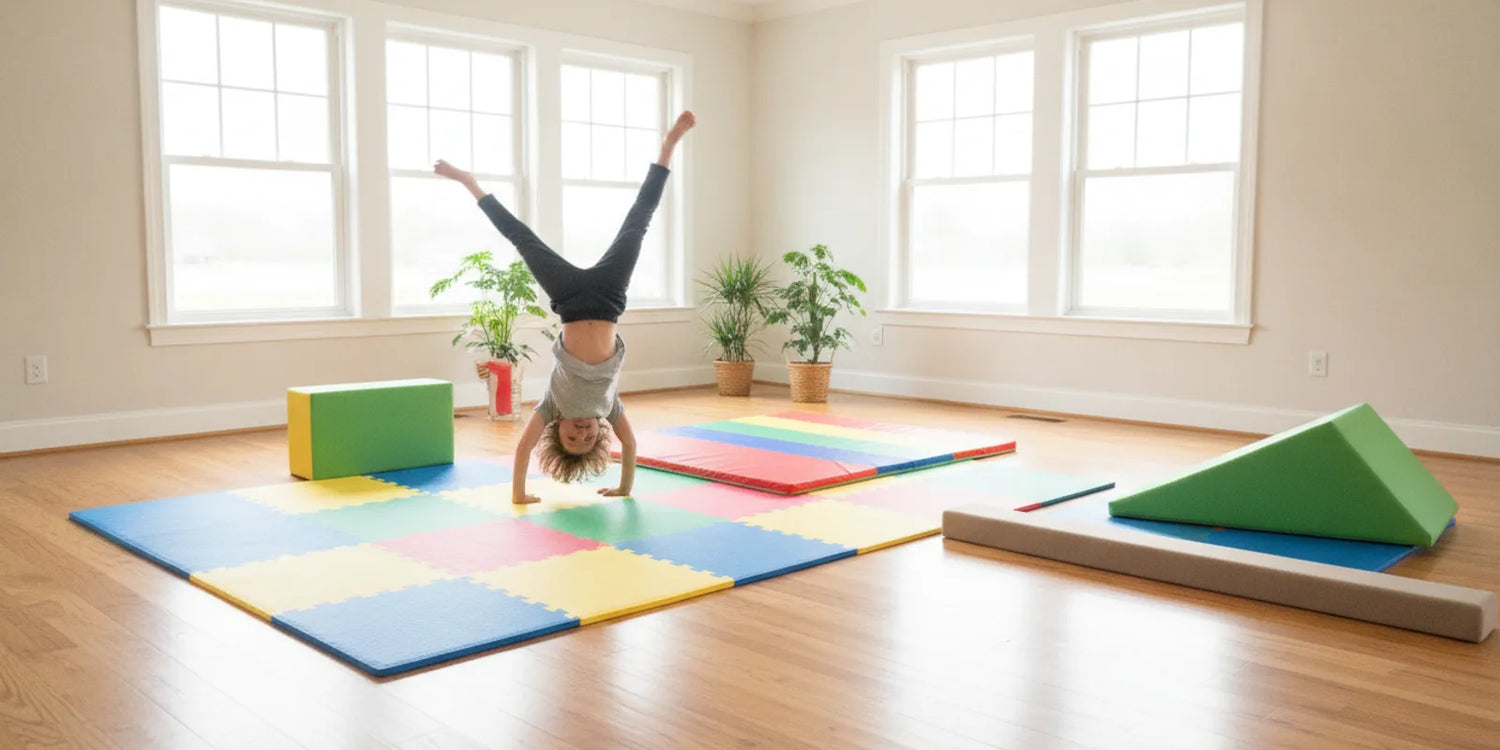
A cartwheel is a sideways rotation where your hands and feet move in a smooth hand-hand-foot-foot pattern, and it is one of the first big gymnastics skills most kids want to master. This guide breaks it into four clear steps your child can practice safely at home.
You will find a quick warm-up, drills to build confidence, common mistakes to fix, and simple safety rules. It is written for parents, coaches, and kids practicing together, not for adult athletes.
Quick Answer: To turn a cartwheel, a child starts in a lunge with arms up, places both hands on the ground one at a time along a straight line, kicks the legs up and over the head into a sideways handstand, then lands foot-by-foot in a lunge facing the opposite direction. Practice on a soft mat with an adult spotting.
Table of Contents
- What Is a Cartwheel and Why Is It Great for Kids?
- How Should Kids Warm Up and Find Their Lead Side?
- How Do You Turn a Cartwheel in 4 Steps?
- Which Drills Build Up to a Full Cartwheel?
- What Are the Most Common Cartwheel Mistakes?
- How Do You Keep Cartwheel Practice Safe?
- How Often Should Kids Practice a Cartwheel?
Key Takeaways
- Four core steps: Lunge, hands down one at a time, kick over, and land in a lunge facing the other way.
- Pick a lead side: Let your child practice both directions and keep the side that feels stronger and more balanced.
- Drills build the skill: Bunny hops, the arc-on-the-floor pattern, and wall cartwheels develop the shape before going solo.
- Safety first: Use a padded mat, clear the space, spot beginners at the hips, and stop if there is wrist or neck pain.
- Short, regular practice wins: A few brief sessions each week beat one long session for building a controlled cartwheel.
What Is a Cartwheel and Why Is It Great for Kids?
A cartwheel is a sideways rotation in which the body passes through a brief straddle handstand, moving hands then feet in a wheel-like arc. It builds coordination, upper-body strength, balance, and spatial awareness in one fun movement.
Gymnastics-style movement supports balance development in young children. One study found that children who completed educational gymnastics lessons improved one-foot balancing and postural control more than children doing typical physical education[1].
- Builds body awareness: Kids learn where their hands, hips, and feet are while upside down.
- A foundation skill: The cartwheel leads to roundoffs and other tumbling on the kids gymnastics equipment collection.
- Confidence booster: Mastering a visible skill motivates kids to keep moving and trying new ones.
It is worth knowing the cartwheel is not the easiest first skill. Research on seven-year-olds found the frontal cartwheel was one of the more complex gymnastics skills, with slower gains than simpler forward and backward rolls over an 18-week program[2].
"Importantly, literacy in the physical sense is not just about participating in daily bouts of MVPA. It is also about moving proficiently in a variety of physical activities with confidence, competence, and enthusiasm because when children are equipped with those characteristics, it is more likely they will participate in the recommended amount of MVPA"
Avery Faigenbaum, EdD, FACSM, FNSCA, Professor of Health and Exercise Science, The College of New Jersey
How Should Kids Warm Up and Find Their Lead Side?
Kids should warm up with light movement and gentle stretches before any cartwheel attempt, then test both directions to find the side that feels stronger. A warm body and a chosen lead side make the skill safer and easier to learn.
A Quick 5-Minute Warm-Up
Start with light cardio such as jogging on the spot or jumping jacks, then loosen the wrists, shoulders, hamstrings, and hips since these areas carry the load in a cartwheel.
How to Find the Dominant Lead Side
Have your child try a few practice kicks leading with each side, since their writing hand is not always their lead hand for tumbling.
- Test both ways: If right-handed, they usually step the right foot forward and place the right hand down first.
- Keep the comfy side: Whichever direction feels more balanced becomes their lead side for practice.
- Build balance too: Single-leg holds on a kids balance beam help the stability a cartwheel needs.
How Do You Turn a Cartwheel in 4 Steps?
You turn a cartwheel in four steps: start in a lunge with arms up, place your hands down one at a time, kick your legs up and over your head, then land foot-by-foot in a lunge facing the opposite way. Keeping the legs straight and the hands in a straight line creates a clean wheel shape.
Step 1: Start in a Strong Lunge, Arms Up
Stand tall with arms straight overhead near the ears, then step the lead foot forward into a slight lunge to load the momentum for the movement.
Step 2: Reach and Place Hands Down One at a Time
Reach toward the floor and place the lead hand down first, then the second hand, shoulder-width apart along an imaginary straight line with fingers spread wide.
Step 3: Kick the Legs Up and Over
As the hands land, kick the back leg up toward the ceiling followed by the other leg, passing through a straddle handstand with legs straight and toes pointed.
Step 4: Land in a Lunge Facing the Opposite Way
The first leg over comes down first, then the second, landing in a lunge facing the direction you started from with arms lifting back overhead.
For a visual demonstration of these steps, this beginner tutorial breaks down the same hand-hand-foot-foot pattern, and you can follow along with our complete beginner's cartwheel guide.
Which Drills Build Up to a Full Cartwheel?
The best cartwheel drills break the skill into smaller shapes, building the kick, alignment, and landing one piece at a time. Bunny hops, wall cartwheels, and incline practice all help kids feel the movement before doing it solo.
Bunny Hops and the Arc-on-the-Floor Drill
Place a rope in an arc and have your child put hands in the middle and feet at the ends, hopping over in a hand-hand-foot-foot pattern that mimics the cartwheel.
Wall Handstands and Wall Cartwheels
Kicking up to a handstand with the back to a wall builds the strength and confidence to go upside down, then wall cartwheels teach straight alignment over the head.
Cartwheel Over a Low Object or Down an Incline
A slight downward slope adds helpful momentum for early attempts, so practicing on an incline gymnastics mat makes the first full cartwheels easier.
- Hands then feet: Reinforce the rhythm by hopping sideways across an octagon tumbling mat.
- Add a soft object: A rolled mat under the hips encourages a higher, straighter line.
- Fold and store: A tri-fold gymnastics mat makes daily home drills easy to set up.
What Are the Most Common Cartwheel Mistakes?
The most common cartwheel mistakes are bent legs, hands placed too close together, and a low or forward-facing landing instead of an upright finish. Research found that cartwheel execution is often technically insufficient, with the descent and landing phase being the hardest to control[3].
- Bent legs: Cue your child to point the toes and reach the legs toward the ceiling for a clean wheel shape.
- Hands too close: Place hands shoulder-width apart on a straight line to stop tipping and twisting.
- Crooked path: Wall cartwheels and the rope arc keep the movement traveling in one straight direction.
- Low landing: Practice finishing tall in a lunge with arms up rather than dropping to the floor.
Fixing one habit at a time works better than correcting everything at once, so pick a single cue per session.
How Do You Keep Cartwheel Practice Safe?
You keep cartwheel practice safe by using a padded surface, clearing the area, spotting beginners, and stopping at the first sign of pain. A soft mat absorbs landings and protects wrists, neck, and shoulders during early attempts.
- Use a soft surface: Practice on a safe gymnastics tumbling mat rather than a hard floor.
- Clear the space: Move furniture and keep at least an arm's length of open room on every side.
- Spot beginners: An adult can support the hips through the rotation until the child gains control.
Stop practice if your child feels wrist, neck, or shoulder pain, and choose gear that fits your space using our tumbling mat vs gymnastics mat guide.
How Often Should Kids Practice a Cartwheel?
Kids learn a cartwheel fastest with short, regular practice a few times each week rather than one long session. Because the frontal cartwheel is a complex skill that develops gradually, frequent low-pressure repetition builds the strength and coordination it needs[2].
- Keep sessions short: A focused 10 to 15 minutes holds attention and reduces fatigue mistakes.
- Mix drills and full attempts: Spend part of each session on drills and part on the whole skill.
- Set up at home: A tumbling mat and balance beam set makes regular practice convenient.
Celebrate small wins like straighter legs or a taller landing, since steady progress keeps kids motivated.
FAQs About How to Turn a Cartwheel
What age can a child start learning a cartwheel?
Many children begin practicing cartwheel basics around ages five to seven, once they can hold a steady lunge and a short wall handstand. Every child develops differently, so focus on body control and confidence rather than a fixed age, and always practice on a soft, safe surface.
How long does it take a kid to learn a cartwheel?
It varies widely by child, but with regular short sessions a few times each week, many kids build a recognizable cartwheel over several weeks to a few months. Progress depends on strength, balance, and confidence, so celebrate small wins and avoid rushing the full skill.
Which hand and foot go first in a cartwheel?
Children lead with their dominant side. If a child is right-handed they usually step the right foot forward and place the right hand down first, then the left. Let them try both directions and keep the side that feels naturally stronger and more balanced.
Is it safe for kids to practice cartwheels at home?
Yes, when set up carefully. Use a padded tumbling or gymnastics mat, clear the area of furniture, and have an adult spot beginners by supporting the hips. Warm up first, keep sessions short, and stop immediately if a child feels wrist, neck, or shoulder pain.
What is the most common cartwheel mistake?
The most common beginner mistakes are bent legs, hands placed too close together, and landing low or facing forward instead of finishing upright in a lunge. Drills like wall cartwheels and the arc-on-the-floor pattern help fix alignment and build a straight, controlled wheel shape.
Conclusion
Turning a cartwheel comes down to four steps, a chosen lead side, and patient practice. Warm up, build the shape with drills, and let your child finish tall in a lunge.
Keep every session short, soft, and supervised, and add a little new challenge as confidence grows. With regular practice on a safe surface, that first clean cartwheel is closer than it looks.
Disclaimer
This article is for general educational purposes only and does not replace professional coaching or medical advice. If your child has a health concern or experiences pain, consult a qualified coach or healthcare provider before continuing practice.
References
1. Anderson N, Button C, Lamb P. The effect of educational gymnastics on postural control of young children. Frontiers in Psychology. 2022;13:936680. https://pmc.ncbi.nlm.nih.gov/articles/PMC9399810/
2. Culjak Z, Miletic D, Kalinski SD, Kezic A, Zuvela F. Fundamental Movement Skills Development under the Influence of a Gymnastics Program and Everyday Physical Activity in Seven-Year-Old Children. Iranian Journal of Pediatrics. 2014;24(2):124-130. https://pmc.ncbi.nlm.nih.gov/articles/PMC4268830/
3. Avalos-Ramos MA, Vega-Ramirez L. Gender Differences in the Level of Achievement of Gymnastic and Acrobatic Skills. International Journal of Environmental Research and Public Health. 2020;17(19):7068. https://pmc.ncbi.nlm.nih.gov/articles/PMC7579210/



Leave a comment
This site is protected by hCaptcha and the hCaptcha Privacy Policy and Terms of Service apply.