

A kids gym mat is a cushioned foam mat built for active movement at home, giving children a safer surface for rolls, cartwheels, handstands, and energetic play. The right one depends on your room size, floor, and your child's age.
This guide helps you match a mat to your space and your child, then set it up and store it safely. It is written for families and beginners, not advanced or adult training.
Quick Answer: The best kids gym mat for home is a foldable foam panel mat sized to your room, around two inches thick over a forgiving floor and thicker over concrete or tile. Match it to your child's age and skill, leave clear space on all sides, and supervise active use.
Table of Contents
- What Counts as a Kids Gym Mat for Home
- How Do You Match the Mat to Your Child's Age
- How Do You Measure Your Space and Clearance
- Which Mat Type Fits Your Room
- What Thickness and Foam Density Suit Your Floor
- How Do You Set Up and Store a Mat Safely
- What Home Setup Mistakes Should You Avoid
- When Should You Supervise and When to Stop
Key Takeaways
- Match to space and age: Pick a mat sized to your room and suited to your child's age and skill, not just the softest option.
- Foldable panel mats win at home: They give a flat practice surface and fold away for small bedrooms and playrooms.
- Floor matters as much as thickness: Hard floors like concrete or tile need thicker, denser foam than carpet.
- Leave clearance: Keep open space and headroom on every side, away from furniture, walls, and corners.
- Supervise active play: A mat softens impact but does not replace adult supervision for tumbling and jumps.
What Counts as a Kids Gym Mat for Home
A kids gym mat is a dense foam mat with a wipeable vinyl cover designed to absorb the impact of jumps, rolls, and landings during active play. It is firmer and more supportive than a thin play mat or a yoga style exercise mat.
- Gym or tumbling mat: Firm, dense foam for rolls, cartwheels, and beginner gymnastics movement.
- Play mat: Soft and gentle, best for babies, tummy time, and quiet floor play.
- Thin exercise mat: Too thin to absorb tumbling impact, so a child still feels the hard floor underneath.
For active kids practicing movement, a supportive foam mat is the safer base. You can browse the full range in our shop all gymnastics mats collection to compare options.
If you are still deciding between categories, our guide on play mats vs tumbling mats breaks down which surface fits which activity.
How Do You Match the Mat to Your Child's Age and Skill Level
Match the mat to your child's age, weight, and skill so the surface supports how they actually move. Younger beginners need softer, supportive foam for rolls and basic patterns, while older kids practicing higher energy skills benefit from denser foam and more impact protection.
- Toddlers: Soft folding or play mats for crawling, climbing, and gentle movement with close supervision.
- Young children: A supportive panel mat for forward rolls, handstands, and cartwheel practice.
- Older kids and teens: Denser foam and longer mats for repeated tumbling and beginner gymnastics drills.
Age also shapes safety, not just comfort. Younger children are still developing the ability to modulate their landing strategy and body stiffness the way older peers can, which is one reason younger groups are given extra landing support[1].
"Building physical literacy through safe, enjoyable daily movement and active play is foundational for children, and age appropriate environments and supervision matter more than intensity for young beginners."
Avery D. Faigenbaum, EdD, FACSM, Professor of Health and Exercise Science, The College of New Jersey (paraphrased position)
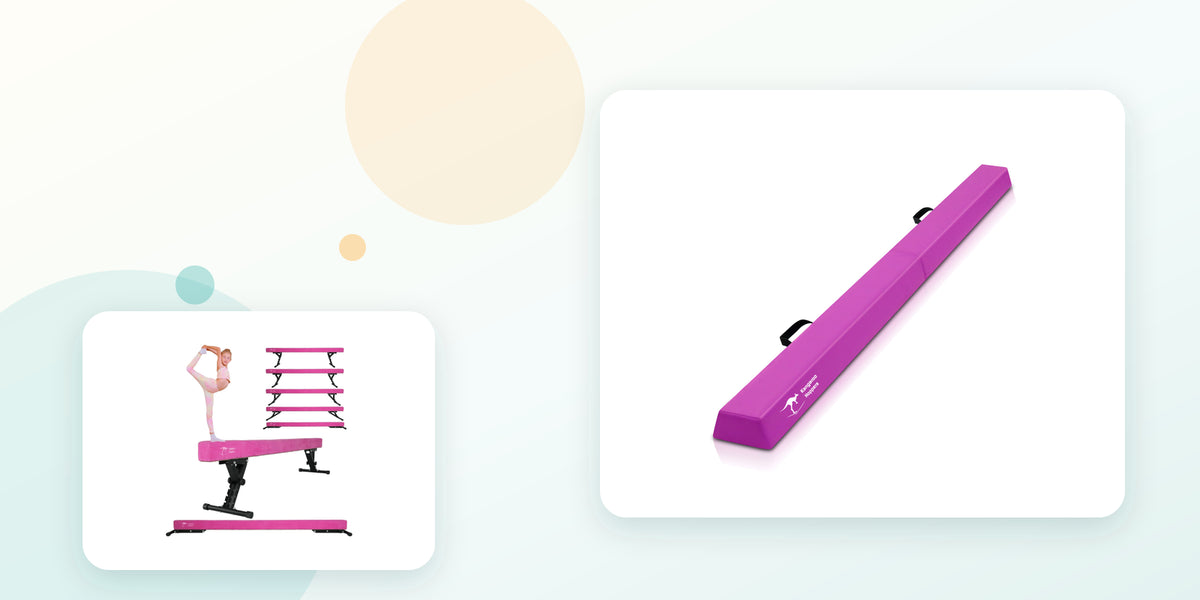
An Incline Gymnastics Mat for Kids is a helpful starting piece for young beginners learning forward rolls with a gentle slope.
How Do You Measure Your Space and Clearance Before You Buy
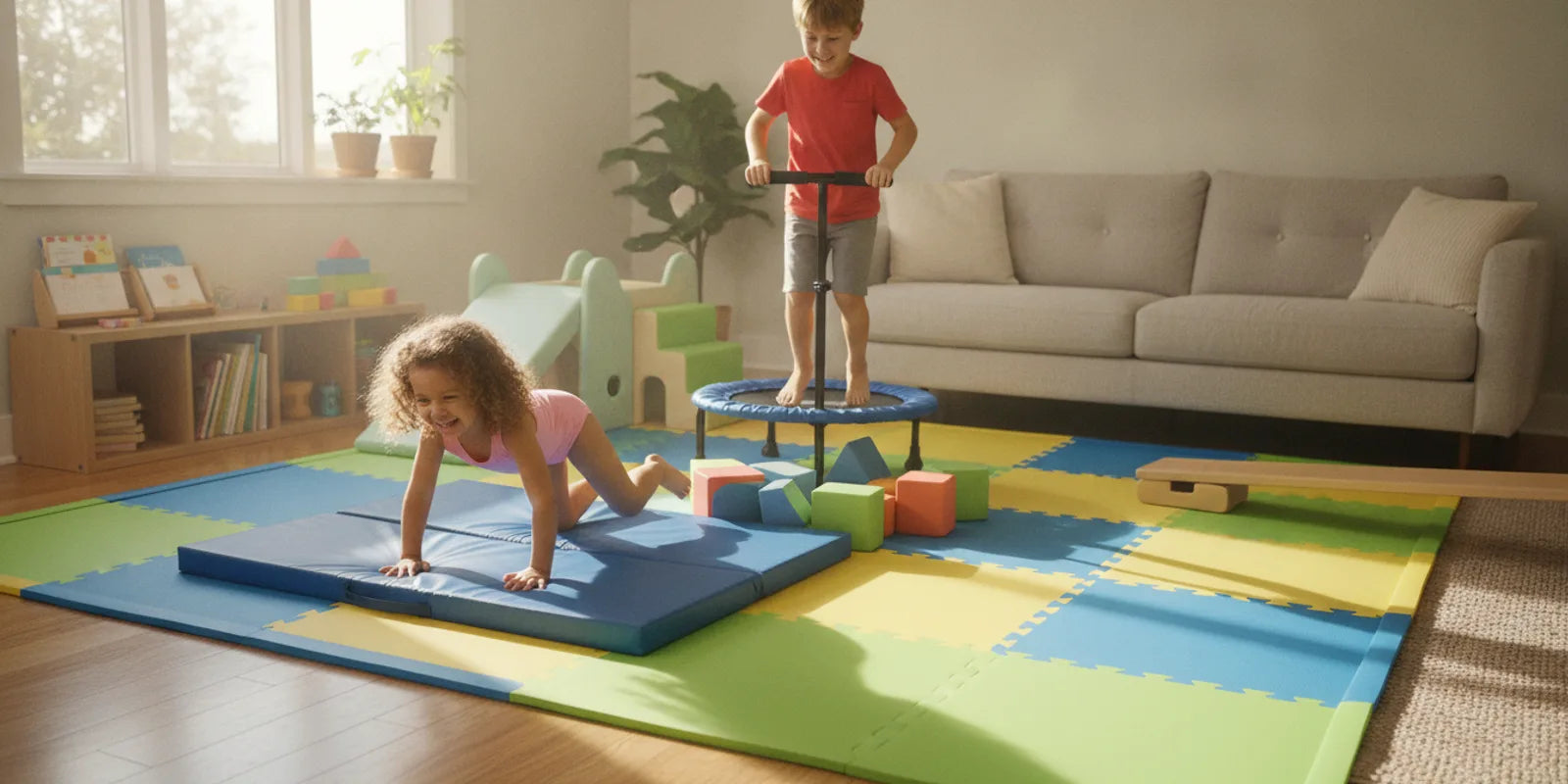
Measure your clear floor area first, then add a buffer on every side so a child never tumbles into furniture or walls. A classic four by eight foot panel mat needs a clear rectangle a bit larger than the mat plus open headroom for handstands and jumps.
- Measure the floor: Mark a clear rectangle and confirm a mat of that size fits flat without curling at the edges.
- Add side clearance: Leave a couple of feet on each side away from sharp corners, tables, and shelving.
- Check headroom: Make sure there is open vertical space for jumps, handstands, and cartwheels.
- Keep the path clear: The route to and from the mat should stay free of toys and cords.
If you want a sizing reference for a full setup, see our starter home gym bundle size guide.
Which Mat Type Fits Your Room: Bedroom, Playroom, or Garage
Choose the mat type by how much space you can dedicate and how the room is used. A foldable panel mat suits small bedrooms, a panel plus thicker landing mat suits playrooms and garages, and a longer tumbling mat suits dedicated practice areas.
- Small bedroom: A foldable panel or tri-fold mat that stores under a bed or upright in a closet.
- Playroom: A panel mat for daily practice, with room to add a thicker mat for landings later.
- Garage or basement: Space for a longer mat and denser foam to protect against hard floors.
For tight rooms, a Tri-Fold Gymnastics Mat for Kids folds into quarters and stores easily. An Octagon Tumbling Mat for Kids pairs well with a flat mat to add shape practice.
What Thickness and Foam Density Suit Your Floor Surface
Choose thickness and foam density based on both your child's skill and the floor underneath, because a hard floor transmits far more impact than carpet. Purpose built shock absorbing foam lowered peak landing force and lengthened the time to that peak, while a stiff low compliance surface produced the highest forces[2].
- Concrete or tile: Use thicker, denser foam since these surfaces offer almost no give.
- Hardwood or laminate: A medium thickness mat with supportive foam works for most practice.
- Carpet: A thinner mat may be enough for simple drills, but still choose supportive foam.
Foam quality matters as much as the number of inches, because the wrong foam can bottom out and feel unstable. A core gymnastics tumbling mat for home uses dense foam under a durable vinyl cover for repeated use.
How Do You Set Up and Store a Kids Gym Mat Safely at Home
Set the mat on a clear, flat surface, smooth out any folds, and use non slip backing or connecting strips so it stays put during active use. Store it folded or rolled out of walkways so it stays clean and the room stays safe.
- Lay it flat: Open the mat fully on a clean floor and press out creases before any practice.
- Stop sliding: Use the non slip side down or add connecting strips on smooth floors.
- Inspect regularly: Check seams, zippers, and Velcro and retire a mat that is torn or compressed.
- Store smart: Fold panel mats into quarters and tuck them away to keep paths clear.
A ready made Starter Home Gym Bundle for Kids bundles the core pieces for a first setup in one step.
What Home Setup Mistakes Should You Avoid
The most common home setup mistakes are using a mat that is too thin for the floor and leaving too little clearance around it. Both reduce the protection the mat is meant to provide and raise the risk of bumps and falls.
- Too thin for the floor: A thin mat over concrete bottoms out and a child feels the hard floor.
- No clearance: Placing a mat against furniture or walls removes the safe buffer for falls.
- Sliding mat: Skipping non slip backing lets the mat shift mid movement.
- Outgrown mat: Keeping a small or worn mat after a child advances limits safe practice.
When a child progresses to repeated tumbling, the Tumbling Home Gym Bundle for Kids adds more runway and cushioning for that next stage.
When Should You Supervise and When Should a Child Stop
Supervise active tumbling and stop the session when a child is tired, in pain, or attempting skills beyond their level. A mat softens minor impact but does not remove the need for adult oversight during higher energy movement.
- Supervise: Stay present for jumps, handstands, rolls, and any new skill attempts.
- Stop for pain: End practice if a child reports pain rather than pushing through it.
- Match the skill: Keep skills within the child's current ability and progress gradually.
Safety context matters because tumbling passes and dismounts account for most gymnastics injuries, and the majority happen during practice rather than competition[3]. For deeper selection criteria, see our guide on how to choose the best gymnastics mat for home.
FAQs About Kids Gym Mats for Home
What thickness gym mat is best for kids at home?
For most kids practicing rolls, cartwheels, and basic tumbling at home, a mat around two inches thick over a forgiving floor works well, while harder floors like concrete or tile call for thicker, denser foam. Match thickness to both your child's skill level and the floor underneath, because foam density matters just as much as the number of inches.
Is a regular exercise mat safe for kids gymnastics?
No, a thin yoga or exercise mat does not have the density or support needed for safe tumbling. These mats do not absorb the impact of jumps and landings, so a child can feel the hard floor underneath. Choose a thicker mat with high density foam designed for active movement to better protect growing joints during home practice.
How much space do I need for a kids gym mat at home?
A classic four by eight foot panel mat needs a clear rectangle a bit larger than the mat itself, plus a couple of feet of clearance on every side away from furniture, walls, and sharp corners. Measure your room first, keep the path to the mat clear, and make sure there is open headroom for jumps and handstands.
What is the best kids gym mat for a small bedroom?
A foldable panel or tri-fold mat is usually the best fit for a small bedroom because it gives a flat practice surface and folds into quarters to store under a bed or upright in a closet. It supports rolls, stretches, handstands, and gentle play without taking over the whole room.
At what age can a child use a gym mat at home?
Toddlers can use soft play and folding mats for crawling and gentle movement, while preschoolers and older kids can begin beginner tumbling on a firmer mat with supervision. Younger children are still developing landing control, so keep skills simple, supervise closely, and let an adult guide progression rather than thickness alone deciding safety.
Conclusion
The right kids gym mat for home comes down to matching the surface to your room, your floor, and your child's age and skill. A foldable foam panel mat is the most practical starting point for most families.
Measure your space, leave clearance on every side, choose foam density to suit your floor, and supervise active play. Start simple and upgrade to a longer or thicker mat as your child progresses.
Disclaimer
This article is general guidance for choosing and setting up kids gym mats at home and does not replace professional medical, safety, or coaching advice. Consult a qualified professional before starting new physical activities, especially if your child has any health concerns.
References
1. Pavlasova K, Bizovska L, Gaba A, Farana R, Janura M. Biomechanics of landing in gymnasts: a scoping review. Frontiers in Sports and Active Living. 2025;7:1602058. https://pmc.ncbi.nlm.nih.gov/articles/PMC12179790/
2. Brtva P, Bizovska L, Canty B, Skypala J, Irwin G, Farana R. Modifying landing mat properties elicits different lower limb biomechanical responses in gymnasts and non-gymnasts. Scientific Reports. 2025;15(1):42490. https://pmc.ncbi.nlm.nih.gov/articles/PMC12660871/
3. Tisano B, Zynda AJ, Ellis HB, Wilson PL. Epidemiology of Pediatric Gymnastics Injuries Reported in US Emergency Departments: Sex- and Age-Based Injury Patterns. Orthopaedic Journal of Sports Medicine. 2022;10(6):23259671221102478. https://pmc.ncbi.nlm.nih.gov/articles/PMC9201328/

Leave a comment
This site is protected by hCaptcha and the hCaptcha Privacy Policy and Terms of Service apply.