
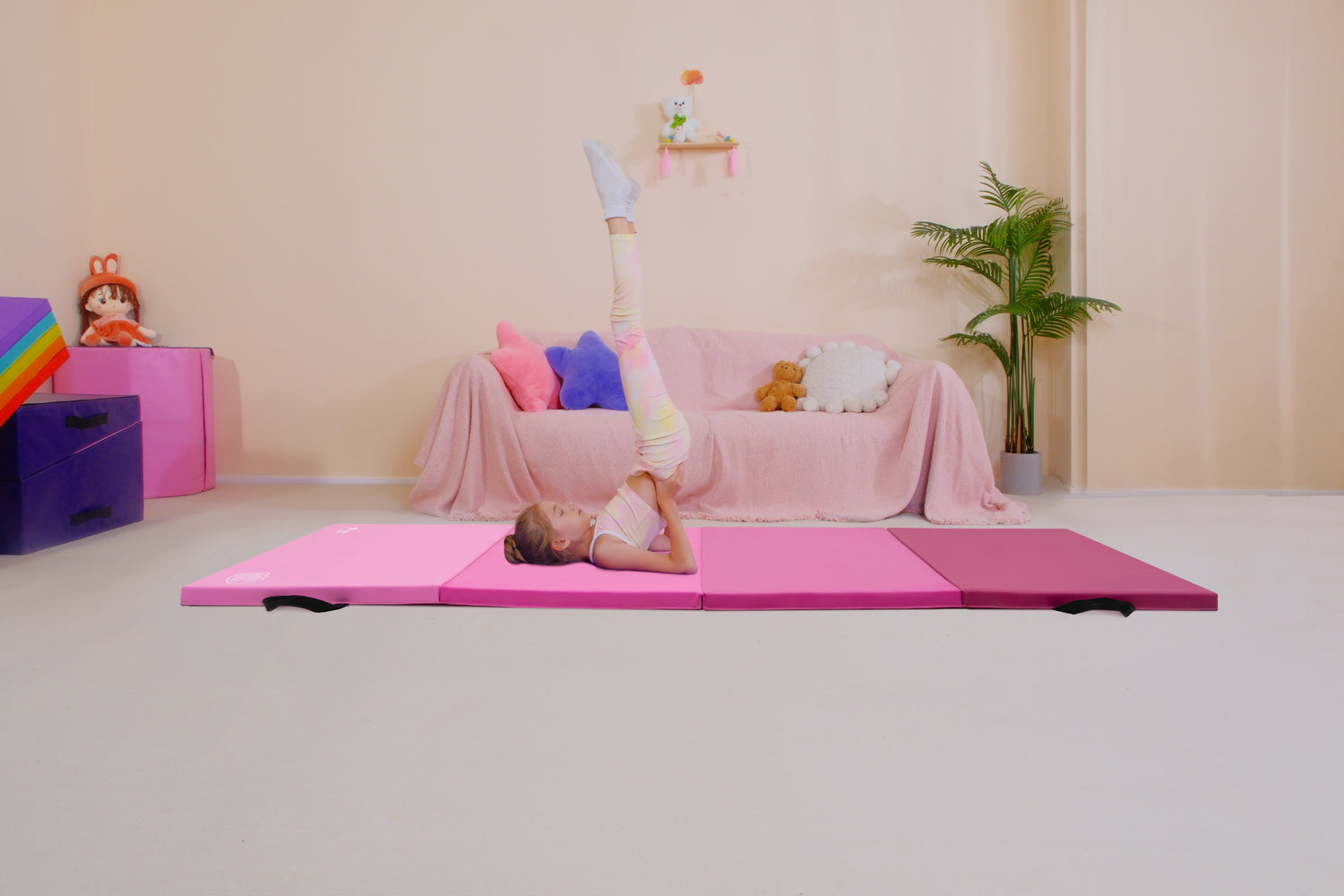
The best gymnastics mat for home practice is the one that matches the user’s age, skill level, training goals, and floor surface. For most families, a foldable mat with supportive foam, an easy-to-clean cover, and the right thickness offers the safest and most practical starting point.
Key Takeaways
- Choose the mat based on who will use it, what skills they practice, and what type of floor is underneath.
- Foldable panel mats are the best all-around option for most beginners, kids, and families with limited space.
- Air tracks work well for tumbling and cheer practice, while crash mats and wedge mats are better for skill progression and landings.
- Thickness alone is not enough because the right foam density, surface grip, and stability matter just as much for safety.
- A good home mat should be durable, easy to store, easy to clean, and built from non-toxic materials whenever possible.
Know Your Needs First
Who Will Use the Mat?
Start by matching the mat to the user’s age, weight, and skill level. Young children and beginners usually need a softer, supportive surface for rolls, handstands, and basic movement patterns, while older kids, teens, and advanced tumblers often need denser foam and better impact protection for higher-force skills.
Also think about the main activity before you buy. A mat used for light gymnastics, stretching, and active play does not need the same construction as a mat used for cheer drills, martial arts practice, or repeated tumbling passes.
Where Will You Use It?
Choose the mat with your space in mind because the room and floor surface directly affect safety. A mat placed over concrete or tile should provide more shock absorption than one used over carpet or a wood floor.
Storage matters just as much as setup in a home environment. If the mat needs to be packed away after each session, a foldable or inflatable design will usually be the most practical choice.
How Often Will It Be Used?
Buy for the level of use, not just the current budget. A mat used once in a while for casual practice can be simpler, but daily training requires stronger seams, more resilient foam, and a cover that can handle repeated cleaning and wear.
This is especially important in households with multiple children. Frequent use increases the value of better materials and stronger construction because cheaper mats often flatten faster and lose support over time.
Types of Gymnastics Mats for Home
Panel Folding Mats
Panel mats are the most versatile choice for home use and are often the best place to start. They provide a flat practice surface, fold for storage, and work well for beginner tumbling, stretching, movement drills, and general indoor activity.
Many panel mats also connect with hook and loop closures, which helps families build a longer runway as skills progress. Their main limitation is that thinner models may not provide enough protection for high-impact tumbling or advanced landings.
Tumbling Tracks and Air Tracks
Air tracks are a strong option for cheerleaders, tumblers, and energetic kids who need more rebound and a longer practice surface. They allow you to adjust firmness, which can help balance bounce and cushioning based on the skill being practiced.
They are also easier to store than large foam landing mats because they can be deflated when not in use. The tradeoff is a higher price, the need for an air pump, and a setup that may be less convenient for quick daily practice.
Crash Mats and Landing Mats
Crash mats are the right choice for harder landings and more advanced skills. They provide deeper cushioning and are especially useful at the end of a tumbling line or under specific drills where extra impact protection is needed.
They are not usually the best everyday choice for small homes because they are heavier, bulkier, and harder to store. Still, they are a smart upgrade when athletes begin working on more demanding gymnastics skills.
Incline and Wedge Mats
Wedge mats are ideal for skill development because they support safe progression in rolls, bridges, walkovers, backbends, and introductory handspring work. Their shape helps guide body position and momentum, which can build confidence faster than a flat mat alone.
They are more specialized than panel mats, so they are not the best single mat for every family. They work best as a training tool for young gymnasts who are learning movement patterns step by step.
Folding Exercise and Multipurpose Mats
Basic exercise mats can be useful for stretching, yoga, mobility work, and light floor activity. They are usually not enough for real tumbling, repetitive jumps, or skills that involve stronger landings.
This is where many families make the wrong first purchase. A thin exercise mat may look similar online, but it often lacks the density and support needed for gymnastics practice at home.
Key Features to Compare
Size and Dimensions
Buy a mat that fits both the room and the skill. A child practicing rolls and handstands may only need a compact area, but cartwheels, roundoffs, and tumbling combinations need more runway and more surrounding clearance.
Always measure the room before choosing the mat. Leave open space around the mat so the user is not practicing too close to walls, furniture, or other household obstacles.
Thickness and Cushioning
Choose thickness based on both skill level and floor type. A thinner mat may be enough for beginner drills on a forgiving floor, while harder surfaces and higher-impact skills call for thicker, more protective options.
The goal is not the softest possible mat. The best mat gives enough cushioning to reduce stress on wrists, ankles, knees, and hips while still feeling stable enough for balance and controlled movement.
Foam Type and Density
Foam quality matters as much as thickness because the wrong foam can bottom out or feel unstable. Supportive high-density foam is usually the better option for home gymnastics because it helps absorb impact without feeling too soft underfoot.
Cross-link foam and resilient EPE-style foam are popular in home mats because they offer a balance of support, comfort, and durability. For families comparing products, this is often a better quality clue than color or appearance.
Surface Material and Cover
Look for a cover that is durable, easy to clean, and comfortable for hands and feet. Vinyl, PVC, and PU style covers are common because they resist moisture, wipe down easily, and stand up well to repeated household use.
The surface should not be too slippery or too rough. A balanced texture helps prevent sliding while reducing the chance of discomfort during floor work.
Durability and Construction
Check the mat’s seams, handles, fold points, and connection points before making a final choice. Reinforced stitching, sturdy carrying handles, and strong closure systems are small details that make a big difference over time.
This matters even more for families who will fold and unfold the mat regularly. A mat that stores easily but wears out quickly is not good value in the long run.
Safety Considerations
Impact Protection and Joint Safety
The primary job of a home gymnastics mat is injury reduction, not decoration. A good mat helps soften minor falls, reduce repetitive impact, and create a more forgiving practice environment for growing kids and active beginners.
For more advanced drills, do not rely on one thin mat to do everything. Layering surfaces or adding a dedicated landing mat can create a safer setup for new skills and harder dismounts.
Non-Slip and Stability
A mat that shifts during practice creates an immediate safety problem. Choose a mat with a stable base, place it on a flat surface, and use connecting strips or non-slip support when needed.
This is especially important on wood, laminate, or other smooth household floors. Even a quality mat performs poorly if it slides during cartwheels, jumps, or transitions.
Certifications and Materials
Families with children should pay close attention to material safety. Non-toxic materials, low-odor construction, and phthalate-free claims can help build confidence, especially for equipment used often in bedrooms, playrooms, or shared family spaces.
This is not just a nice extra. A mat used daily at home should feel safe in both physical performance and material quality.
Proper Setup and Use
Always place the mat in a clear practice zone before training begins. Remove nearby furniture, sharp objects, toys, and clutter so the landing area stays open and predictable.
A good mat improves safety, but it does not replace supervision or common sense. New or advanced skills should still be introduced carefully and in the right environment.
Portability, Storage, and Maintenance
Folding and Storage
Home-friendly gymnastics gear should fit real family routines. Foldable mats are often the easiest solution because they can slide under a bed, stand in a closet, or tuck neatly into a playroom corner.
Inflatable mats can also save space when fully deflated. They are especially useful for homes that need a larger practice surface only part of the time.
Weight and Ease of Moving
Choose a mat that the household can realistically move and manage. Lightweight folding mats with handles are easier for everyday use, while thicker landing mats may need adult help to set up and store.
The easier the setup, the more often the mat gets used. Convenience plays a real role in whether home practice becomes a consistent habit.
Cleaning and Care
A wipe-clean cover is one of the most useful features for family equipment. It helps the mat stay hygienic after daily training, shared use, or indoor play.
Let the mat dry fully before folding or storing it. This simple habit helps preserve the cover, protects the foam, and supports longer product life.
Budget and Value for Money
Price Ranges by Mat Type
Basic folding mats usually offer the best entry-level value for home users. They are affordable, easy to store, and practical for a wide range of beginner activities.
Air tracks, wedge mats, and training shapes often sit in the middle to upper price range. Crash mats are typically the most expensive because they use more material and more specialized cushioning.
When to Spend More
Spend more when safety, frequency, or skill level demands it. Daily practice, heavier users, harder floors, and higher-impact skills all justify a better mat with stronger support and longer-lasting construction.
This is one area where underbuying can create frustration. A mat that loses firmness too quickly may end up costing more if it needs replacement sooner than expected.
Warranties and Return Policies
A strong warranty adds confidence because it shows the brand stands behind its product. It is also worth checking the return window, shipping terms, and customer support details before buying.
Customer reviews can also help you understand how the mat performs over time. Look for feedback on firmness, ease of storage, cover durability, and whether the mat holds its shape after repeated use.
Matching the Right Mat to Common Scenarios
For Young Kids and Beginners
A foldable panel mat with supportive foam is usually the best first choice. It creates a safe, simple surface for rolls, stretches, basic tumbling, and active play without taking over the whole room.
For Tumbling and Cheer Practice
Longer practice surfaces matter more for cheer and tumbling skills. Connected panel mats or an air track provides more runway for round-offs, back handsprings, and repeated drills.
For Advanced Gymnastics Skills
Advanced users need more protection where impact is highest. A landing mat, a crash mat, or a combined setup with more than one surface is usually the safer route.
For Small Spaces or Apartments
Foldable mats are the easiest answer for compact homes. They store neatly, set up quickly, and can still support a wide range of beginner and intermediate practice.
Checklist Before You Buy
- Who will use the mat in terms of age, weight, and skill level?
- What skills and activities will be practiced most often?
- Where the mat will be used and what floor is underneath
- What size, thickness, and foam support level are needed
- Whether the materials are durable, easy to clean, and family safe
- How the mat will be stored between sessions
- Whether the price, warranty, and long-term value make sense
FAQs
What is the best gymnastics mat for a beginner at home?
A foldable panel mat is the best choice for beginners practicing at home. It provides a supportive flat surface for basic movements like rolls and handstands. You can easily fold it for storage and connect it to other mats as your child develops new skills.
Can I use a regular exercise mat for gymnastics tumbling?
No, a regular exercise mat lacks the density and support needed for safe gymnastics tumbling. These thin mats do not absorb the impact of jumps and harder landings. You should choose a thicker mat with high density foam to properly protect your joints during home practice.
Does the type of floor underneath the gymnastics mat matter?
Yes, the floor surface directly affects the safety and shock absorption of your gymnastics mat. Practicing over concrete or tile requires a thicker mat with better cushioning. A thinner mat might only be suitable if you are practicing simple drills on a softer carpeted floor.
How should I store a large gymnastics mat in a small space?
You should buy a foldable or inflatable gymnastics mat for easy storage in small homes. Foldable panel mats can quickly slide under a bed or stand in a closet corner. Inflatable air tracks save a lot of space because they pack away flat when fully deflated.
Which gymnastics mat is best for learning back handsprings safely?
An incline wedge mat or a thick crash mat is the best equipment for learning advanced skills safely. The wedge shape helps guide body momentum during introductory backbends and handsprings. Crash mats provide the deep cushioning required for safe landings at the end of tumbling passes.
Conclusion
The right gymnastics mat makes home practice safer, more comfortable, and easier to stick with over time. Start with the user, the skills, and the space, then choose the mat type, thickness, and construction that best support confident progress at home.

Leave a comment
This site is protected by hCaptcha and the hCaptcha Privacy Policy and Terms of Service apply.