
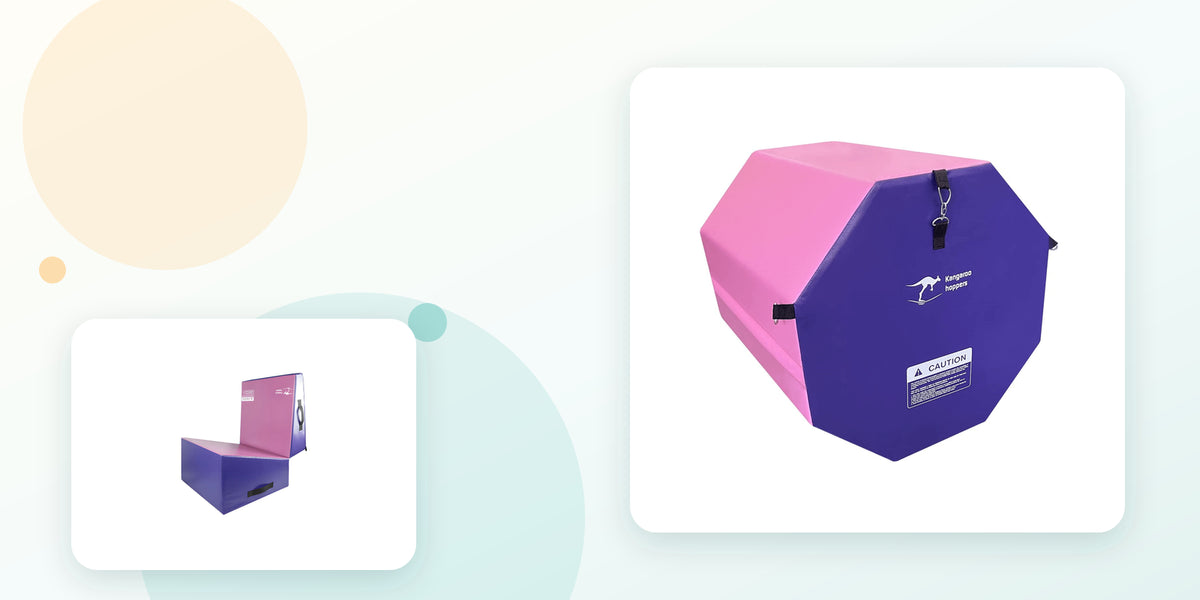
Looking for the safest mat for a back handspring can feel overwhelming when every listing promises maximum cushion and gym quality. The best mat for a back handspring is a firm, thick gymnastics mat that supports a child's wrists and landings, matched to their skill level and your home space.
This guide compares wedge, panel, and crash mats by thickness, firmness, and landing safety, then points to the right Kangaroo Hoppers mat for each training stage. It also covers a safe at-home setup and the mistakes that slow kids down.
Quick Answer: The best mat for a back handspring is a thick, firm gymnastics mat with supportive foam, a non-slip base, and enough length for backward tumbling. Beginners benefit most from an incline wedge mat for drills plus a 3-6 inch crash mat for landings, so most families choose a 4 by 8 foot panel mat to start.
Key Takeaways
- Mat type matters: A wedge mat trains the backward motion, while a crash mat softens landings for a kid learning a back handspring.
- Thickness is not everything: Supportive foam density and a non-slip base matter as much as how thick a mat is.
- Thin mats fall short: A yoga or exercise mat cannot absorb the force of backward tumbling landings.
- Size up your space: Measure the room and doorway before buying so a 4 by 8 foot mat fits with room to move.
- Safety first: Always use a spotter for new attempts and stop at the first sign of wrist, back, or shoulder pain.
Why does the right mat matter for a back handspring?
The right mat matters because a back handspring drives both hands and feet into the surface with force, and a cushioned gymnastics mat absorbs that impact so young wrists and joints are not overstressed. A thin yoga mat or bare floor cannot support the repeated landings that backward tumbling drills demand.
- Protects growing joints: A dense foam surface spreads the impact of each hand and foot plant instead of sending it straight to the bones.
- Builds confidence: A stable, cushioned surface lets a child practice the scary backward motion without fearing a hard floor.
- Keeps practice going: Softer landings mean less soreness, so kids stay motivated to repeat drills and build the skill.
Browse our gymnastics mats to see options built for home tumbling rather than for light exercise.
What should I look for in a back handspring mat?
Look for thick, supportive foam, a non-slip base, a durable vinyl cover, and a size that fits the room where your child trains. Thickness and firmness matter more than color or branding, because the surface has to cushion landings and stay stable underfoot.
Tumbling places real load on the body, and a 2024 study of 14 artistic gymnasts found that skills such as the back handspring generate high impact loading on the hands and lower limbs, with the landing phase where injuries often occur.[1] Measurements of floor tumbling have recorded upper-extremity forces near 2.15 times body weight, with back handspring forearm forces close to 2.37 times body weight.[2]
- Thickness: For landings and new skills, a practice or crash mat of 3-6 inches adds real shock absorption, while a 1.5-2 inch panel mat supports footwork.
- Firmness: The foam must feel supportive, not spongy, so feet and hands push off cleanly instead of sinking in.
- Non-slip base: A mat that slides during a drill is a safety problem, so use a non-slip underlay on slick floors.
- Size and storage: A 4 by 8 foot mat fits most rooms, and a foldable panel stores upright or under a bed.
What types of mats work best for back handspring training?
Wedge mats, panel mats, and crash mats each support a different stage of back handspring training, from learning the backward motion to landing with confidence. Most home setups pair a firm wedge for drills with a thicker landing mat at the end of the tumbling line.
- Wedge (cheese) mat: The incline guides body momentum and teaches the correct shape before a child tries the skill on flat floor, with lots of things you can do on a gymnastics cheese mat.
- Panel or tumbling mat: A firm 1.5-2 inch surface gives sure footing for handstands, cartwheels, and drills, and the difference is explained in tumbling mat vs. gymnastics mat.
- Crash or practice mat: A 3-6 inch mat absorbs higher-impact landings and is the right tool when a child first completes the skill.
- Octagon mat: Its shape supports forward rolls, walkovers, and handspring drills, which is what an octagon mat is used for.
- Air track: A bouncy air tumbling mat is fun for confidence reps, but it is not a substitute for a firm landing mat.
Which Kangaroo Hoppers mats are best for a back handspring?
For a back handspring, the best Kangaroo Hoppers mat matches the stage your child is working on, from an incline wedge for beginner drills to a foldable tumbling mat for connected passes. Every pick below uses supportive foam and a non-slip base designed for home practice.
Equipment guides explain that wedge mats let an athlete start at the high end and work down the incline, training the correct body motion for a handspring until it can be done on flat floor.
| Training Stage | Best Mat Type | Recommended Mat |
|---|---|---|
| Beginner (backbends, bridges, backward jumps) | Incline wedge (cheese) mat guides body angle and momentum | Incline Gymnastics Mat |
| Tumbling passes and round-offs | Foldable tumbling mat provides a cushioned runway | Rainbow Tumble Mat |
| All-around home practice | Panel or tri-fold mat is stable and easy to store | Tri-Fold Gymnastics Mat |
| Handspring drills and torso rolls | Octagon mat supports rolls, walkovers and handspring training | Octagon Tumbling Mat |
These picks compare surfaces inside the Kangaroo Hoppers product line, matching each training stage to a home practice mat without rating any outside brand.
All of these options live in the gymnastics tumbling mats collection, where you can compare sizes and colors.
How do I set up a safe back handspring practice space at home?
Set up on a flat, non-slip surface in a cleared room with a few feet of extra space at each end, and keep a trained adult spotter close by when a child first tries the skill. Measure the room before buying so the mat fits with room to move.
- Measure the space: A 4 by 8 foot mat needs roughly 12 feet of total clearance, so check the room and doorways before ordering.
- Clear the area: Move furniture, hard edges, and wall decorations a few feet away from the tumbling line.
- Use a spotter: A trained adult guides the hips and legs on early attempts, then fades to one-hand support.
- Build progressions first: Master the backbend, bridge, and kick-over before attempting a full back handspring.
- Add a landing mat: Place a thicker crash mat at the end of the line for new or higher landings.
What common mistakes should kids avoid when learning a back handspring?
Kids stall on the back handspring when they skip prerequisites, practice on a thin mat, or train without a spotter, so build the bridge and kick-over first and stop at the first sign of pain. A proper gymnastics mat and controlled repetition matter more than rushing the skill.
Wrists carry much of the landing load. In a study of 50 young female gymnasts ages 8 to 15, the average wrist angle at the moment of hand impact during a standing back handspring was 95 degrees, and 30 percent of the group reported wrist pain.[3]
- Skipping the bridge: Jumping straight into the skill without a strong backbend and kick-over is the fastest way to get stuck or hurt.
- Using a thin mat: A yoga mat does not absorb the impact, so use a real gymnastics mat even for simple drills.
- No spotter: Early attempts should always have a trained adult ready to guide the motion.
- Dropping the head: Tucking the chin throws off the rotation and puts stress on the neck and shoulders.
- Training through pain: If wrists, back, or shoulders hurt, stop for the day instead of pushing through.
FAQs About Back Handspring Mats
What is the best mat for learning a back handspring at home?
A thick, firm gymnastics mat is the safest choice. Incline wedge mats guide body momentum for backward drills, while a 3-6 inch crash mat softens landings. Most families start with a foldable panel mat around 4 by 8 feet and add a thicker landing mat as skills progress.
How thick should a back handspring mat be?
For basic drills and footwork, a 1.5-2 inch panel mat works well. For landings and new skills, choose a crash or practice mat that is 3-6 inches thick. Thicker is not always better. The surface also needs firm, supportive foam so feet and hands feel stable.
Can my child use a yoga mat for back handspring practice?
No, a thin yoga or exercise mat does not provide enough cushioning, grip, or stability for tumbling. A back handspring lands with force on the hands and feet, so choose a dense gymnastics mat built for impact instead, and layer mats for higher landings.
Is a wedge or cheese mat good for a back handspring?
Yes, an incline wedge mat is a great training tool. It lets a gymnast practice the backward motion and body shape on a slope before trying the skill on a flat surface. Starting high and working down the incline builds confidence and safer technique for beginners.
Should a child use a spotter when practicing back handsprings at home?
Yes, especially when first learning. A trained adult or coach should spot the skill, guiding the hips and legs through the motion. Practice only on a padded gymnastics mat, and stop right away if your child feels pain in the wrists, back, or shoulders.
How do I stop a back handspring mat from slipping?
Place the mat on a flat, clean surface and use a non-slip underlay or rug pad if the floor is slick. Keep hook and loop connections between mats tight, and inspect the seams and zippers monthly for wear before each practice session.
Conclusion
The best mat for a back handspring is the one that fits your child's current skill stage, your floor type, and your storage space. Start with a thick, firm gymnastics mat, then add an incline wedge for drills and a crash mat for landings as confidence grows.
Choose a surface your child can use daily, and keep an adult nearby until the skill feels smooth. Find family-friendly kids mats for the floor that grow with your young gymnast.
Disclaimer
This article is for general information only and is not medical advice. For questions about a child's readiness for gymnastics skills or any pain during practice, consult a qualified coach or pediatric health professional.
References
1. Campbell RA, Bradshaw EJ, Ball N, Hunter A, Spratford W. Upper and lower limb impact loading during artistic gymnastics foundation floor tumbling skills. European Journal of Sport Science. 2024;24(4):385-94. doi:10.1002/ejsc.12048. PMCID: PMC11235812.
2. Seeley MK, Bressel E. A Comparison of Upper-Extremity Reaction Forces between the Yurchenko Vault and Floor Exercise. Journal of sports science & medicine. 2005;4(2):85-94. PMCID: PMC3880892.
3. McLaren K, Byrd E, Herzog M, Polikandriotis JA, Willimon SC. IMPACT SHOULDER ANGLES CORRELATE WITH IMPACT WRIST ANGLES IN STANDING BACK HANDSPRINGS IN PREADOLESCENT AND ADOLESCENT FEMALE GYMNASTS. International journal of sports physical therapy. 2015;10(3):341-6. PMCID: PMC4458921.


Leave a comment
This site is protected by hCaptcha and the hCaptcha Privacy Policy and Terms of Service apply.